
Bakers making several cakes
You want to make larger quantities for the gathering and find out how much cake batter the mixer can handle in each batch.


Choose a stand mixer for marble cake based on the weight of batter you want to make in each batch: the bowl capacity in litres doesn’t tell you how much cake batter it can handle. A compact model may suit smaller batches and be easier to store, while a medium-sized or larger mixer makes sense if your recipe calls for bigger batches. Check which mixing attachments are included, too, and how much space the machine takes up.
You want to make larger quantities for the gathering and find out how much cake batter the mixer can handle in each batch.
You mix the base batter first, then add cocoa to a portion of it. The right attachment and adjustable speed may be important here.
You’ll use the mixer after the gathering, too, and want to know whether it will fit on your worktop or can be put away.
When to choose it: if smaller batches suit your recipe and you want to put the machine away after use.
Trade-off: plan on making extra batches if the total amount of batter exceeds the capacity of the model you choose.
When to choose it: if you want to mix a larger batch at a time and a patisserie set or flat beater is important to you.
Trade-off: check the full model code and specification, as box contents and bowl details can vary between models.
When to choose it: if your recipe genuinely calls for larger amounts of batter in each batch.
Trade-off: a larger mixer also needs space for the machine, bowl and cleaning its parts.
| What to consider | What to look for | Who it’s for |
|---|---|---|
| Cake capacity | Work out the batter weight for each batch and compare it with the cake capacity for the exact model, not just the bowl capacity. Kenwood lists 1,8 kg for the Go KZM35.000GY and 5 kg for the Chef XL KVL4100S; Bosch lists 2,7 kg for the MUM58L20. These are figures provided by the manufacturers. | If I’m baking several cakes for the gathering, I want to know whether my batch sizes fall within the model’s limit. Around 36% of consumers prioritise being able to mix enough batter in each batch. |
| Mixing two portions of batter | Check whether the model comes with a flat beater or K-beater and whether you can adjust the speed. KitchenAid’s marble cake recipe divides the base batter and mixes cocoa into one portion. | I want to be able to mix the vanilla batter and chocolate portion according to my recipe. Around 29% of consumers mainly want control over mixing the marble cake batter. |
| Space and cleaning | Measure the space on your worktop and where you plan to store the mixer. Also consider how many bowls and attachments you’ll need to wash after baking. | If I want to put the mixer away after the gathering, I need to consider whether it will fit in my kitchen and how many parts I’ll need to store. Around 21% of consumers prioritise space and cleaning. |
| What’s included | Check the full model code and what’s in the box, especially if you need a particular bowl or beater. | I want to know which parts suit the way I bake before choosing a model. Around 14% of consumers consider the included parts their top priority. |
Bowl capacity and the stated maximum amount of cake batter are different specifications. Looking only at the number of litres won’t tell you whether your recipe is within the stated cake capacity.
Work out the weight of the batch you want to make and compare it with the cake capacity of the exact model.
A larger batch may mean extra mixing and washing up if it exceeds the stated capacity.
The models reviewed differ in the parts they list as included. An attachment or second bowl you need won’t necessarily come with every model.
Check the full model code and what’s in the box before making your choice.
If you need an extra bowl or attachment for the way you bake, you’ll also need to store and clean it.
A manufacturer’s guarantee does not replace your statutory rights against the retailer. The Dutch government explains that the Netherlands has no fixed statutory guarantee period.
Keep your proof of purchase and contact the retailer to discuss a solution if there’s a fault.
The Go KZM35.000GY and Chef XL KVL4100S are examples you can compare when looking at a compact model and a larger one.
The MUM58L20 is a reference point if you’re considering a medium-sized mixer with a stated cake capacity.
The Artisan model reviewed, 5KSM175PS, is worth considering if you want to compare mixers with several bowls and attachments.
The SMF05PKEU is a useful comparison point if you’re considering the included attachments and the space needed for the machine.
The Assistent Original AKM6230 is an alternative to consider if you’re looking at a different bowl and attachment set-up.
These picks are stand mixers for mixing and making cake batter. Compare the details of the exact model with your desired batter weight and check that the applicable CE marking is present; the NVWA outlines this requirement for electrical products covered by the rules.
 No image available
The stated bowl capacity may help when working out how much batter you want to make; bowl capacity isn’t the same as cake capacity.
5,5 L bowl; 11 speeds; 4,5-inch LED touchscreen.
 No image available
This model may suit you if a stainless-steel bowl and several adjustable speeds are among your priorities.
4,5 L bowl; 1300 W; 6 speeds plus pulse.
 No image available
You can include this Bosch MUM model in your comparison; check the cake capacity and included parts for the exact model.
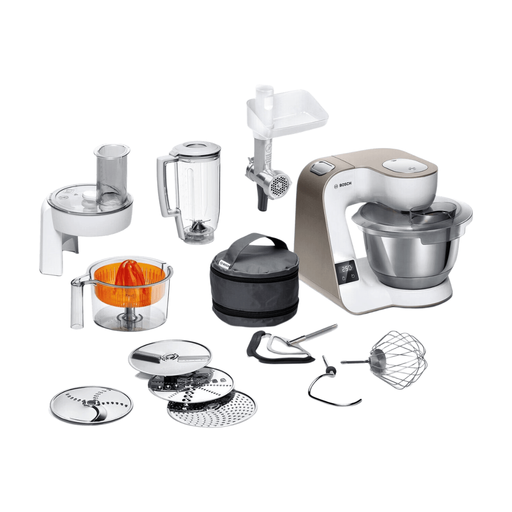 No image available
This model may suit you if you’re comparing Bosch MUM5 mixers; check the cake capacity and box contents for your recipe.
1000 W.
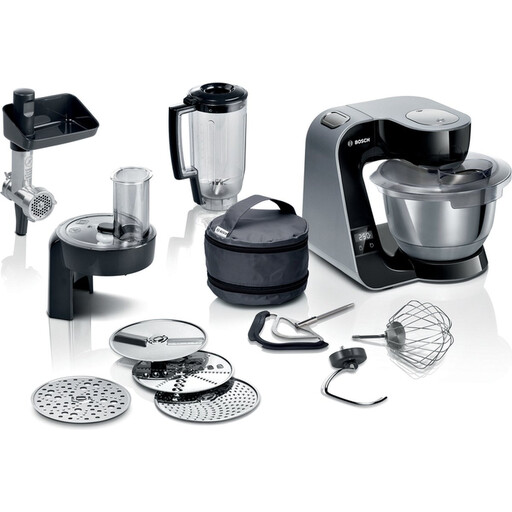 No image available
You can include this Bosch MUM5 model in your selection; check that the included attachments and cake capacity suit your marble cake recipe.
1000 W.
Work out the weight of your recipe and compare the weight of each batch with the cake capacity stated by the manufacturer for the exact model. The bowl capacity in litres won’t tell you this limit.
Not necessarily: KitchenAid’s marble cake recipe divides the base batter and mixes cocoa separately with one portion. Follow the instructions for your machine and recipe when choosing the speed and attachment.
The Voedingscentrum advises using clean kitchen utensils, avoiding contact between prepared food and raw egg, and cooking dishes containing raw egg thoroughly. Raw batter carries an additional risk for young children, pregnant people, older adults and people with weakened immune systems.
According to the NVWA, CE marking is required for electrical products covered by the relevant rules. Check the marking on the appliance itself; a general product description doesn’t confirm that an individual model has been checked.
Contact the retailer to discuss a solution if the product is faulty. The Dutch government states that the Netherlands has no fixed statutory guarantee period, and that a manufacturer’s guarantee is in addition to your statutory rights. Online purchases usually come with a 14-day cooling-off period after delivery, although there are exceptions.