
Baking large quantities for a buffet
Want to mix a large quantity of cake batter in one batch, and have room for a bigger stand mixer? Compare the weight of your recipe with the cake batter capacity specified by the manufacturer for the exact model.


Choose a stand mixer based on the weight of the batter you make per batch, and compare it with the cake batter capacity specified for the exact model. The bowl capacity in litres alone isn’t enough. A larger bowl or two compatible bowls can be useful for bigger quantities or keeping different batters separate, while a more compact model may suit you if you can work in smaller batches. Don’t use the mixer to fully blend the final marbling pattern.
Want to mix a large quantity of cake batter in one batch, and have room for a bigger stand mixer? Compare the weight of your recipe with the cake batter capacity specified by the manufacturer for the exact model.
If you want to prepare vanilla and chocolate batters separately, check which bowls and mixing attachments are included. A marble cake recipe may call for dividing the base batter before mixing cocoa into one portion.
If you can prepare the buffet in several batches, a more compact model may be more practical than a mixer with a large bowl for making everything in one go. Check the external dimensions and work out your batch size using your own recipe.
First, work out how much batter you want to make at a time, then check whether the manufacturer says the exact model is suitable for that quantity. Next, see whether the included bowls and attachments, as well as the mixer’s dimensions, suit the way you bake and the space you have available.
| What to consider | What should you check? | Who is this most relevant to? |
|---|---|---|
| Batter per batch | Work out the weight of your recipe and compare it with the cake batter capacity specified for the exact model. Kenwood and Bosch state this capacity for each model; bowl capacity alone doesn’t determine the limit. | If I’d rather make the buffet batter in as few batches as possible, I want to know whether my recipe is within the model’s limit. Around 33% of consumers say capacity is their top priority. |
| Mixing different batters separately | Check whether the model includes extra bowls and the mixing attachments you want. Prepare the batters separately before bringing them together to create the marbling pattern. | If I want to keep the light and chocolate batters separate and organised, I look for bowls that suit the way I work. Around 27% of consumers say keeping the batters separate is their top priority. |
| Worktop and storage space | Compare the external dimensions of the exact model with the space available on your worktop and in your cupboard. | If space is limited but I can bake in batches, a suitable size matters more to me than making one large batch. Around 20% of consumers say available space is their top priority. |
| Cleaning between batches | Check the cleaning instructions for each bowl and attachment included with the exact model. An extra bowl can be handy when making different batters one after another, but it doesn’t replace following those instructions. | If I’m making several batches of batter in a row, I want to know in advance what I’ll need to clean in between. Around 20% of consumers say cleaning is their top priority. |
Bowl volume and cake batter capacity are two different things. A bowl’s capacity in litres doesn’t, by itself, tell you how many kilograms of batter the manufacturer specifies for that model.
Weigh your recipe for each batch and compare it with the cake batter capacity of the exact model.
The number and capacity of the bowls supplied can vary between versions. Also check which mixing attachments are included with the model code.
Before you buy, check what’s in the box for the exact version you’ve chosen.
In the marble cake recipe we consulted, cocoa is mixed into one portion of the base batter. If you then use the mixer to blend everything together, the two batters will no longer stay separate.
Mix the batters separately, then bring them together to create the pattern.
These examples relate to the models and versions mentioned; they aren’t a general assessment of the brands or an indication of availability.
The models mentioned range from a more compact mixer to a version with two bowls; the stated cake capacity varies by model.
The Serie 6 MUMS6EW22 is worth considering if you’re looking for a large bowl and a specified cake batter capacity.
The Artisan 5KSM175PS version mentioned is worth considering if you want to look at a mixer with two bowls and a range of mixing attachments.
The SMF03DGEU mentioned is a stand mixer with a 4.8 L bowl and a flat beater.
These stand mixers are designed for mixing cake batter. Check which bowls and attachments are included with each version if you want to prepare different batters separately.
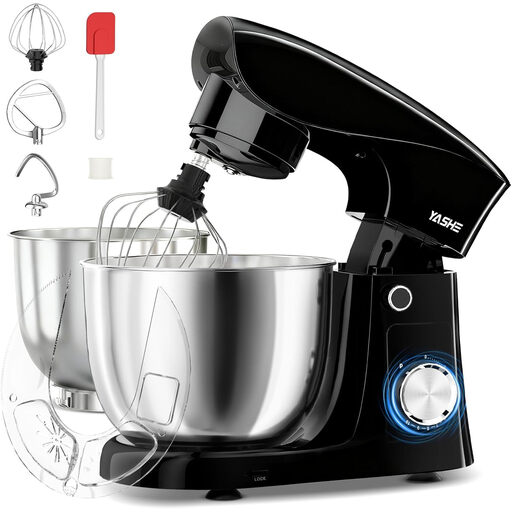 No image available
A version with two bowls for preparing different batters separately, one after the other.
The product title mentions a tilt-head design and a dough hook.
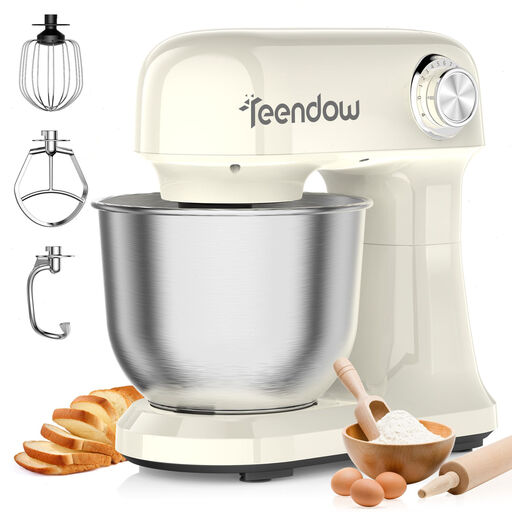 No image available
An option if you’re looking for a stand mixer with a stainless steel bowl and tilt-head design for mixing cake batter.
The product title lists 12 speeds, a 5 qt stainless steel bowl and a tilt-head design.
 No image available
This version may suit anyone looking for a stand mixer with a tilt-head design and several listed attachments for cake batter.
The product title lists a 5 L bowl, 10 speeds, a dough hook, whisk and beater.
 No image available
A version with a 6 L bowl to consider if you want to compare bowl capacity with the amount of batter in your recipe.
The product title lists six speeds, a dough hook, whisk and beater. Bowl capacity isn’t the same as a specified cake batter capacity.
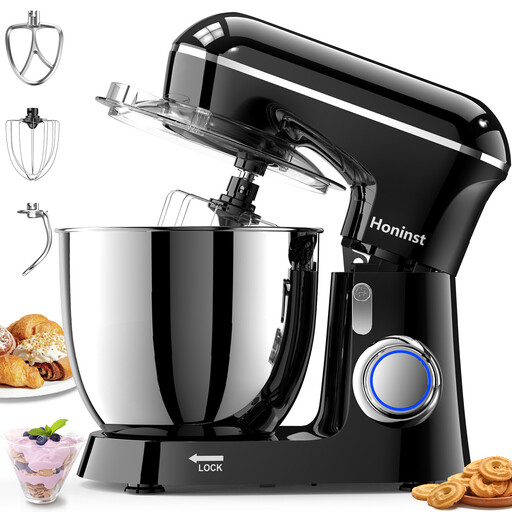 No image available
A stand mixer worth considering if you’re looking for a tilt-head version with several mixing attachments for cake batter.
The product title lists a 6.5 qt bowl, 10 speeds, a dough hook, whisk and beater. The description limits use to normal household quantities and operating times.
No. Compare the weight of your batter per batch with the cake batter capacity specified for the exact model. Kenwood lists a 7 L bowl and a cake capacity of 4 kg for the KVL85.124SI; Bosch lists a 5.5 L bowl and a cake batter capacity of 3.5 kg for the MUMS6EW22.
First prepare the base batter and divide it before mixing cocoa into one portion, as in the marble cake recipe we consulted. Use the mixer for the separate batters, but don’t use it to fully blend the final pattern together.
This varies by model and component, so follow the instructions for your exact version. Bosch lists dishwasher-safe accessories for the MUMS6EW22. For the KitchenAid Artisan 5KSM125 we looked at, KitchenAid says the bowl and beater can go on the top rack of the dishwasher, but the whisk must be washed by hand.
According to ACM ConsuWijzer, when you buy as a consumer, you’re entitled to an appropriate free solution if a product breaks sooner than you could reasonably expect and you’ve used it normally. The seller must resolve the problem, for example through repair, replacement or a refund; an additional manufacturer’s guarantee doesn’t replace this legal right.
Business rules are relevant if you’re providing the buffet as a business; they don’t automatically apply to a private gathering. According to the NVWA, food businesses must register, and customers must be able to obtain information about allergens in unpackaged cake sold commercially; there are conditions on the permitted ways of providing this information.