
Baking one cake for a picnic
Your main aim is to mix lemon cake batter, so you’re looking for a suitable beater and bowl rather than extra features. The Dutch Consumers’ Association lists mixing and whisking among the uses of a stand mixer.


For one standard lemon cake, a stand mixer with a suitable beater, a bowl that can handle your recipe and dimensions that fit your kitchen will usually be enough. If you regularly bake larger batches, compare the stated cake capacity of the specific models and check which attachments are included; you don’t automatically need a larger bowl. Any chilled topping affects how you transport the cake, not which mixer you choose.
Your main aim is to mix lemon cake batter, so you’re looking for a suitable beater and bowl rather than extra features. The Dutch Consumers’ Association lists mixing and whisking among the uses of a stand mixer.
You want to bake the same kind of cake, but the mixer’s height and storage space matter too. The Kenwood Go KZM35.000GY is a specific compact model you can compare by dimensions and cake capacity.
You often make larger batches of batter and want to compare the stated cake capacity of the exact model before mixing a big batch. Bosch and KitchenAid publish capacity figures for specific models.
Best for: people who usually bake one cake and have little worktop or storage space. Kenwood lists a 4-litre bowl, a cake capacity of 1.8 kg and a height of 30 cm for the Go KZM35.000GY.
Keep in mind: compare the capacity with your own recipe; bowl capacity in litres isn’t the same as the permitted amount of batter.
Best for: people who regularly make larger quantities at a time. Bosch lists a maximum of 2.7 kg of cake batter for the MUM58200; KitchenAid gives a cake capacity of 2.7 kg for the models in its capacity table.
Keep in mind: these are manufacturer figures for specific models, not results from a direct comparative test. Also check the size and included attachments.
| What to consider | What should you check? | Who is this important for? |
|---|---|---|
| Mixing cake batter | Check which beater is included and, if possible, look for a relevant test of how well it mixes cake batter. | I want my mixer to mix lemon cake batter well, so I look at the beater and relevant test results; around 36% of consumers say mixing cake batter is their top buying priority. |
| Space and storage | Measure the available height and depth, including the space needed to operate the mixer head. | If my kitchen has limited space, I want to know whether the mixer will fit on the worktop or in storage; around 29% of consumers prioritise a suitable size and storage space. |
| Batch size | Compare the amount in your recipe with the cake capacity of the exact model, not just the bowl capacity in litres. | When I’m baking for a group, I want to know whether my recipe can be mixed in one go; around 21% of consumers prioritise sufficient capacity for larger batches. |
| Cleaning and equipment | Check the cleaning instructions and included attachments for each model. | I don’t want to be left with unnecessary accessories or extra cleaning after baking; around 14% of consumers say ease of use and cleaning are their main considerations. |
Manufacturers may list both the bowl capacity and a separate maximum amount of cake batter for the same model. These figures don’t describe the same thing.
Compare the amount in your recipe with the cake capacity stated for the exact model.
If a mixer can’t handle enough batter at once, you may need to mix it in several batches.
Power alone doesn’t tell you how well a stand mixer will mix cake batter. The Dutch Consumers’ Association assesses mixing cake batter as a separate task.
Alongside the product specifications, look for a relevant mixing test and check which batter attachment is included.
A topping that needs to stay chilled may call for different transport arrangements from a plain cake. The Netherlands Nutrition Centre recommends using a cool bag for foods that are normally kept chilled, and discarding them if they’ve been left unrefrigerated for more than two hours.
Check the storage advice for the finished cake as a whole, and transport chilled components appropriately.
A cool bag may be needed for a chilled topping.
The Go KZM35.000GY is a specific compact model to use as a reference; the kMix KMX751ABK is a separate range to compare.
The Serie 4 MUM58200 is a reference for cake capacity and the included patisserie set; the Serie 2 MUMS2VM00 is a different model.
The Artisan 5KSM125 is a reference for comparing a tilt-head mixer and the stated mixing attachments.
The SMF03DGEU is an example of a stand mixer supplied with a whisk, flat beater and dough hook.
These models are designed for home baking and mixing batter; compare the stated bowl capacity and attachments with the amount in your own recipe.
 No image available
The product information lists cakes and mixing among its uses; the 5.5-litre bowl may be useful if your recipe makes more than one small batch.
The product title lists 11 speeds. According to the product description, the bowl and accessories aren’t dishwasher-safe.
 No image available
The product description lists a beater for batter and a whisk; check that these attachments are suitable for the lemon cake you want to make.
The product title lists a 5-litre stainless steel bowl, 10 speeds and 600 W. A dough hook and splash guard are also mentioned.
 No image available
The product information lists a multifunctional mixing arm and patisserie set; check which parts are included with this version for your mixing needs.
The stated bowl capacity is 3.9 litres. The stated maximum amount is 2.7 kg of kneaded dough, not a specified cake batter capacity.
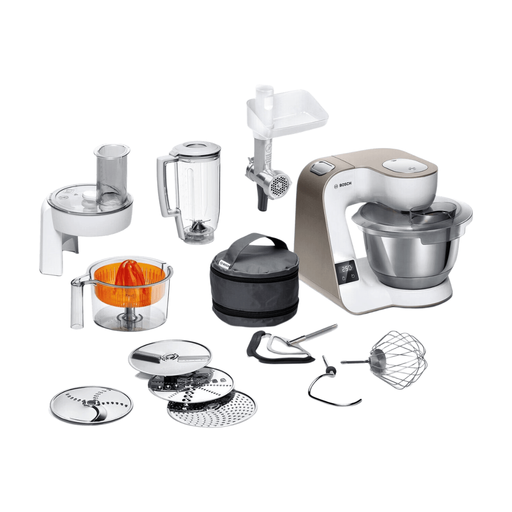 No image available
This version may be worth considering if you’d also like to weigh ingredients while baking; check which features and attachments come with the model on offer.
The product title lists a power rating of 1000 W.
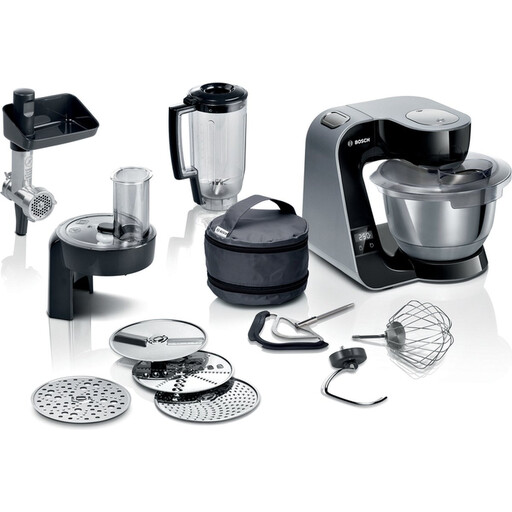 No image available
The product information lists this version for mixing and whisking; check which bowl and attachments are included with this model before comparing it with your recipe.
The product title lists a power rating of 1000 W and a black finish.
No. Compare the amount of batter in your recipe with the cake capacity of the exact model. Bowl capacity in litres isn’t the same as a stated maximum cake capacity in kilograms.
Kenwood recommends scraping the mixture down with a spatula halfway through if the K-beater doesn’t clear the sides of the bowl. For other models, follow the instructions in the relevant manual.
It depends on the ingredients in the finished cake. The Netherlands Nutrition Centre recommends using a cool bag for foods that are normally kept chilled, and discarding them if they’ve been left unrefrigerated for more than two hours. So check the storage requirements for cream or any other chilled topping separately.
Report a problem to the seller. According to the Dutch Government, there’s no fixed statutory guarantee period in the Netherlands; with normal use, the product must meet what you could reasonably expect from it. A manufacturer’s guarantee is an additional benefit.
Check the product information and markings for the version on offer. The Dutch Government explains that products requiring CE marking must meet the applicable legal requirements; a mention on a sales page doesn’t, by itself, verify that an individual item complies.