
Bakers who want control over mixing
You want to mix butter, sugar, eggs and flour according to your cake recipe. Look for a suitable attachment and speed control that lets you follow the different mixing steps.


Choose a stand mixer with an attachment suited to the steps in your cake recipe, and compare the amount of batter with the stated cake capacity for the exact model—not just the bowl capacity. A compact model can be practical if you have limited worktop space and are making a modest batch; for larger quantities, capacity and the number of mixing batches matter. Manufacturer specifications are not a test of your lemon cake recipe.
You want to mix butter, sugar, eggs and flour according to your cake recipe. Look for a suitable attachment and speed control that lets you follow the different mixing steps.
You want to know whether you can make your planned amount of batter in one go. To find out, compare the batter capacity of the exact model with the quantity in your recipe.
You want to use the mixer on the worktop and then put it away somewhere. Measure the available space before choosing a model.
For lemon cake batter to serve at a lunch gathering, key considerations include the right attachment, the amount of batter, available space and cleaning.
| What to consider | What to look for | Who should prioritise this? |
|---|---|---|
| Mixing control | Check that the included beater is suited to the steps in your recipe and that you can adjust the speed. | If you want to follow your cake recipe's steps for butter, sugar and flour, look for the right attachment and controls. Around 36% of consumers put mixing control first. |
| Batch size | Compare the weight of the batter in your recipe with the stated cake capacity of the exact model. | If you're baking for a lunch gathering, you'll want to know whether your planned quantity will fit in one batch. Around 29% of consumers prioritise the batch size they need. |
| Worktop space | Measure your worktop and storage space, then compare these with the dimensions of the mixer. | If your kitchen has limited free space, you'll want to be able to use and store the mixer without it getting in the way. Around 21% of consumers focus mainly on the space required. |
| Cleaning | Check the cleaning instructions for each included attachment; don't assume the same rules apply to every part. | After baking, you'll want to clean the bowl and attachments without unnecessary fuss. Around 14% of consumers put ease of cleaning first. |
Bowl capacity in litres and cake capacity in kilograms describe different things. A larger bowl alone doesn't tell you how much cake batter the manufacturer specifies for that model.
Weigh or calculate the amount of batter in your recipe and compare it with the cake capacity of the exact model. If necessary, plan to mix it in several batches.
KitchenAid's butter cake recipe uses a flat beater for the mixing steps described. You don't automatically need a different attachment just because you're making cake batter.
Check the mixing steps in your own recipe and see which suitable attachment comes with the mixer.
Cleaning instructions can vary from one part to another. For example, KitchenAid states that the standard wire whisk 5K452WW is not dishwasher-safe.
Check the instructions for each attachment you plan to use and clean.
According to the Government of the Netherlands, there is no fixed statutory guarantee period in the Netherlands. A manufacturer's guarantee is in addition to the rights you have against the seller if a product is faulty.
Before buying, check what any additional guarantee covers and what terms and conditions apply.
The Kenwood Go KZM35.000GY is worth considering if compact placement and storage are important to you. The kMix KMX750ABK is another model, with a higher stated bowl and cake capacity.
The Bosch MUM58720 is an option to consider if you want to mix cake batter and use the included accessories for other recipes too.
The Artisan 5KSM125EMH is a stand mixer with a beater, whisk and dough hook, suited to anyone who wants to make other recipes as well.
These stand mixers are options to compare for mixing batters, with speed settings, bowl capacity and included attachments all worth considering.
 No image available
The listed speed settings and bowl capacity give you a few things to weigh up against the steps and amount of batter in your recipe.
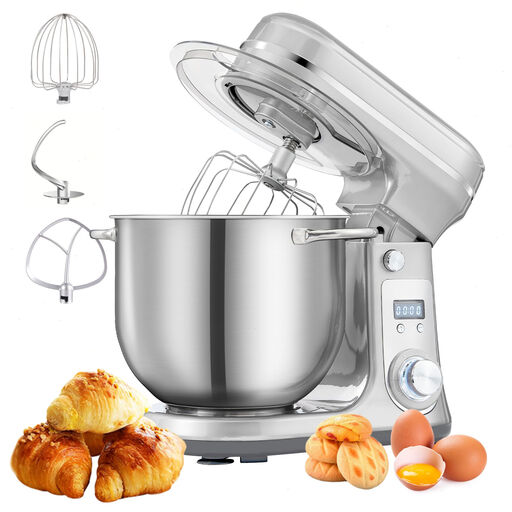
The product name lists 11 speeds, a 4.5-inch touchscreen and a 5.5-litre bowl.
According to the product information, the bowl and accessories are not dishwasher-safe.
 No image available
You can compare the listed speeds and pulse function with the mixing steps in your cake recipe.
The product name lists a 6-litre capacity and 1200 W of power; the description mentions six speeds and a pulse function.
 No image available
The listed beater and speed settings are worth comparing with the mixing steps in your recipe.
The product name lists a 5-litre bowl and 400 W of power. The product description mentions a beater for batters and ten speeds plus pulse.
 No image available
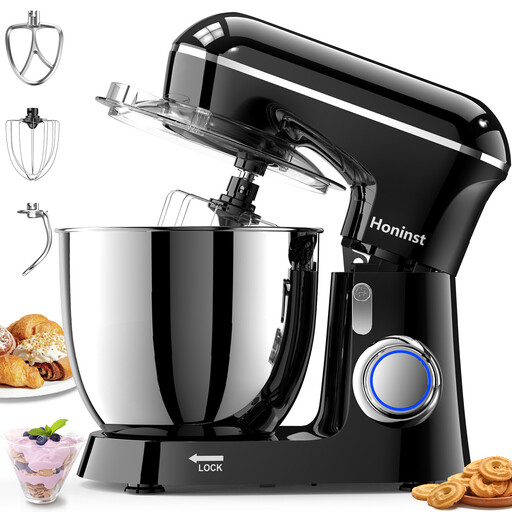
The product description mentions a beater for cake batter; check that the attachments suit what your recipe calls for.
The product name lists a capacity of 6.5 QT. The description mentions a beater, whisk and dough hook.
 No image available
The product description lists a K-Beater for batters, plus a whisk and dough hook for other recipes.
Check the information for the exact model and which attachment you want to use for your cake recipe.
Follow the mixing steps in your recipe. KitchenAid's butter cake recipe uses the flat beater for the butter, sugar and other steps described; check which suitable attachment comes with your model.
Unplug the mixer before cleaning and follow the instructions for the machine and each attachment. KitchenAid states that the standard wire whisk 5K452WW is not dishwasher-safe, so don't assume the same cleaning rules apply to every part.
The Netherlands Nutrition Centre advises against tasting raw cake batter, as raw eggs and flour can contain harmful bacteria. Bear this in mind when baking for others, including young children, pregnant people, older people and anyone with a weakened immune system.
No. According to the Government of the Netherlands, there is no fixed statutory guarantee period in the Netherlands; what you can expect from a product depends, among other things, on the product, its price and how it is used. If a product is faulty, the seller is your point of contact, and a manufacturer's guarantee is in addition to your rights.
According to the European Commission, a CE mark indicates that the manufacturer declares the product meets the applicable EU product requirements. The mark is not a certification issued by a central EU authority and, on its own, says nothing about a mixer's performance.