For lemon cake batter, a stand mixer with a bowl and whisk or beater suited to your usual recipe is a better fit for the job than a food processor, which is mainly designed for slicing, grating and chopping. Then choose based on the space you have for baking and storage, the cleaning instructions and the noise level. A larger bowl or extra features won’t necessarily be an advantage when you’re making just one cake.
Who is this advice for?
Regular cake baker
You make cake batter often and want the bowl and beater to suit your usual recipe. Focus on the mixing results and ease of use, not just the wattage. The Consumers’ Association highlights ease of use and mixing results as important factors when choosing a kitchen machine.
Baker sharing a worktop
You need to clear the space after baking and want to be able to move and store your mixer. Compare its dimensions and weight, as well as the room needed to fit and remove the bowl; Kenwood provides these details for the Go and kMix.
Baker who wants to tidy up quickly
You share the kitchen and want to clean and put away the removable mixing parts quickly. The Consumers’ Association warns that accessories aren’t dishwasher-safe with every kitchen machine, so check the instructions for each part.
What should you look for when buying?
| What to consider |
What should you check? |
Who should prioritise this? |
| Mixing cake batter effectively |
Check whether a whisk or beater is included, and compare the bowl capacity with the amount of batter in your usual recipe. |
If I bake cakes regularly, I want the attachment and bowl to suit my recipe; around 31% of consumers prioritise mixing cake batter above all else. |
| Worktop and storage space |
Measure the available width, depth and height where you’ll use and store the mixer. Allow room to use the bowl and mixer head. |
If I need to put the mixer away after baking, it’s not just a question of whether it fits; I also need to be able to move it easily. Around 25% of consumers prioritise space for use and storage. |
| Cleaning after use |
Check which parts are removable, and follow the dishwasher or hand-washing instructions for each part of the exact model. |
If I share the kitchen with others, I want to be able to clean the parts quickly after baking; around 19% of consumers put cleaning at the top of their list. |
| Noise for housemates |
Look for a noise test of the exact model under similar conditions; don’t infer its noise level from the wattage. |
If others are in the same room, I want to know how noisy the mixer is before choosing when to use it; around 13% of consumers say noise is their top priority. |
| Purchase price and frequency of use |
Compare the included baking accessories with how often you bake. If you only bake occasionally, consider a hand mixer too. |
If I only bake a cake now and then, I want to weigh up the price against how often I’ll actually use the mixer; around 12% of consumers put this consideration first. |
Common buying mistakes
-
Choosing a food processor because it also says ‘mix’
A food processor is mainly designed for slicing, grating and chopping. For cake batter, a stand mixer with a bowl and whisk or beater is better suited to the baking task, according to information from the Consumers’ Association.
Compare the appliances based on how well they handle cake batter, and check which mixing attachment comes with the exact model.
-
Looking only at the bowl capacity
A larger bowl doesn’t automatically mean it will mix a small batch well. Models can also vary in size and weight, which matters if you need to put the mixer away after use.
Compare your usual recipe with the stated capacity, and measure both your mixing area and your storage space.
-
Assuming every attachment is dishwasher-safe
Cleaning instructions can vary from one part to another. The Consumers’ Association notes that accessories aren’t always dishwasher-safe.
Check the instructions for the bowl, whisk, beater and any splash guard separately.
If a part isn’t dishwasher-safe, washing it by hand after baking takes extra time.
-
Assuming there’s a fixed two-year warranty
In the Netherlands, your statutory guarantee depends on what you could reasonably expect from the product with normal use. ACM ConsuWijzer explains that this doesn’t simply mean the same fixed period applies to every mixer.
Keep your proof of purchase and contact the retailer if there’s a problem. Consider any additional cover separately from your statutory rights.
Brands to consider
Kenwood
The Go KZM35.000GY and kMix KMX750ARD are two stand mixers with different bowl capacities and dimensions.
- Kenwood lists a 4 l bowl, a height of 30 cm, a K-beater, whisk and splash guard for the Go.
- For the kMix, Kenwood lists a 5 l bowl and dimensions of 38,5 × 24 × 35,5 cm.
- According to Kenwood, the kMix weighs 9,26 kg, so bear that in mind if you plan to move the mixer often. These specifications aren’t an independent assessment of mixing results or noise.
Bosch
The Serie 2 MUMS2EW00 is a stand mixer with a 3,8 l bowl and basic baking accessories.
- Bosch lists a whisk, beater and dough hook, with dimensions of 266 × 266 × 277 mm.
- Check the accessories and cleaning instructions for the exact model. The stated features aren’t an independent assessment of how it handles lemon cake batter.
KitchenAid
The Artisan 5KSM125EMI is a stand mixer with a 4,7 l bowl.
- KitchenAid lists a wire whisk, flat beater, dough hook, ten speeds and a die-cast metal body.
- These manufacturer’s details don’t in themselves show an advantage for small batches of cake batter or a lower noise level.
Princess
According to the manufacturer, the Princess 220138 combines a stand mixer with an ice-making function.
- Princess lists a 5 l mixing bowl, a whisk, beater and dough hook.
- The extra ice cream bowl and paddle are mainly useful if you also want to make ice cream; allow for extra storage and cleaning space.
Stand mixers at Joybuy
These stand mixers are designed for mixing batter and come with different bowl capacities and controls to weigh up against your recipe and the space in your kitchen.
 No image available
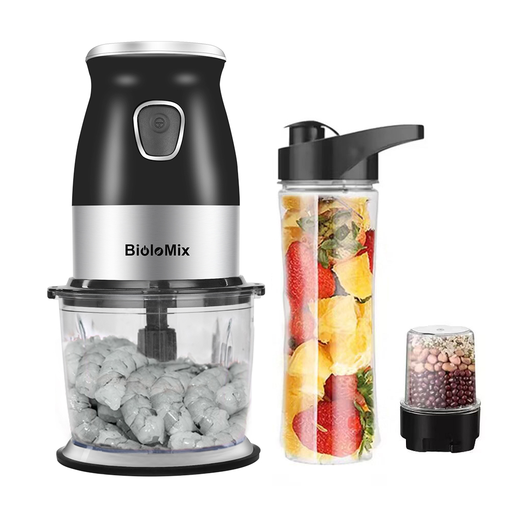
BioloMix BM816 stand mixer
The product description mentions mixing batter and whipping cream. The product name specifies a 500 W motor and one-button operation.
View at Joybuy
 No image available
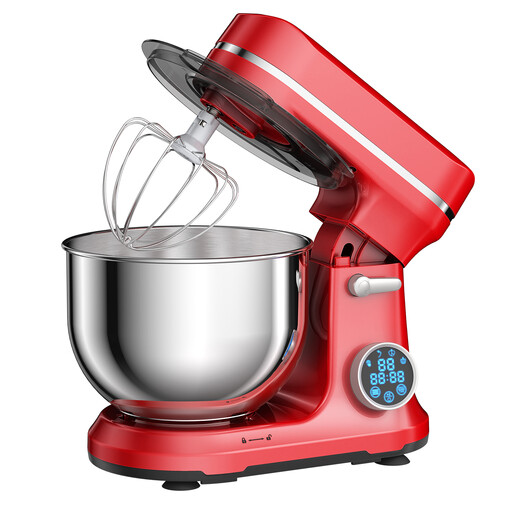
BioloMix BM602E stand mixer, red
The product description mentions cake batter and removable dishwasher-safe parts. The product name specifies a 5 l bowl and 11 speeds.
View at Joybuy
 No image available
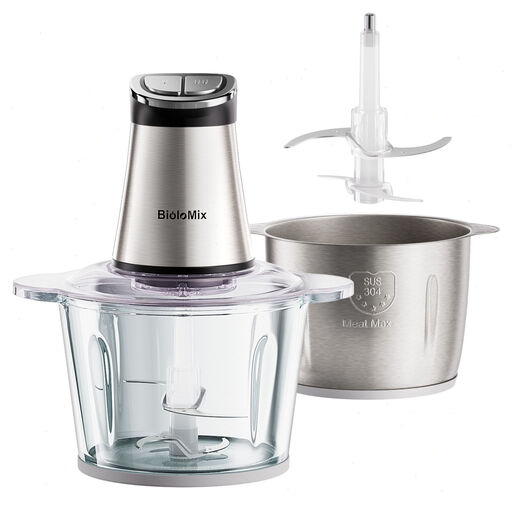
BioloMix AMJ501 stand mixer
The product description mentions mixing batter. The product name specifies a 3 l bowl, two speeds and a 300 W motor, and describes the appliance as easy to clean and dishwasher-safe.
View at Joybuy
 No image available
AUCMA stand mixer, 5 l
The product description mentions a beater for batter and cake. The product name specifies a 5 l bowl, ten speeds, a whisk, dough hook and beater; the stated dimensions are 35,4 × 22,5 × 29,6 cm.
View at Joybuy
Frequently asked questions
Do I need a food processor or a stand mixer for lemon cake?
For mixing batter, a kitchen mixer with a bowl and whisk or beater is better suited to the task; a food processor is mainly designed for slicing, grating and chopping. Check which mixing attachment comes with your chosen mixer and whether it suits your recipe.
How do I use and clean a mixer in a shared kitchen?
Position the mixer with enough space to fit and remove the bowl. Follow the cleaning instructions for each removable part of the exact model, as accessories aren’t dishwasher-safe with every kitchen machine.
Should I buy extra cover in case my mixer breaks?
Not automatically. ACM ConsuWijzer explains that statutory guarantee in the Netherlands depends on what you could reasonably expect from the product with normal use; there isn’t simply the same fixed two-year period for every mixer. Compare any additional cover with your statutory rights.
What product safety rules apply to a mixer in the Netherlands?
Electric mixers that fall within the scope of EU low-voltage rules must meet the applicable safety requirements and carry the CE marking. Bowls and mixing parts that come into contact with batter are also covered by EU rules on food contact materials. EUR-Lex sets out the low-voltage rules, while the European Commission explains the rules on food contact materials; check the documentation for the exact model.


