
Jam biscuit baker
KitchenAid says its flat beater is suitable for biscuit dough. Check which beater comes with the model you’re considering.


For jam biscuit dough, choose a stand mixer that comes with a flat beater or K-beater suitable for biscuit dough. Don’t choose based on wattage or bowl capacity alone. Then compare your recipe quantity with the stated dough capacity, and choose a size that suits the space you have for using and storing the machine.
KitchenAid says its flat beater is suitable for biscuit dough. Check which beater comes with the model you’re considering.
Consumentenbond describes food processors as appliances for baking tasks. Compare your recipe quantity with the manufacturer’s stated dough capacity; bowl capacity alone won’t tell you how many biscuits you can make.
Kenwood describes the Go as compact. Check the dimensions of the model you’ve chosen and whether it comes with the beater you need.
Consumentenbond describes a dough hook as suitable for kneading heavy bread dough for extended periods, while KitchenAid says its flat beater is suitable for biscuit dough. So start with the beater, then consider portion size, space and cleaning in line with how you plan to use the mixer.
| What to consider | What to check before buying | Who should pay particular attention? |
|---|---|---|
| Mixing biscuit dough | Check that the flat beater or K-beater is included with the model you’ve chosen and is suitable for your dough. | If I mainly make jam biscuits, I want a beater that’s right for that dough. Around 36% of consumers mainly consider how well a mixer handles biscuit dough. |
| Portion size | Compare the quantity of ingredients with the applicable dough capacity stated by the manufacturer, as well as the bowl capacity. | For a shared lunch, I want to mix my recipe quantity without mistaking the bowl’s capacity for the number of biscuits it will make. Around 29% of consumers mainly consider portion size. |
| Worktop and storage space | Measure the space available and compare it with the mixer’s external dimensions. | If I have limited space on my worktop or in my cupboard, I want to know in advance where I can use or store the machine. Around 21% of consumers mainly consider size and storage space. |
| Cleaning and accessories | Check which parts are included, how they should be cleaned and whether separate beaters are compatible with the model. | After baking, I want to know which parts need to be washed by hand and whether I need to buy a suitable beater. Around 14% of consumers mainly consider maintenance and accessories. |
Wattage and bowl capacity alone won’t tell you whether a beater is suitable for biscuit dough or how much of your recipe will fit in the bowl.
Check the beater first, then compare your recipe with the stated dough capacity and bowl capacity.
Kenwood says that Chef accessories don’t fit the Go KZM35. So an accessory for a different range may not be suitable for your mixer.
Check the full model number and compatibility information before choosing a separate accessory.
An accessory bought separately that doesn’t fit cannot be used with the intended machine.
Bowl capacity and included parts can vary between versions. And the stated capacity isn’t a direct measure of how many biscuits you can make.
Check the exact model number, box contents and manufacturer’s specifications before deciding.
KitchenAid Netherlands says its flat beater is suitable for biscuit dough. For the Artisan 5KSM175PSECA, KitchenAid lists several beaters and two bowls.
Kenwood describes the Go and Chef as separate ranges. For the Go KZM35.000RD, Kenwood lists a 4-litre bowl; certain Chef models are listed with a K-beater for pastry and shortbread.
Bosch Netherlands lists a 3,8-litre bowl and a maximum dough capacity of 2,0 kg for the MUMS2VM00.
KitchenBrothers lists a 6-litre bowl, a timer and several included beaters for article KB1000790.
Smeg Netherlands lists a 4,8-litre bowl with a flat beater, whisk and dough hook for model SMF03DGEU.
These stand mixers suit different priorities around biscuit dough, portion size and available space. Check which beater comes with the version you choose and its stated dough capacity; bowl capacity alone won’t tell you how many biscuits it will make. According to the Netherlands Food and Consumer Product Safety Authority, CE marking is compulsory for electrical products. Check the marking and product documentation for the item you buy.
 No image available
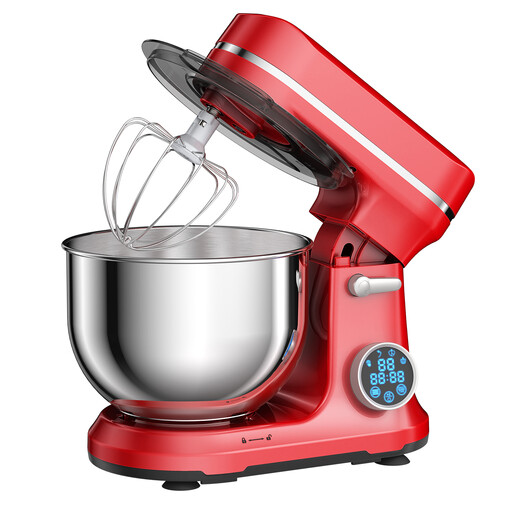
The product description mentions mixing thick biscuit dough; check whether the included beater is suitable for your recipe.
The product name lists a 5 L capacity, 11 speeds and a 1200 W motor.
 No image available
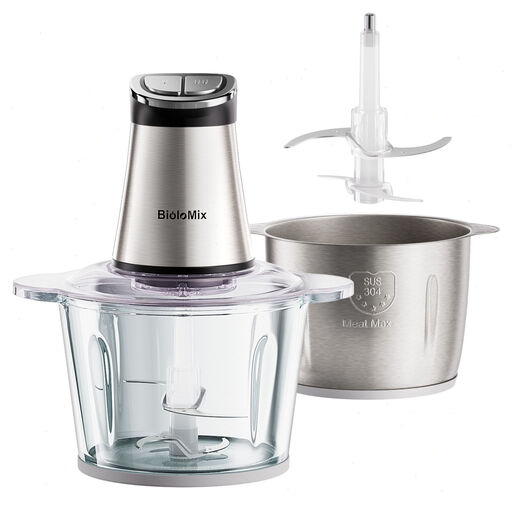
The product details mention mixing, whisking and kneading; compare the listed parts with the beater your biscuit recipe calls for.
The product name lists a 3 L capacity, two speeds and a stainless-steel 4-wave blade.
 No image available
The product details list a mixing beater, dough hook and whisk; check which beaters are included with the version you choose.
The product name lists a 5 L bowl and 10 speeds.
 No image available
The product listing mentions a K-beater for biscuit dough, as well as a whisk and dough hook.
Check the full model number and box contents if you specifically need these beaters.
 No image available
The product details list a K-beater, whisk and dough hook; compare the model number and box contents with what your recipe needs.
Also check that the machine will fit where you plan to use or store it.
Start with your recipe and the mixer’s instruction manual. KitchenAid says its flat beater is suitable for biscuit dough; Kenwood says a specific Chef K-beater is suitable for pastry and shortbread. That doesn’t mean you automatically need a bread dough hook for jam biscuits.
Switch off the mixer and unplug it before cleaning. Kenwood says the Go’s bowl is dishwasher-safe, while the K-beater, whisk and dough hook should be washed by hand. For other models, follow their own instruction manual.
Voedingscentrum advises against eating raw biscuit dough, as raw eggs and flour may contain harmful bacteria. Baking kills these bacteria.
If there’s a fault, contact the seller to resolve the issue; the Dutch Government describes this as part of your right to a product that meets the required standards. For a standard distance purchase from a business, you’ll generally also have a 14-day cooling-off period. This statutory right is separate from any manufacturer’s warranty.
Yes. The Netherlands Food and Consumer Product Safety Authority says CE marking is compulsory for electrical products. This requirement doesn’t prove that a specific item for sale has the marking; check the marking and product documentation for the version you buy.