
Organisers of group batches
You want to make enough batter for several participants in one batch. So, compare the recipe weight with the exact model’s stated cake batter capacity.


Start by weighing the batter for one planned batch and comparing it with the exact model’s stated cake batter capacity. Bowl capacity alone won’t tell you how much cake batter it can hold. Then choose a suitable mixing attachment, and consider the number of batches, cleaning involved and the space the mixer takes up. A larger machine could save you batches, while smaller batches may be more practical if participants take turns mixing.
You want to make enough batter for several participants in one batch. So, compare the recipe weight with the exact model’s stated cake batter capacity.
You have participants work in smaller batches and need controls and mixing attachments that suit the batter.
You prepare several batches in a row and want to plan ahead for cleaning the bowl and attachments, as well as the available worktop space.
First, weigh the recipe for each batch and check the capacity for cake batter of the exact model. Then consider the attachments, controls, cleaning and the space the machine takes up.
| What to consider | What should you check? | Who should give this more weight? |
|---|---|---|
| Batter per batch | Weigh the full recipe and compare it with the exact model’s stated cake batter limit; don’t confuse this with the bowl capacity. | If you want to make batter for a group in one go, the amount per batch is your top priority. Around 31% of consumers put batch size first. |
| Mixing cake batter | Check which attachment is included and how to adjust the speed; don’t assume a dough hook is the right attachment for cake batter. | If participants will be mixing for themselves, you’ll want the chosen attachment and controls to suit the way they’ll work. Around 31% of consumers give ease of mixing top priority. |
| Changeovers and cleaning | Check the dimensions, available worktop space and cleaning instructions for the bowl and individual attachments. | When you’re running several batches in a row, the set-up and time needed for cleaning matter. Around 23% of consumers prioritise easy changeovers and cleaning. |
| Purchase and servicing | Check which attachments are included and what servicing and warranty terms apply to your chosen model and intended use. | If you want to know what to expect for parts, maintenance and servicing, these terms are important. Around 15% of consumers put purchase and servicing at the top of their list. |
Manufacturers may list both the bowl capacity and a separate maximum cake batter capacity for the same model. These figures measure different things.
Weigh your recipe for each batch and check the cake batter limit for the exact version.
Cleaning instructions can vary between parts, and accessories aren’t always dishwasher-safe.
Check the instructions for the bowl and every included attachment before planning your workshop batches.
Mixing specifications don’t tell you about the obligations that may apply if an organiser runs a food business.
Check separately whether the workshop falls under those business rules, and review the terms of use and warranty for your chosen mixer.
The Chef XL KVL4100S is worth comparing if you want to make one larger batch of batter.
The Serie 4 MUM58720 is worth comparing for smaller, individual batches of batter.
The Artisan 5KSM125EMH is worth considering if you’re weighing up a tilt-head design and the included mixing attachments.
These products are suited to mixing and preparing batter with a stand mixer or food processor. Compare the listed features with your recipe, workshop set-up and intended use. A stated bowl capacity isn’t automatically the same as a cake batter limit.
 No image available
The product information describes a food processor with a mixing arm and baking set. These features may be useful for mixing during a workshop.
According to the product information, the bowl has a capacity of 3.9 litres. The stated maximum of 2.7 kg refers to kneaded dough, not a specified cake batter limit.
The product information describes the appliance as intended for domestic use; bear this in mind when considering how you plan to use it in your workshop.
 No image available
The product information lists a beater for batter and a whisk; check that the included attachments suit your recipe.
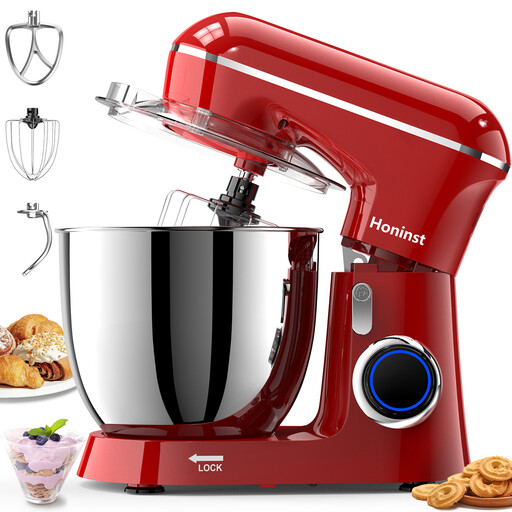
The title specifies a 5-litre bowl and 10 speeds. The product information also mentions a tilt-head design and dishwasher-safe accessories.
 No image available
The product title lists a mixing hook, whisk and beater for different mixing tasks.
The title specifies a 6.5QT bowl and 10 speeds. The product information also mentions a tilt-head design and a splash guard.
The product information limits use to normal quantities and durations for domestic use.
 No image available
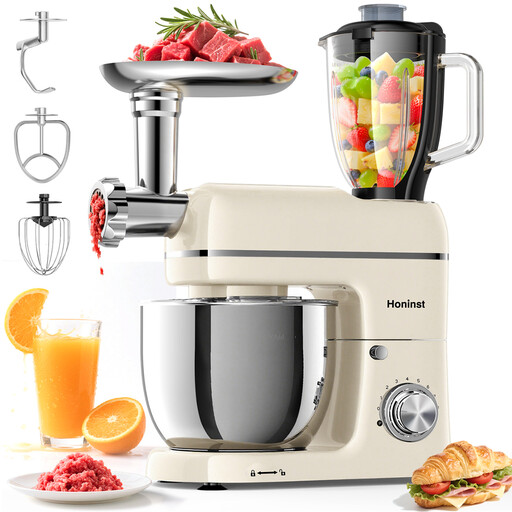
The product title lists a beater, whisk and dough hook; the product information describes mixing, kneading and whisking.
The title specifies a 6.5 QT bowl and 8 speeds. The product information also mentions integrated scales for the mixing bowl and a safety switch that turns off the motor when the head is raised.
The product information limits use to normal quantities and durations for domestic use.
 No image available
The product information lists a K-beater for batter, a whisk and a dough hook.
According to the product information, the bowl has a capacity of 6.7 litres. The stated dimensions are 38,5 × 28 × 34,5 cm; bear these in mind when planning your workspace.
The product information states that the appliance is not intended for children under 8. Children aged 8 and over may use it only under close supervision and after receiving instructions.
No. Compare the recipe weight with the exact model’s stated cake batter capacity, if one is given. For example, Bosch lists both a 3.9-litre bowl and a maximum cake batter capacity of 2.7 kg for the MUM58720.
Check the cleaning instructions for each part, as accessories aren’t always dishwasher-safe. Allow time to clean the bowl and attachments before the next batch begins.
It’s not recommended. According to the Voedingscentrum, raw egg and flour in cake batter can contain harmful bacteria. Don’t let participants sample raw batter, and make sure they wash their hands after handling it.
The Netherlands Food and Consumer Product Safety Authority (NVWA) states that food businesses must register. For businesses that prepare, process or sell food, the NVWA explains that they must follow a food safety plan based on HACCP; an approved hygiene code can be used for this. Whether these requirements apply to your workshop depends on the organiser’s activities.