
Baking for a large group
You want to divide the full recipe into as few suitable kneading batches as possible, so you compare the dough limit for the exact model.


First, weigh all the ingredients in your full dough recipe and compare the total with the stated capacity for the exact mixer model. A higher dough capacity may mean you need to plan fewer kneading batches. Weighing or proving functions may also suit your preparation, while a model for smaller quantities can be more practical if you have time to divide the dough. Bowl capacity, flour weight and limits for yeast dough or cake batter are not interchangeable.
You want to divide the full recipe into as few suitable kneading batches as possible, so you compare the dough limit for the exact model.
You want to add the butter gradually and plan kneading and proving carefully. Capacity matters, as do the controls and suitable attachments.
You can divide the dough into portions in advance, so you also consider the mixer’s dimensions, access to the bowl and its suitability for other baking tasks.
| What to consider | What should you check? | Who should pay particular attention? |
|---|---|---|
| Dough capacity per batch | Weigh all the ingredients on the same basis and compare the dough weight with the limit for the exact model. Don’t use bowl capacity or a flour or cake-batter limit as a substitute for a dough limit. | If I’m baking for a large group, I want to know in advance how much dough fits in one batch and how many batches I’ll need to plan. Around 33% of consumers prioritise dough capacity per kneading batch. |
| Handling enriched dough | Check that the correct dough hook is included and follow the quantity and usage instructions for your recipe and model. | If I’m adding butter gradually and coordinating kneading and proving, I want to be able to plan my process carefully. Around 27% of consumers prioritise features for enriched dough. |
| Worktop space and other uses | Compare the appliance dimensions, clearance above the head, access to the bowl and included attachments. | If my worktop space is limited and I want to use the mixer after the gathering too, I weigh up space and versatility against extra kneading batches. Around 20% of consumers prioritise worktop space and use beyond the event. |
| Cleaning and servicing | Check the cleaning instructions for each part and distinguish the manufacturer’s warranty from your rights with the seller. | If I want to clean the bowl and tools after a large baking session and may need suitable servicing later, I look at maintenance and repair options. Around 20% of consumers prioritise these points. |
Bowl capacity and the maximum amount of dough are different specifications. Bosch Nederland lists separate maximum quantities for yeast dough and cake batter for the MUM58L20. KitchenAid Nederland gives a maximum flour weight for the 5KSM125 family covered in this guide.
Compare like with like, and check the manual for your exact model and recipe.
Consumentenbond distinguishes between brief mixing or kneading light dough and kneading firm bread dough for longer periods.
Check that the appliance has a suitable dough hook and a useful capacity specification for your quantity.
Additional cover isn’t automatically necessary: according to the Rijksoverheid, a manufacturer’s or seller’s guarantee supplements your statutory rights.
Check what extra cover is offered and keep your proof of purchase in case you need to contact the seller.
The Chef XL KVL4110S and Titanium Chef Patissier XL KWL90.034SI reviewed here each have a stated dough capacity for larger quantities.
The MUM58L20 is worth comparing if the stated yeast dough quantity per batch suits your plans and you want to use the mixer for other baking tasks too.
According to KitchenAid, the Artisan 5KSM125EMH has a tilting head and comes with tools for kneading, mixing and whisking.
This selection includes stand mixers and a dough maker for kneading dough. For enriched dough, check the capacity and usage limits for the exact model.
 No image available
The product information says it can knead bread dough; check that the stated bowl capacity suits your quantity.
5,5 l bowl, 11 speeds and a 4,5-inch LED touchscreen.
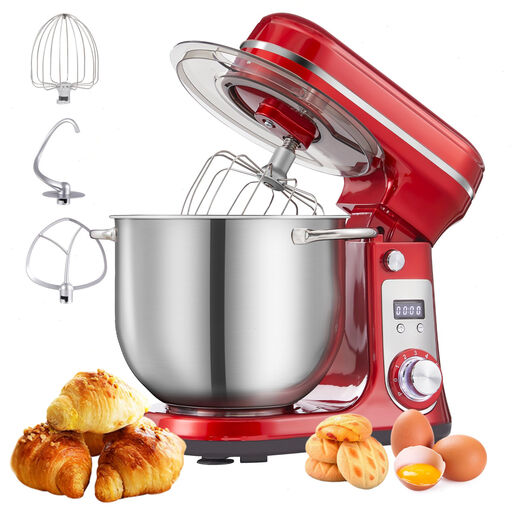 No image available
A tilting head can be useful if you want to reach the bowl while kneading; follow the instructions for your dough.
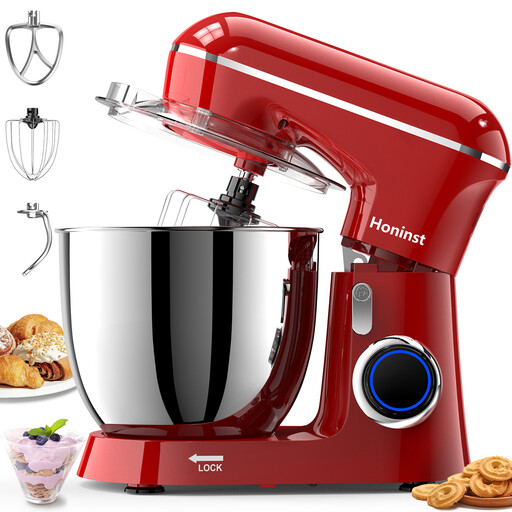
6 l bowl, 1200 W motor, LCD screen with timer, 6 speeds and a pulse setting.
 No image available
The product name mentions a dough hook, and the product information refers to bread and pizza dough.
5 l bowl, 10 speeds and a pulse setting; the product name also lists a 400 W motor.
 No image available
The dough hook and tilting head are useful if you want to knead dough and easy access to the bowl matters to you.
6.5QT bowl and 10 speeds. According to the usage information, when kneading heavy yeast dough, use the mixer for no more than 10 minutes at a time, then let it cool for at least 15 minutes.
 No image available
Worth considering if you’re looking for a model with automatic kneading and resting functions.
5 l bowl; the product information lists a dough capacity of 2,5 kg. Check that this specification suits your recipe.
No. Compare the weight of your full recipe with the relevant dough or ingredient limit for the exact model. Bowl capacity in litres, flour weight in kilograms, yeast dough weight in kilograms and cake batter weight in kilograms are different measures.
Follow your recipe and the instructions for your mixer. A brioche recipe from KitchenAid Nederland adds softened butter a spoonful at a time after an initial kneading stage; it also includes proving and a long chill. These are recipe instructions, not a general requirement for every brioche.
Check the cleaning instructions for the specific bowl and attachments. In the Netherlands, the seller is your point of contact if a consumer product is faulty. According to the Rijksoverheid, there is no fixed statutory guarantee period; a manufacturer’s guarantee is an addition, not a replacement for your rights with the seller.
It depends on how the event is organised. The Dutch Food and Consumer Product Safety Authority outlines food safety rules for selling food at events, including sales by private individuals, and requires a food safety plan from anyone who prepares and sells food several times a year. Businesses offering food to consumers must provide information about allergens present. Whether these sales rules apply to a one-off, free neighbourhood coffee morning depends on the circumstances.