What should you look for when buying?
First, work out how much dough you’ll make per mixing session, then compare it with a limit measured on the same basis, such as total dough weight or flour weight.
| What to consider |
What should you check? |
Who is this important for? |
| Capacity for the party quantity |
Work out the dough weight per mixing session and compare it with the dough limit for the exact model. Only compare flour weight with a flour limit. |
If I’m making several focaccias for a party, I want to know whether the dough will fit in one go or needs to be made in batches. Capacity for the party batch is the top priority for around 36% of consumers. |
| Sticky dough and kneading instructions |
Check whether a dough hook is included, and follow the speed, kneading time and maximum load specified in the manual. |
If my focaccia dough is sticky, I want a dough hook and instructions I can follow for my own machine. Around 29% of consumers prioritise handling sticky dough. |
| Using the mixer after the party |
Check which attachments come with the exact version and whether they’re suitable for your other baking tasks. |
If I want to use the mixer after the party too, mixing and whisking matter alongside kneading dough. Around 21% of consumers particularly value this wider range of uses. |
| Space and size |
Compare the dimensions with your worktop and storage space. At the same time, check that the dough limit suits your batch sizes. |
If my kitchen has limited worktop or storage space, I want to know whether the mixer will be practical to keep out and put away. Around 14% of consumers prioritise a suitable size. |
Stand mixers on Joybuy
These models are options to compare for mixing focaccia dough, from smaller portions to larger batches. For each model, check the dough limit and instructions for the exact version.
 Image unavailable
Bosch MUMS2AW00 stand mixer
Consider this model if you can divide the party quantity into batches and want to use the mixer for mixing and whisking too.
The product information lists a maximum dough quantity of 1,7 kg and a dough hook, whisk and beater.
View on Joybuy
 Image unavailable
AUCMA stand mixer, 6 L, black
The dough hook makes this an option to consider if you want to make other baked goods as well as focaccia dough.
The product information lists a 6 L bowl, 6 speeds, a dough hook, whisk and beater. Continuous use is limited to a maximum of 6 minutes; follow the recommended rest period.
View on Joybuy
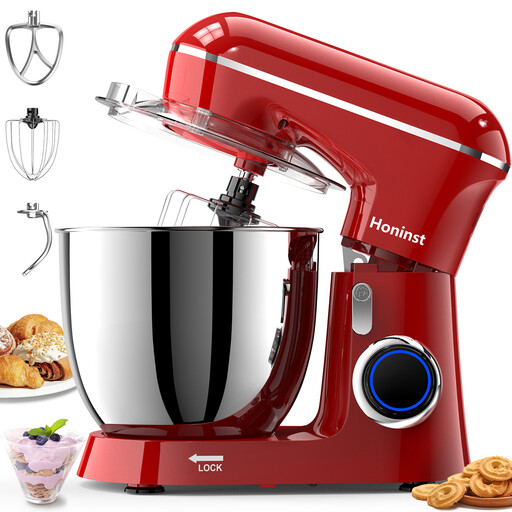 Image unavailable
Honinst stand mixer, 6.5QT, 10 speeds
Consider this model if you’re looking for a dough hook and want to adjust the kneading time to suit the machine’s instructions.
The product information lists a dough hook, whisk and beater. For heavy yeasted dough, it specifies a maximum of 10 minutes of continuous kneading, followed by at least 15 minutes to cool down.
View on Joybuy
 Image unavailable
Kenwood Chef XL KVL4110S, silver
Consider this model if you want to compare a larger batch of dough with the stated limit for this exact mixer.
Kenwood specifies a dough capacity of 2,42 kg for the KVL4110S. The product information lists a 6,7-litre bowl, a dough hook, K-beater and whisk.
View on Joybuy
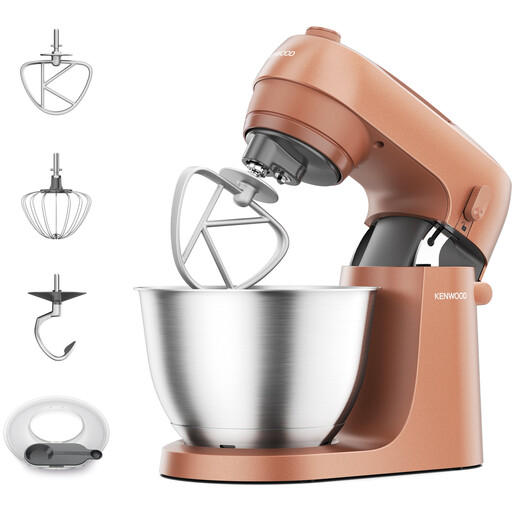 Image unavailable
Kenwood Go KZM35, red
This version is worth comparing if you make smaller batches and want a mixer that’s equipped for other baking tasks too.
The product information lists a maximum dough quantity of 1,4 kg, a 4-litre bowl and 6 speeds. The set includes a dough hook, whisk and K-beater; the stated dimensions are 33,5 × 18 × 30 cm.
View on Joybuy
Frequently asked questions
How can you tell whether there’s enough room for all the guests’ focaccia in one go?
Add up the ingredients in your recipe for one mixing session, then compare the result with a limit measured on the same basis: total dough weight with a dough limit, or flour weight with a flour limit. Rutger bakt’s focaccia recipe uses 500 g of flour, 340 ml of water and other ingredients per baking tin of approximately 25 × 35 cm. Scale the recipe up for the number of tins you need, while staying within the instructions for the exact mixer model.
Should you add extra flour to make sticky focaccia dough firmer?
Not just because the dough is sticky: according to Rutger bakt, sticky dough is part of the focaccia recipe, and using a mixer with a dough hook is one option. Also follow the speed and kneading instructions for your own machine; KitchenAid recommends speed 2 and a limited kneading time for yeasted dough in its mixers.
How should you clean the mixer after the party?
Check the manual for the bowl and each attachment before putting anything in the dishwasher. Kenwood warns that older Chef attachments with a non-stick coating aren’t dishwasher-safe; this warning doesn’t automatically apply to other attachments or brands.
What if the mixer turns out to be faulty under normal use?
According to the Dutch government, you’re entitled to a product that works properly in the Netherlands, and the seller must resolve any problem with a faulty product. There’s no fixed statutory warranty period of two years; a manufacturer’s warranty is in addition to your legal rights.
Which product safety requirements apply when buying in the Netherlands?
Business.gov.nl, the Dutch government’s business portal, explains that manufacturers of electrical equipment must meet the relevant European requirements. After confirming that the equipment meets these requirements, the manufacturer must apply the CE marking and draw up an EU Declaration of Conformity. A CE logo on its own doesn’t indicate how mixers compare in quality.


