
Baker making several picnic-sized portions
You regularly make more than one focaccia and want to know whether your planned batch falls within the capacity specified for the model.


Start with the amount of flour or dough in your recipe, then compare it with the capacity stated for the exact model. Kilograms of flour and kilograms of yeast dough are not the same thing. A compact model may suit a single batch and a small worktop, while an explicit dough capacity is more relevant if you regularly make larger batches. But that alone doesn’t guarantee better focaccia.
You regularly make more than one focaccia and want to know whether your planned batch falls within the capacity specified for the model.
You want a stand mixer with a suitable dough hook and useful instructions for a standard recipe-sized batch.
You make smaller batches and want a machine that’s easy to put away after baking.
Suitable for: usually making one batch at a time and having limited worktop or storage space. Kenwood describes the Go KZM35.000GY as compact and lists a 4-litre bowl.
Trade-off: a smaller machine isn’t automatically suitable for a double batch; bowl capacity isn’t the same as dough capacity.
Suitable for: making focaccia as well as batters and other mixtures, with a dough hook included. Bosch lists a maximum of 1.9 kg of yeast dough for the MUM58L20; KitchenAid lists a maximum of 1 kg of flour for the Artisan 5KSM125.
Trade-off: the manufacturers use different units, and these figures aren’t a direct comparison of focaccia performance. Don’t compare them as if they measure the same limit.
Suitable for: regularly making several focaccias at once. Ankarsrum lists a 7-litre bowl and a maximum dough capacity of 5 kg for the Assistent Original AKM6230.
Trade-off: the manufacturer’s stated capacity doesn’t prove that small batches or wet focaccia dough will knead better. Also consider whether you’re comfortable using a dough roller and dough knife.
| What to consider | What to check before buying | Who does this matter to? |
|---|---|---|
| Dough capacity | Compare the amount in your recipe with the figure stated for the exact model. Keep flour and finished dough separate. | If I’m making several picnic-sized portions, I want to know whether the whole batch will fit in one go. Around 36% of consumers prioritise capacity for their planned dough batch. |
| Dough hook and instructions | Check which attachments are included and follow the speed and kneading times in your appliance’s manual. | If I’m choosing a mixer mainly for focaccia dough, I’m looking for a suitable dough hook and clear instructions. Around 29% of consumers give kneading the highest priority. |
| Worktop and storage space | Measure the space on your worktop or in your cupboard, and leave room to fit and remove the bowl. | If I usually make a smaller batch, I want a mixer that’s easy to get out and put away. Around 21% of consumers put saving space first. |
| Other functions and after-sales support | Check which whisk or mixing attachment is included, and consider any extra warranty alongside your statutory rights. | If I want to use the machine for other recipes too, I look at the attachments and after-sales support. Around 14% of consumers prioritise versatility and after-sales service. |
A manufacturer’s capacity figure for yeast dough may differ from the one for cake batter. KitchenAid lists a limit in kilograms of flour for the Artisan 5KSM125; this can’t be directly compared with kilograms of finished dough.
Compare your recipe with the capacity stated for the exact model and the same type of dough. Litres and watts aren’t a substitute for this check.
If your batch exceeds the permitted dough load, you may need to knead it in smaller portions.
Consumentenbond describes a test using light white bread dough and notes that heavier dough wasn’t tested. This doesn’t provide a model-specific verdict for every focaccia batch.
Read test results in the context of the conditions described, and also check your model’s manual and dough capacity.
For the white Maxima MPM-7L, the product title states a maximum dough capacity of 2 kg, while the specifications table gives 1.5 kg. Maxima also says this model shouldn’t be used for more than 15–30 minutes at a time.
Before buying, ask for confirmation of the dough limit for the exact version and take the stated operating time into account.
An additional warranty doesn’t replace your statutory rights in the Netherlands. According to Rijksoverheid, the retailer is your point of contact if a product is faulty.
Check what additional cover is offered and who to contact if there’s a problem.
Bosch describes the MUM58L20 as having a 3.9-litre bowl and a dough hook included.
Kenwood describes the Go KZM35.000GY as a compact model. According to Kenwood, the Chef KVC3110S has a 4.6-litre bowl and three mixing attachments.
KitchenAid describes the Artisan 5KSM125 as coming with a whisk, beater and dough hook.
The Assistent Original AKM6230 is worth comparing if you regularly make larger dough batches and are open to using its particular method.
The white MPM-7L is a planetary mixer supplied with a dough hook.
Joybuy product picks for stand mixers used to knead dough, with listed features that may also suit other mixing tasks.
 No image available
The product information lists kneading as a function. Check whether the included attachments suit your recipe.
The product name specifies a 5.5-litre bowl, 11 speeds, a 4.5-inch LED touchscreen and an all-metal construction.
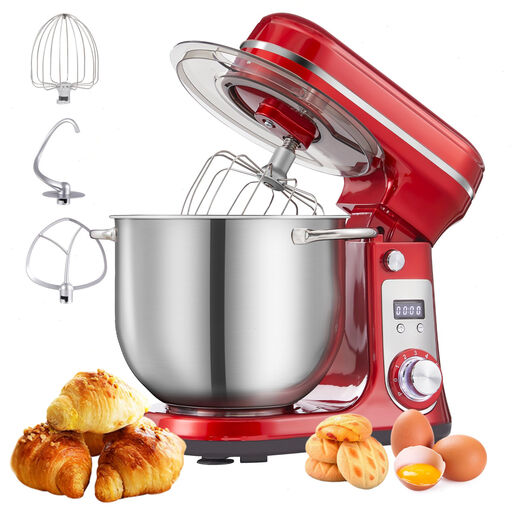 No image available
The product information mentions dough preparation and a tilt-head design. Check the dough limit and included attachments for your recipe.
The product name specifies a 6-litre bowl, a 1200 W motor, six speeds and a pulse setting.
 No image available
The product information mentions a dough hook and kneading. Check the instructions and dough capacity for your recipe.
The product name specifies a 5-litre bowl, 10 speeds and a 400 W motor. The product information also mentions a whisk and beater.
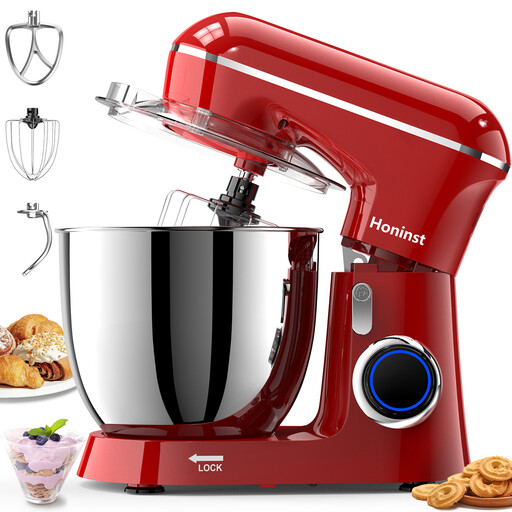 No image available
The product information mentions a dough hook for kneading. Check that the maximum dough capacity is suitable for your focaccia recipe.
The product name specifies 10 speeds. The product information also mentions a whisk and beater.
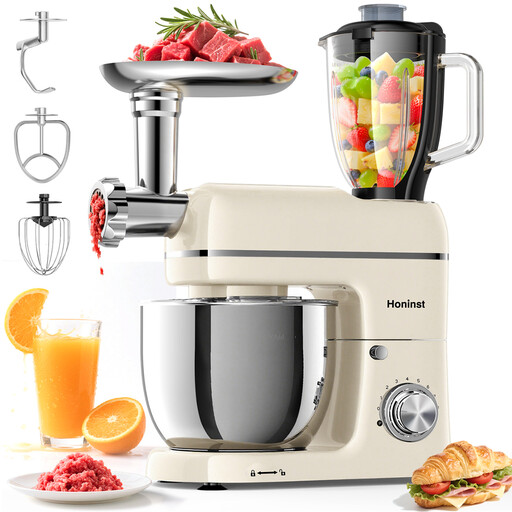 No image available
The product information mentions a dough hook for preparing dough. Check which attachments are included with the exact version.
The product name specifies 8 speeds. The product information also mentions a blender, meat grinder, beater and whisk.
Not for the same kneading task. Consumentenbond describes a stand mixer with a dough hook as suitable for extended kneading, while a food processor is mainly designed for slicing, grating and chopping. Choose according to the instructions and dough capacity of the specific appliance.
KitchenAid’s own focaccia recipe uses speed 1 to briefly mix the dry ingredients, then speed 2 for four minutes of kneading. This is an example for that recipe, not a general setting for other brands. Follow your mixer’s manual and don’t exceed the model’s limit.
According to Rijksoverheid, purchases made remotely from a business generally come with a 14-day cooling-off period. There are exceptions, and the government distinguishes between buying from a business and buying from a private seller. Check which terms apply to your purchase.
According to Rijksoverheid, there is no fixed statutory warranty period in the Netherlands. You’re entitled to a product that works as it should, and the retailer is your point of contact if there’s a problem. A manufacturer’s warranty or extra warranty may provide additional cover.
The Netherlands Food and Consumer Product Safety Authority states that CE marking is compulsory for electrical products covered by the applicable rules. For electrical equipment covered by low-voltage rules, the stated limits are 50 to 1,000 V AC. Check whether the rules apply to the specific version. A CE marking isn’t an independent comparison of kneading performance.