
Baker catering for several guests
You regularly make more than one batch and want to know in advance how much dough the exact model can handle. Manufacturers such as Bosch and Kenwood state maximum capacities that you can compare with your recipe.


For one tray of focaccia, a mixer with a dough hook can help with sticky dough, but you don’t necessarily need a machine for a recipe that calls for mixing and folding. If you often bake several batches, compare the maximum dough or flour capacity for the exact model with your recipe. Bowl capacity alone doesn’t tell you how much dough the machine can handle.
You regularly make more than one batch and want to know in advance how much dough the exact model can handle. Manufacturers such as Bosch and Kenwood state maximum capacities that you can compare with your recipe.
You want to know whether a dough hook suits your recipe, or whether you’d rather mix and fold the dough. Rutger bakt describes using a mixer with a dough hook for sticky focaccia dough.
You don’t bake often, so you’re weighing up an appliance against the space it takes up and the other baking you could use it for. The Consumentenbond lists the dough hook as a tool for kneading bread dough for longer periods.
| What to consider | What should you look for? | Who is this important for? |
|---|---|---|
| Capacity for guests | Work out the amount of dough and flour in your recipe, then compare it with the maximum for the exact model and type of dough. | If you bake for several guests, you’ll want to know whether your planned batch is within the stated capacity. Around 36% of consumers say capacity for entertaining is their main buying priority. |
| Mixing sticky dough | Choose a recipe first, then check whether a dough hook is included if you want to follow the mixer method. | If you want to do less mixing by hand with sticky dough, choose a recipe that works with a dough hook. Around 29% of consumers prioritise this method. |
| Use beyond focaccia | Think about how often you bake and which included accessories you could use for other baking, too. | If you only make focaccia occasionally, a recipe that doesn’t require a machine may be enough. Around 21% of consumers say the balance between buying an appliance and how often they’ll use it matters most. |
| Space and versatility | Measure the space available and compare it with the dimensions and accessories of the exact model. | If you have limited worktop or cupboard space, you’ll want to know whether the machine is practical to store and can handle other tasks too. Around 14% of consumers prioritise space and versatility. |
Bowl capacity in litres, dough weight in kilograms and flour weight in kilograms are different measurements. Only compare maximum capacities that refer to the same thing, and follow the instructions for your model and recipe.
Alongside capacity in litres, manufacturers sometimes give separate limits for dough or flour, which can vary depending on the type of dough.
Work out the quantities in your recipe and check the stated unit and maximum capacity for the exact model.
Rutger bakt describes using a dough hook for sticky dough, while King Arthur Baking’s recipe uses a mix-and-fold method.
Choose your recipe’s method before deciding whether you need a mixer.
A different model code may refer to a different version or a different set of included accessories.
Before buying, check the full model code and what’s in the box. Don’t assume without evidence that the Kenwood KVL4100S and KVL4110S are the same version.
According to Bosch Netherlands, the Bosch MUM5X720 has a 3.9-litre bowl and a maximum capacity of 1.9 kg of yeasted dough.
The KitchenAid Artisan 5KSM125EER comes with a dough hook, flat beater and whisk.
According to Kenwood, the Chef XL KVL4100S has a 6.7-litre mixing bowl.
Ankarsrum describes the Assistent Original AKM6230 as a machine for larger batches of dough, with a 7-litre bowl.
These Joybuy product picks are stand mixers described in their product information as suitable for preparing dough, from smaller baking jobs to larger batches. Check the model details and manual to see whether a machine suits your recipe and method.
 No image available
The product information mentions dough preparation and a 5.5-litre bowl, making it an option if you’re looking for a stand mixer for dough and other baking.
The title lists 11 speeds and a 4.5-inch touchscreen.
Check the manual for the permitted quantity of dough for your recipe.
 No image available
The product information mentions a dough programme and a 5.5-litre bowl, making it an option if you want to bake more than just focaccia.
The title lists five preset menus and 11 speeds.
Check which programmes and settings suit your recipe.
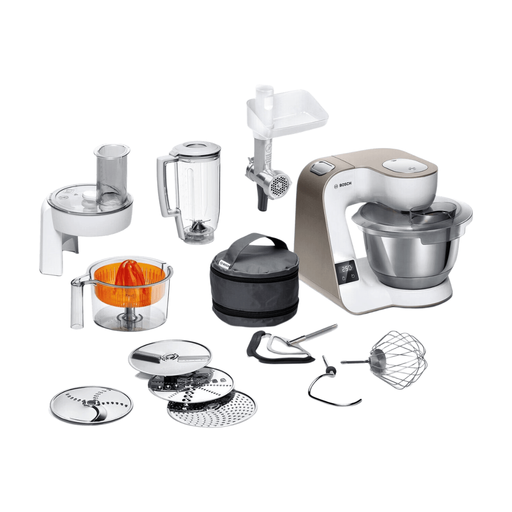 No image available
The product information mentions mixing and kneading; the built-in scale could be useful for weighing ingredients.
The description lists a 3.9-litre bowl and a maximum capacity of 1.9 kg of yeasted dough. This is a product specification, not a focaccia performance test.
Check that the included accessories match the version you’re looking for.
 No image available
The included dough hook makes this an option to compare if you want to use a mixer method for focaccia.
The product information states a maximum dough capacity of 1.7 kg. This is a product specification, not a focaccia performance test.
The description also lists a whisk and beater for other baking.
 No image available
The product information lists a dough hook if you want to knead dough, as well as other mixing accessories.
The title lists a 6-litre bowl and six speeds. According to the user information, the machine must not run continuously for more than 6 minutes without a rest.
Bear this operating limit in mind if your recipe calls for longer mixing times.
No, not for every recipe. King Arthur Baking describes a method that involves mixing and folding, while Rutger bakt uses a dough hook for sticky dough. Follow the steps in the recipe you choose.
Compare the quantity in your recipe with the maximum capacity for the exact model and type of dough. Bosch states a maximum in kilograms of yeasted dough for the MUM5X720, while KitchenAid gives a maximum in kilograms of flour for the 5KSM125 model family. These units aren’t interchangeable.
For a consumer purchase in the Netherlands, you can contact the seller to claim your statutory guarantee rights. According to the Dutch government, there is no fixed statutory guarantee period in the Netherlands; a manufacturer’s guarantee is in addition to your statutory rights.
Check which EU product rules apply to the electrical appliance and whether the required marking and product information are present. The European Union explains that CE marking is only mandatory when applicable harmonised EU rules require it; a CE mark is not a separate approval from a central EU authority.