
Baker making large batches for a sale
You want to make your planned number of rolls or brioches in as few separate batches as possible, so the stated dough capacity is your main consideration.


Choose based on the weight of your recipe per batch, then compare it with the stated dough or flour capacity of the exact model. The bowl capacity in litres alone won’t tell you how much dough you can knead. A larger capacity may mean fewer batches, while a machine designed for smaller batches, with extra bowls or attachments, may be better suited to working through several stages of baking. Manufacturer capacity figures are not independent performance tests using enriched dough.
You want to make your planned number of rolls or brioches in as few separate batches as possible, so the stated dough capacity is your main consideration.
You might be making brioche, for example, and want to know which dough hook, batch size and model-specific instructions suit your recipe.
You also use your machine for batters or whisking, and weigh up the benefits of extra bowls and attachments against the space you have available.
| What to consider | What to check | Which consumers? |
|---|---|---|
| Batch size | Weigh all the ingredients for one batch and compare the total with the dough limit for the exact model. If only a flour limit is given, compare the flour weight separately. | If I want to make lots of rolls at once for a bake sale, the amount of dough I can process per batch matters most. Around 36% of consumers prioritise batch capacity. |
| Enriched dough | Check which dough hook is included and follow the instructions for your exact mixer model and recipe. | For a recipe containing butter and eggs, I want to know which kneading instructions are right for my machine. Around 29% of consumers prioritise handling enriched dough. |
| Other baking tasks | Check which bowls and attachments are included with each model and whether you can swap them during baking. | If I make batters or other bakes as well as dough, useful bowls and attachments are important. Around 21% of consumers prioritise versatility and workflow. |
| Space and future use | Measure the space available for using and storing the machine, and consider whether you’ll continue to use it after the bake sale. | If I need to put the mixer away after the sale, I want to know whether it will fit in my kitchen and be useful for other baking. Around 14% of consumers prioritise space and use beyond the bake sale. |
Manufacturers state capacity in different ways, such as bowl volume, dough weight or flour weight. Mixing up these measurements can lead to a different number of batches than you expected.
Calculate the recipe for each batch using the same measure as the limit stated for the exact model. Don’t use bowl capacity as a substitute for dough or flour capacity.
A product listing may refer to a model range or show a different product category from the one you’re looking for. Parts and specifications can vary between versions.
Before buying, check the full model number, product category, included parts and specifications for the version you’ve chosen.
KitchenAid Netherlands gives different speed instructions in its general yeast dough FAQ and its own brioche recipe.
Follow the manual for your exact model and adapt the recipe steps accordingly.
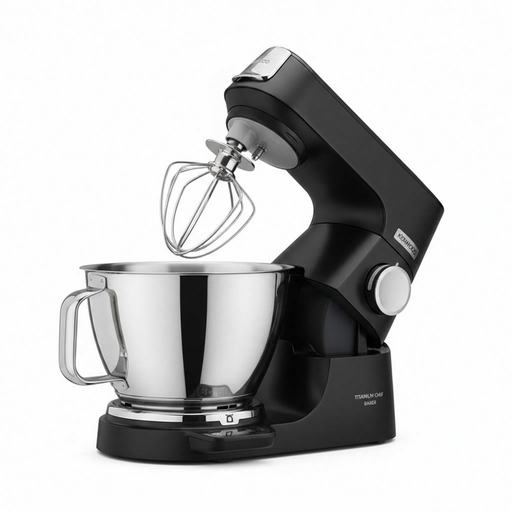
The Titanium Chef Baker XL KVL85.124SI is designed for larger batches and working through several stages of baking.
The Assistent Original AKM6230 is worth considering if you want to make large dough batches at a time.
The MUM58200 is a smaller option if its stated yeast dough capacity suits your recipe batches.
The Artisan 5KSM175PS suits smaller dough batches and separate baking tasks, with two bowls included.
These Joybuy options are designed for making dough, ranging from stand mixers to an automatic dough maker. Before choosing, compare your recipe batch size with the instructions and capacity for the exact model.
 No image available
For anyone who wants to knead dough as well as mix or whisk.
The product title lists a 5.5-litre bowl and 11 speeds.
 No image available
For anyone who wants to make dough as well as prepare other types of baking mixture.
The product title lists 5 preset programmes, a 5.5-litre bowl and 11 speeds. The product description mentions programmes for dough, batter, egg whites and whipped cream.
 No image available
For anyone who wants to knead dough and use a whisk and beater as well as the dough hook.
The product description lists a 6-litre bowl, 6 speeds and a power rating of 450 W. It recommends using the mixer continuously for no more than 6 minutes at a time, without a break.
 No image available
For anyone looking for a dough maker with automatic kneading and resting functions.
The product title lists a maximum dough capacity of 2.5 kg and a 5-litre capacity for family use.
 No image available
For anyone who wants to weigh ingredients in the bowl while baking and prepare other mixtures too.
The product description lists a built-in scale, an extra bowl, a folding function and a power rating of 1200 W. It does not state a maximum dough capacity.
No. Compare the weight of your ingredients per batch with the limit for the exact model. Kenwood states a dough capacity of 2.56 kg for the KVL85.124SI, Bosch states a maximum of 1.9 kg of yeast dough for the MUM58200, and KitchenAid states a maximum of 1 kg of flour for the 5KSM175PS model family. These measurements are not interchangeable.
Follow the manual for your exact mixer and use a suitable recipe. In its general yeast dough FAQ, KitchenAid Netherlands recommends speed 2, while its published brioche recipe also includes a step at speed 4. Don’t assume that a speed or timing from one recipe is a universal instruction for every mixer without checking first.
Yes. The Netherlands Food and Consumer Product Safety Authority (NVWA) says that food sold at markets and events must be prepared, stored and sold safely and hygienically, whether you’re a business or an individual. Tell customers about the relevant allergens, including cereals containing gluten, eggs and milk. How you provide this information depends, among other things, on whether products are prepacked or unpackaged.
It depends on the nature of the sale and who is organising it. The NVWA says a food safety plan is required if you prepare and sell food several times a year, and describes registration requirements for food businesses that sell directly to consumers. Calling it a bake sale alone does not determine whether your activity needs to be registered; check the requirements for your specific arrangement and way of selling.
When you buy as a consumer in the Netherlands, you’re entitled to a product that works properly; there is no fixed statutory guarantee period. The Dutch government says you should contact the seller to resolve an issue with a faulty product. A manufacturer’s guarantee or extended warranty does not replace these rights.