
Yeast doughnut baker
If your recipe makes kneadable yeast dough, look for a suitable dough hook and a stated capacity for yeast dough. A KitchenAid Netherlands yeast doughnut recipe uses a dough hook.


Start with your recipe: kneadable yeast dough needs a dough hook, while batter may need a suitable mixing attachment. For example, KitchenAid Netherlands uses a dough hook in a yeast doughnut recipe. Then compare the recipe weight per batch with the stated capacity for that specific preparation and model, as bowl capacity alone does not tell you how much yeast dough the machine can handle.
If your recipe makes kneadable yeast dough, look for a suitable dough hook and a stated capacity for yeast dough. A KitchenAid Netherlands yeast doughnut recipe uses a dough hook.
If you’re making doughnuts for a school fair, work out the recipe weight per batch and compare it with the capacity for the right type of dough or batter.
If you can make smaller batches, compare the dimensions of the exact model with the space where you plan to use and store the mixer.
First, establish whether your recipe makes dough or batter. Then work out the batch size and check that the appliance will fit in your kitchen and still be useful after the school fair.
| Buying concern | What should you check? | Who is this important to? |
|---|---|---|
| Attachment for your recipe | Check whether the exact model includes a dough hook or mixing attachment suited to your preparation. | If my recipe makes yeast dough or batter, I want to be able to use the right attachment; around 36% of consumers say suitability for their own recipe is their main concern. |
| Capacity per batch | Compare the recipe weight with the model-specific limit for the same type of dough or batter. | For a large school group, I want to know how much of the recipe will fit in each batch and how many batches I’ll need; around 29% of consumers prioritise batch size. |
| Workspace and storage | Compare the dimensions of the exact model with your available work and storage space. | If my kitchen is short on space, I want to know where the mixer can stand while I’m baking and afterwards; around 21% of consumers name workspace as their main concern. |
| Useful after the school fair | See which attachments come with the model and whether you’ll also use them for your usual baking. | If I don’t expect to use the mixer much after the event, I want its features to suit my everyday baking; around 14% of consumers prioritise future use. |
The relevant limit depends on what you’re making. For example, Bosch gives different maximum capacities for yeast dough and cake batter for the MUM58L20.
Weigh or calculate the ingredient quantity per batch, then compare it with the model-specific limit for your type of recipe.
Kenwood describes the KZM35.000GR as an 800 W stand mixer with a 4-litre bowl. A Joybuy product page uses the same model code for a 350 W mini chopper with a capacity of 0.5 litres. So check carefully which product and accessories you’re actually looking at.
Before you buy, compare the full model code, product type and included attachments on the product page.
The NVWA says that the requirement to follow an HACCP food safety plan applies to those who prepare and sell food several times a year. Hygiene and allergen information are also important at events.
Plan how you’ll prepare food safely and make allergen information available. Check whether the specific plan requirement applies based on how often the organiser prepares and sells food.
The MUM5 MUM58L20 has separate stated capacities for yeast dough and cake batter, which helps when planning recipe batches.
The Go KZM35.000GR is a more compact option, while the Titanium Chef Baker XL KVL65.001WH has a higher stated dough capacity.
The Artisan 5KSM125EMH is a medium-sized mixer with attachments for mixing and kneading.
The SMF04BLEU has stated capacities for different preparations and comes with a whisk, flat beater and dough hook.
The products below are listed as stand mixers or dough mixers. Check that the product type, included attachments and capacity of each exact model suit your doughnut recipe.
 Image unavailable
The product information mentions mixing and dough preparation; check that the capacity and included attachments suit your recipe.
Bowl: 5.5 litres. Speeds: 11.
 Image unavailable
The product name describes it as both a dough mixer and a food processor; check that the exact appliance and included attachments are suitable for what you’re making.
Bowl: 4.5 litres. Power: 1300 W. Speed: 6+P.
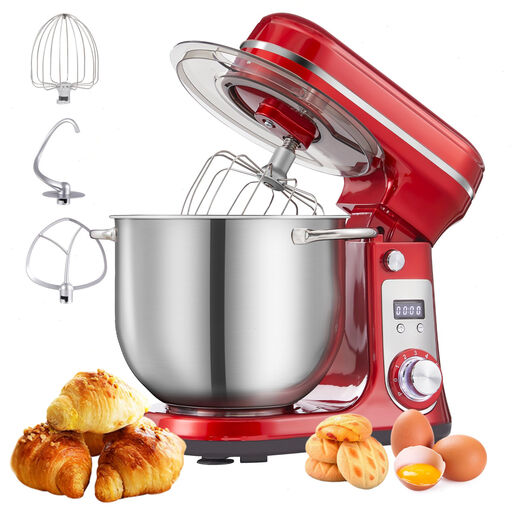 Image unavailable
A stand mixer to consider if you’re looking for a 6-litre bowl; check the suitable quantity and attachments for your recipe.
Bowl capacity: 6 litres. Power: 1200 W.
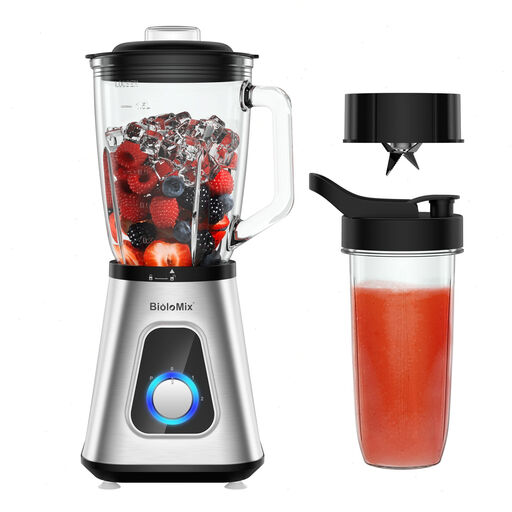 Image unavailable
The product name describes it as a stand mixer, but it also has removable blades; check that the product type and attachments are suitable for mixing or kneading your recipe.
Glass bowl: 1.5 litres. Bottle: 600 ml. Power: 1300 W.
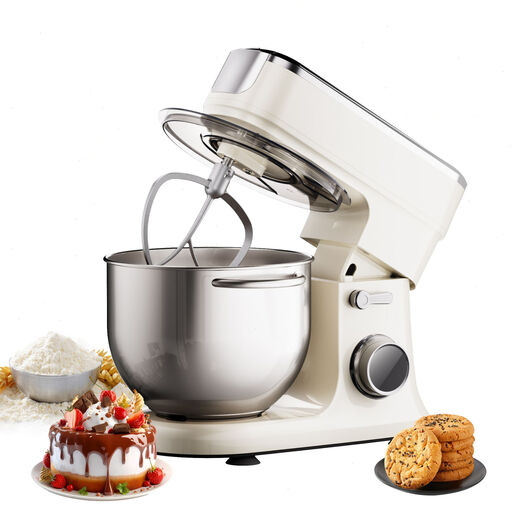 Image unavailable
If you’re looking for a stand mixer with a 7-litre bowl, compare its capacity for your specific preparation and the attachments you’ll need.
Bowl capacity: 7 litres. Power: 1200 W.
No, the right attachment depends on your recipe. A KitchenAid Netherlands yeast doughnut recipe uses a dough hook, while KitchenAid describes a flat beater for cake batter. Check what your recipe needs and which attachments come with the exact model.
First, calculate the ingredient weight per portion and compare it with the manufacturer’s capacity for the same type of preparation and exact model. Bosch lists different maximum capacities for yeast dough and cake batter for the MUM58L20, so don’t use the cake batter limit for yeast dough.
Follow the cleaning instructions for your chosen model and clean any equipment that comes into contact with food thoroughly. The NVWA highlights clean equipment and hand hygiene when food is sold at events; a mixer won’t ensure these practices on its own.
When you buy as a consumer, you’re entitled to a product that meets the terms of the agreement; the Dutch Government says you can contact the seller if there’s a problem. For distance purchases, you generally have a 14-day cooling-off period. Check the terms that apply to your purchase.
Yes. The NVWA says you must consider safe preparation, storage and sale when selling food at events. For unpackaged products, allergen information must be available before someone buys. The NVWA says the requirement to follow an HACCP food safety plan applies to those who prepare and sell food several times a year; don’t assume that this specific plan requirement applies simply because you’re holding one school fair.