
Doughnut batter makers
You’re following a batter recipe and looking for a suitable mixing attachment and enough capacity for each batch.


Start with your recipe: thick batter needs a suitable mixing attachment, while kneadable yeast dough calls for a compatible dough hook and a corresponding dough capacity limit. Then compare the amount you want to make in each batch with the capacity for that particular mixture; bowl capacity in litres doesn’t tell you how much batter or dough the mixer can handle.
You’re following a batter recipe and looking for a suitable mixing attachment and enough capacity for each batch.
You want to divide the recipe into a manageable number of batches, so you compare the stated capacity for batter or dough rather than just the bowl capacity in litres.
You’re making kneadable doughnut dough and need a compatible dough hook and a suitable limit for yeast dough.
First, choose your recipe type and the right attachment. Then compare the amount you’ll make in each batch and consider how much space you have for using and storing the mixer.
| What to consider | What should you check? | Who will find this important? |
|---|---|---|
| Attachment for your recipe | Check whether the exact model comes with a suitable mixing hook or beater for batter, or a dough hook for kneadable yeast dough. | If I’m following a batter recipe, I want to use the right mixing attachment rather than automatically reaching for a dough hook; around 36% of consumers prioritise having the right attachment. |
| Amount per batch | Compare your recipe with the stated maximum quantity for the same type of mixture, rather than just looking at the bowl capacity. | For a neighbourhood get-together, I want to plan in advance how much batter or dough I’ll make at a time; around 29% of consumers prioritise the amount per batch. |
| Kneading yeast dough | Check that the dough hook is compatible with the model and find out what maximum quantity the manufacturer specifies for yeast dough. | If my doughnut recipe calls for kneadable yeast dough, I want to know whether the mixer and dough hook are suitable; around 21% of consumers prioritise kneading yeast dough. |
| Cleaning and storage | Check the cleaning instructions for the bowl and attachments, and look at the machine’s dimensions. | After baking, I want to be able to clean and store the mixer easily; around 14% of consumers prioritise practicality and storage space. |
Manufacturers list bowl capacity separately from the maximum quantities for batter or dough. These figures aren’t interchangeable, and a maximum dough capacity isn’t a maximum for doughnut batter.
Work out the quantity using your recipe, then compare it with the stated capacity for that particular type of mixture.
Some doughnut recipes call for batter, while others make a kneadable dough. That means you may need a different attachment.
Choose your recipe first, then check which attachments are included with the exact model.
A shortened model name doesn’t necessarily tell you the full specification, accessories or product details.
Before buying, compare the full model number, the included attachments and the product details.
For the MUM58359, Bosch lists a 3.9 l bowl, with separate maximum quantities for cake batter and yeast dough.
For the Chef XL KVL4110S, Kenwood lists a 6.7 l bowl and a maximum dough capacity of 2.42 kg.
KitchenAid offers the Artisan 5KSM175PSEFL with a 4.7 l bowl and an additional 3 l bowl.
For the Assistent Original AKM6230, Ankarsrum lists a 7 l bowl and separate capacities for batter and dough.
This selection includes stand mixers for mixing and dough preparation. For each model, compare the suitable attachment and the quantity your recipe requires per batch.
 No image available
The product title describes this model as a dough mixer; check that the included attachments suit your batter or dough recipe.
The title lists a 5.5 l bowl and a metal construction.
 No image available
The product title lists five preset menus, so you can check whether the stated settings are suitable for the preparations you make.
The title lists a 5.5 l bowl and 11 speeds.
 No image available
The listed beater and dough hook may be useful if you switch between batter and kneadable dough; check which attachments come with this model.
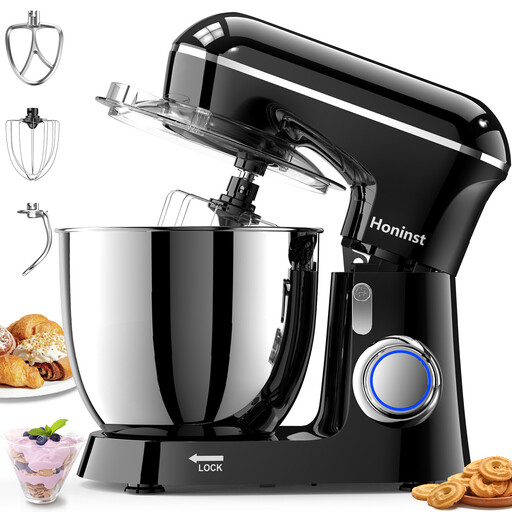
The product title lists a 6 l bowl, three attachments and 450 W. The usage information says not to run the mixer for more than 6 minutes at a time without a rest.
 No image available
The product title lists a beater, whisk and dough hook; check that these attachments suit the recipe you’re making for your get-together.
According to the product information, the mixer is for household use only. When mixing heavy yeast dough, it can be used continuously for a maximum of 10 minutes, after which it must be allowed to cool.
 No image available
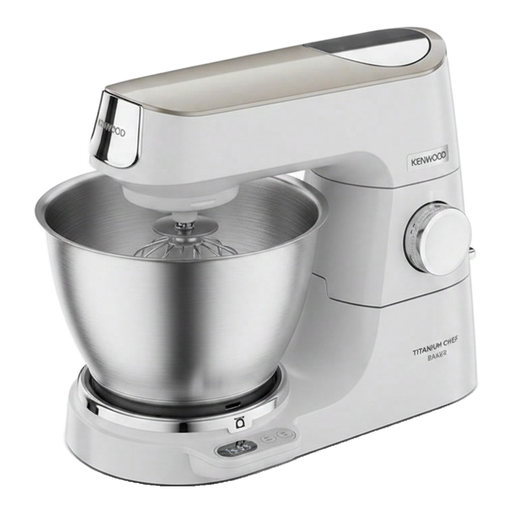
The listed K-beater and dough hook make this model worth considering if you prepare both batter and dough; check which attachments are included with the version on offer.
Follow your recipe: for batter, use a suitable mixing attachment; for kneadable yeast dough, use a compatible dough hook. Check the instructions for your exact mixer and model.
Compare the quantity in your recipe with the maximum specified for that same type of mixture for the mixer. Bowl capacity in litres and batter or dough capacity are different figures; divide the recipe into more batches if needed.
The Netherlands Nutrition Centre advises thoroughly heating dishes containing raw egg, cleaning kitchen utensils properly between uses and keeping dishes made with raw egg in the fridge for no more than 24 hours. It also warns that raw batter can pose a risk to vulnerable groups.
A new stand mixer covered by the applicable Dutch Commodities Act Decree on electrical equipment must carry CE marking. The Netherlands Food and Consumer Product Safety Authority (NVWA) outlines the safety requirements for electrical equipment within the applicable voltage limits. A CE marking alone doesn’t prove that every individual item on offer complies, so check the marking and product information for the exact model.
According to the Netherlands Food and Consumer Product Safety Authority, rules on safe preparation, sale and storage apply when selling at a market or event, including to private sellers. The NVWA says businesses that prepare and sell food several times a year must have an HACCP food safety plan; businesses offering food to consumers must also provide allergen information. First check whether your situation involves selling: these requirements don’t automatically apply to every neighbourhood treat.