
Bakers with limited cupboard space
You want to put your mixer away after use. So measure not only the cupboard opening, but also the space where you’ll use and operate the mixer.


Choose a stand mixer with a beater that the manual says is suitable for cookie dough, and measure both your storage space and the room you’ll need while using it. Then compare your usual batch size with the capacity for the specific model: a smaller mixer may take up less space, but you might need to mix the dough in several batches. Manufacturer capacity figures aren’t based on independent tests using oatmeal cookie dough.
You want to put your mixer away after use. So measure not only the cupboard opening, but also the space where you’ll use and operate the mixer.
You usually make a modest amount and want a suitable attachment without choosing a larger bowl than you need. For example, KitchenAid gives a maximum number of standard cookies for model 5KSM3311X; this isn’t a test using your recipe.
You may want to mix more dough per batch, and weigh this against the extra space a larger bowl or machine needs. Check the capacity for the exact model and your recipe.
| What to consider | What should you check? | Who is this important for? |
|---|---|---|
| Storage and workspace | Measure the cupboard opening and available worktop space. Compare these with the dimensions of the exact model; Kenwood and Bosch publish model-specific measurements. If it has a tilt-head, allow room to operate the mixer too. | If I have limited cupboard space, I want to know that the mixer will not only fit away, but will also be easy to reach while mixing. Around 36% of consumers say storage is their top priority. |
| Attachment for cookie dough | Check whether the model includes a beater, K-beater or flat beater, and consult the manual. Philips says the beater is suitable for cookies on models HR7962/21 and HR7962/01; check the instructions for your own model. | If I’m making oatmeal cookie dough, I want to know which of the included attachments is designed for the job. Around 29% of consumers say having a suitable mixing attachment is their top priority. |
| Batch size and bowl | Compare the quantity of ingredients per batch with the instructions for the exact model. A stated bowl capacity or maximum for another type of dough is no guarantee that it will suit your recipe. | If I’d prefer to mix my usual quantity in one go, I want to weigh the capacity against the space the machine takes up. Around 21% of consumers say the quantity mixed per batch is their top priority. |
| Cleaning and parts | Check which parts are dishwasher-safe and which need to be washed by hand for each model. Also check that replacement attachments are compatible with the full model number. | If I use the mixer often, I want to know which parts need cleaning and whether accessories fit my model. Around 14% of consumers say maintenance and compatible parts are their top priority. |
A mixer may fit in your cupboard but still leave too little room to reach the bowl or mixing head during use.
Measure both the cupboard opening and the clear space on your worktop, including the room above the mixer.
Attachments can have different uses. Philips lists the beater for cookies on specific models and the dough hook for things such as yeasted dough; that guidance doesn’t automatically apply to other mixers.
Check the manual for the exact model and see whether it includes a beater or flat beater.
Kenwood says that Chef attachments don’t fit the Kenwood Go KZM35.
Search for accessories using the full model number and check compatibility before you buy.
A manufacturer’s figures for standard cookies or another type of dough aren’t based on a mixing test using your oatmeal cookie recipe.
Compare the ingredients per batch with the capacity for the exact model, and allow for several batches if needed.
The Go range is worth comparing if you’re looking for a narrow stand mixer with a 4 L bowl.
The MUM Serie 2 MUMS2EW00 is worth comparing if you’re looking for a 3.8 L bowl and included baking attachments.
The tilt-head mixer with a 3.3 L bowl is worth comparing if a smaller bowl is important to you.
This selection includes stand mixers and dough machines with stated bowl, mixing or kneading features. Check which attachment comes with each model and whether its capacity suits your batch sizes.
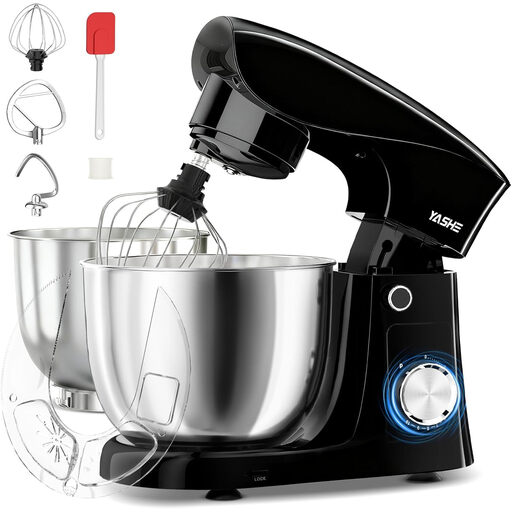 No image available
Worth comparing if storage space is important: the product description says the two bowls nest inside each other.
The title mentions a tilt-head and dough hook; the product description lists 10 speeds and a pulse function.
 No image available
Worth comparing if you’re looking for a range of stated attachments and bowl access via a tilt-head.
The title lists a 4.5 L stainless steel bowl, 1300 W and Speed 6+P. The product description mentions attachments for mixing and kneading.
 No image available
Worth comparing if you’re looking for a beater and whisk as well as a dough hook.
The product description lists a 5 L bowl, 10 speeds, a pulse function, tilt-head and suction feet. The title states 400 W.
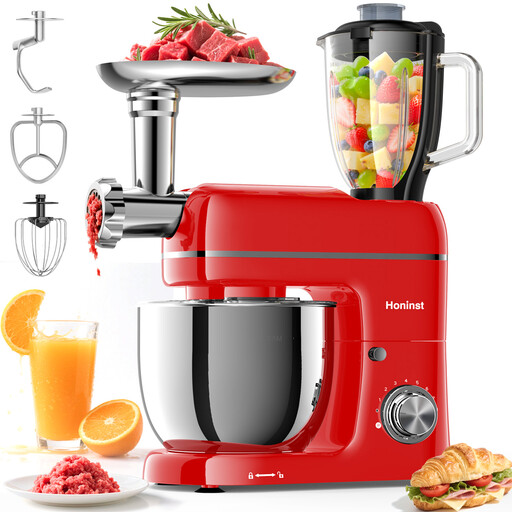 No image available
Worth comparing if you want to consider a flat beater as well as a dough hook and whisk.
The title lists a 6.5 QT bowl and 8 speeds. The product description also mentions a tilt-head and safety lock.
 No image available
Worth comparing if you’re looking for a dough machine with a stated automatic kneading function; check whether the controls and attachments suit your cookie recipe.
The title lists a 5 L capacity and kneading for up to 2.5 kg of dough. The product description also mentions a whisk.
Check the manual for your exact mixer to find out whether to use the beater or flat beater. Philips says the beater is suitable for cookies on models HR7962/21 and HR7962/01; don’t assume this guidance applies to another model.
Switch off the mixer and unplug it before cleaning. Kenwood says the bowl is dishwasher-safe and recommends washing the K-beater, whisk and dough hook by hand.
According to ACM ConsuWijzer, for a standard online purchase you generally have a statutory cooling-off period of up to 14 days after delivery. Before buying, check which exceptions and return conditions apply to your order.
According to ACM ConsuWijzer, the seller is responsible for the statutory guarantee. If the product doesn’t do what you could reasonably expect and the conditions are met, the seller must provide a solution at no cost; a manufacturer’s guarantee does not replace this right.
The Netherlands Food and Consumer Product Safety Authority states that electrical products must carry a CE mark. The mark is a declaration by the manufacturer and, on its own, doesn’t prove that the mixer’s performance has been independently tested. Check the product and conformity details for the model you’re buying.