
Cookie workshop instructor
Makes cookie dough repeatedly and wants to choose a suitable mixing attachment and capacity for the recipe.


Choose a stand mixer to suit your recipe: for cookie dough, the right mixing attachment matters, while light sponge batter calls for a suitable whisk and whisking function. Then compare the largest workshop batch with the mixer’s stated capacity for that same preparation; bowl capacity alone doesn’t tell you how much of your recipe you can make at once.
Makes cookie dough repeatedly and wants to choose a suitable mixing attachment and capacity for the recipe.
Prepares several batches one after another and weighs up bowl capacity against the convenience of having an extra bowl.
Needs to fit the mixer in among participants and other equipment, so pays attention to its dimensions and storage space.
First decide whether you’ll be mixing cookie dough or whisking light sponge batter. Then compare your largest batch with the model’s stated capacity for that preparation, and take account of the available workspace and changing over between sessions.
| What to consider | What to look for | Who is it important for? |
|---|---|---|
| Getting the right mix | Decide which recipe you’ll make, then check which attachment and speed settings are available with the exact model. | If I switch between cookie dough and light batter, I want to be able to use the right attachment for my recipe. Around 36% of consumers give priority to choosing the right mixing method for their recipe. |
| Batch size per session | Compare the ingredients and yield of your largest batch with a capacity figure for the same preparation and unit. | For a group session, I want to know whether my largest recipe will fit in one go, without treating bowl capacity in litres as a dough limit. Around 29% of consumers focus mainly on batch size per session. |
| Changing over and cleaning | Check whether a second compatible bowl is included or available, and read the cleaning instructions for each part. | When different groups are baking one after another, I want to be able to switch between recipes and know how to clean the bowl and attachments. Around 21% of consumers prioritise switching between preparations. |
| Workspace | Measure the available space and clearance height during use, then compare them with the dimensions of the model you’ve chosen. | In a shared or small workspace, I need to fit the mixer in without losing sight of the space needed for participants and ingredients. Around 14% of consumers make limited workspace their main priority when choosing. |
Manufacturers state capacities for different preparations and units, such as numbers of cookies, flour weight, cake batter or yeasted dough. These figures aren’t directly comparable.
Compare a capacity figure for the same preparation with the ingredients and batch size in your own recipe.
If the batch doesn’t fit in one go, extra mixing sessions can take up more of your workshop time.
The Consumers’ Association distinguishes between stand mixers for mixing and whisking, and food processors for other preparations. An attachment for firmer dough isn’t automatically suitable for whisking light batter.
Decide which recipe you’ll use in the workshop, then check whether the exact model comes with the whisk or beater you need.
Whether a second bowl is included or compatible varies by model. A bowl that isn’t suitable for your chosen mixer won’t help you switch between sessions.
Check the full model code and what’s included before planning to use an extra bowl.
A compatible extra bowl may need to be purchased separately.
The 5KSM125EMH has a tilt-head design and comes with a flat beater, whisk and dough hook.
The Go KZM35.000RD is a compact model, while the Titanium Chef Baker XL KVL85.124SI comes with two bowls.
According to Bosch, the MUM5X720 combines a 3.9-litre bowl with integrated scales.
The 7000 Series HR7962/21 comes with a 5.5-litre bowl, beater, whisk and dough hook.
These product picks focus on stand mixers whose product information mentions cookies, cookie dough or baking. Before you start, check which attachment comes with the model you’ve chosen and compare your largest batch with a relevant capacity figure.
 No image available
The product description lists cookies as a suggested use; check whether the included attachments are suitable for your recipe.
Bowl: 5.5 litres. The title lists 11 speeds and a 4.5-inch LED touchscreen.
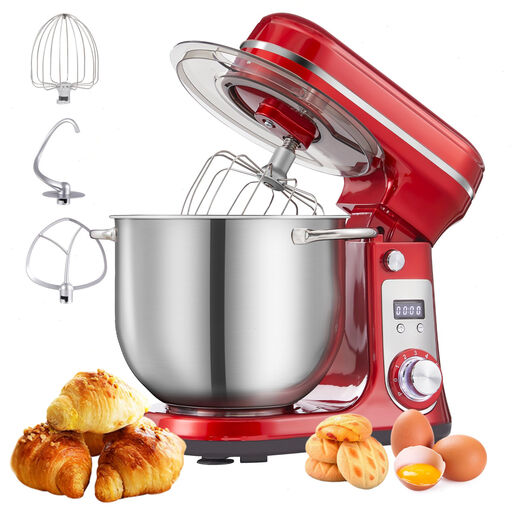 No image available
The product description mentions thick cookie dough; check the recommended attachments and settings for your own recipe.
Bowl: 6 litres. The title lists a 1200 W motor, six speeds and a pulse function.
The product description mentions a tilt head and an LCD screen.
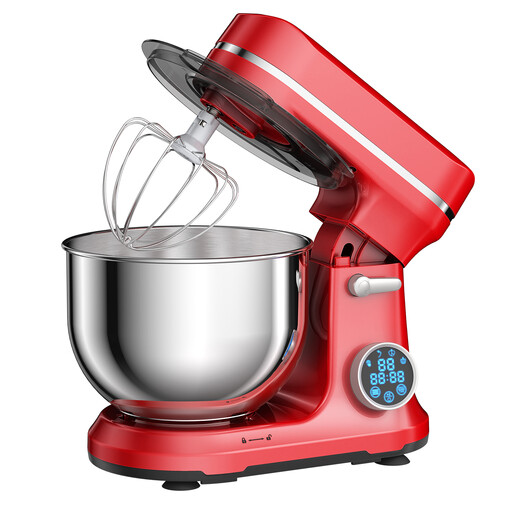 No image available
The product description lists thick cookie dough and cake batter as suggested uses; check the attachments and settings for your specific recipe.
Bowl: 5 litres. The title lists 11 speeds, a 1200 W motor and an OLED touchscreen.
The product description mentions planetary mixing action and dishwasher-safe removable parts.
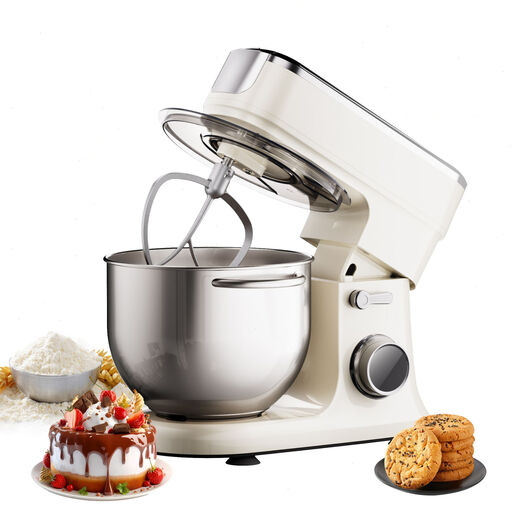 No image available
The product description lists dough and baking as suggested uses; compare your largest workshop batch with the guidance for your preparation.
Bowl: 7 litres. The title lists a 1200 W motor and a digital OLED touchscreen.
The product description mentions adjustable speeds and dishwasher-safe parts.
 No image available
The product description mentions a beater for batter; check whether this model is suitable for the dough or batter you’ll be making in your workshop.
Bowl: 5 litres. The product information lists ten speeds, a pulse function and a 400 W motor.
According to the product description, a beater, whisk and dough hook are included; the mixer has a tilt head.
Not necessarily: ‘biscuit dough’ could mean cookie dough or light sponge batter. For cookie dough, check the beater and a suitable capacity; for light batter, the whisk and whisking function matter. Decide which recipe you’ll use in the workshop before comparing models.
No, the dough hook isn’t automatically the right attachment for cookie dough. KitchenAid says its flat beater is suitable for cookie mixtures; follow the instructions for your own appliance and recipe.
First, compare your largest batch with a relevant capacity figure for the model. A second compatible bowl can make it easier to switch between preparations; clean the bowl and attachments according to the manufacturer’s instructions.
Ask about the applicable warranty terms, the availability of compatible parts and any costs not covered by the warranty. Kenwood publishes warranty information for its product range; check the terms for the exact model and intended use.
For a Dutch business that prepares, processes or sells food, the NVWA explains the requirement to work with an HACCP food safety plan or an approved hygiene code. There are also rules about providing information on allergens present in unpackaged foods. A stand mixer doesn’t replace these food safety measures.