What should you look for?
Start by weighing the ingredients in your recipe for each batch. Then consider the attachments, cleaning requirements and where the mixer will sit during the workshop.
| What to consider |
What should you check? |
Who is this important for? |
| Amount per batch |
Weigh your recipe and compare it with the model-specific cake capacity or dough specification. Don’t assume a manufacturer’s stated capacity applies automatically to your batter. |
If I want to make as few batches as possible, I compare the amount in my recipe with the capacity of the exact machine. Around 36% of consumers prioritise batch size. |
| Mixing control |
Check which attachment is included and whether the controls suit the steps in your recipe. |
If I’m demonstrating ingredients and want to switch between mixing and whisking, I look at the attachments and speed settings. Around 29% of consumers pay most attention to mixing control. |
| Cleaning between batches |
Check the cleaning instructions for each part and see which ones are dishwasher-safe. |
If I’m making several batches in a row, I want to know how much work it takes to clean the bowl and attachments. Around 21% of consumers prioritise quick changeovers and cleaning. |
| Space and moving the mixer |
Measure your worktop and compare the dimensions and weight of the exact model. |
If I need to put the mixer away after the workshop, I consider its size and how easy it is to move. Around 14% of consumers start by considering space and avoiding unnecessary features or costs. |
Stand mixers at Joybuy
These models are intended for mixing cake batter at workshops, from making several smaller batches in a row to comparing larger bowls and different attachments.
 No image available
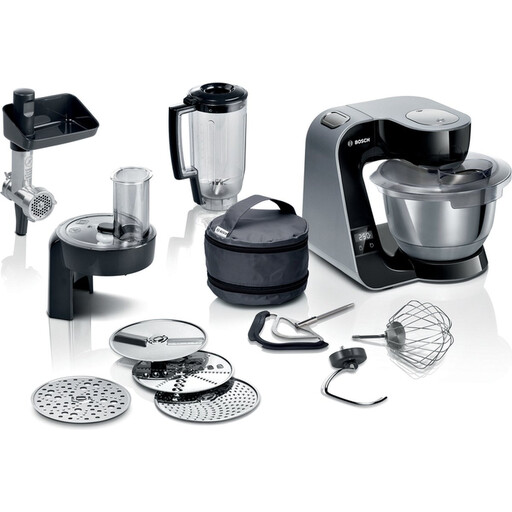
Bosch MUM5XC4E food processor
A 3.9 l bowl and built-in scales are handy for preparing ingredients and mixing in batches.
The description lists planetary mixing, a whisk and dough hooks. The product title also calls it a Food Processor, so check the product description to see which features suit your needs.
View at Joybuy
 No image available
AUCMA stand mixer, 5 l, black
The 5 l bowl and included mixing beater are suited to mixing cake batter.
The title lists 400 W and a tilt-head design; the description mentions ten speeds, a pulse function, a splash guard, a whisk and a dough hook.
View at Joybuy
 No image available
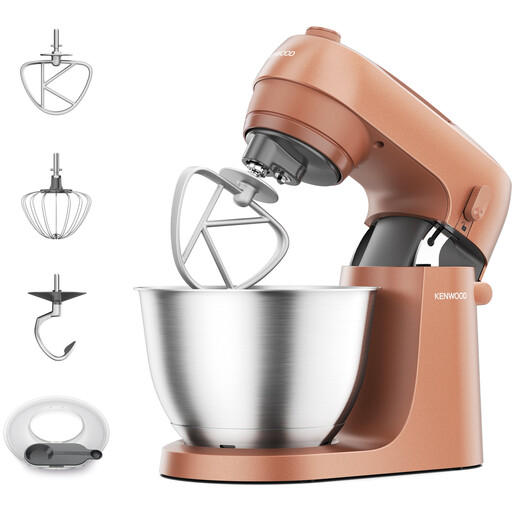
Kenwood Go KZM35 stand mixer, red
The 4 l bowl and K-beater make this model worth comparing for smaller batches.
The description lists a maximum dough capacity of 1.4 kg, six speeds plus pulse, a whisk and a dough hook. The stated capacity is for dough, not specifically coconut cake batter.
View at Joybuy
 No image available
Kenwood Titanium Chef Baker XL KVL85, silver
The 7 l bowl and built-in scales are worth considering if you’re comparing larger bowls and weighing ingredients.
The product specifications list 1200 W. Check the capacity of the exact model for your recipe; bowl capacity alone doesn’t tell you how much batter will fit in each batch.
View at Joybuy
 No image available
Monsga SM100 stand mixer, black and silver
The flat beater and 5.0 l bowl are features worth comparing for mixing cake batter.
The title lists a peak power of 1000 W. The description mentions eight speeds, a tilt-head design, a whisk, a dough hook and dishwasher-safe attachments.
View at Joybuy
Frequently asked questions
Is the bowl capacity the same as the maximum amount of cake batter?
No. Compare the capacity in litres with a model-specific cake or dough specification and the weight of your recipe. For the tabletop model discussed, Maxima lists a bowl capacity of 6.5 l, even though the product name refers to 7 l.
Which attachment should you use for cake batter, and which parts can go in the dishwasher?
Check your recipe instructions and the manual for the exact machine. The Consumentenbond recommends a mixing beater for mixing batter. Dishwasher suitability varies by part, so check each attachment individually.
Can participants taste raw cake batter?
The Voedingscentrum advises against tasting raw batter, as raw egg and flour can contain harmful bacteria. Bear this in mind if participants want to taste ingredients or batter during the workshop.
Which food safety and allergen rules apply to a workshop?
If you sell food to consumers as a business, the NVWA states that you must handle food safely, use a food safety plan or hygiene code based on HACCP, and register your food business. There are also rules on providing information about allergens present in unpackaged products offered to consumers. The requirements that apply to your workshop depend on how you organise it and offer the food.
Does the same consumer protection apply if you buy the mixer for business use?
Not necessarily. The Dutch government states that consumer law generally doesn’t apply to sales to businesses, which are subject to different warranty rules; an exception may apply to small businesses. Check the terms of sale and intended business use before placing your order.


