
Baking several cakes
You want to know how much batter you can mix per batch and whether it’s better to choose one larger bowl or divide the batter between smaller batches.


Choose a stand mixer based on the weight of your recipe per batch and the stated cake batter capacity; bowl volume in litres alone won’t tell you how much batter it can hold. A larger bowl may allow you to mix bigger batches, while a more compact model used for several batches could also work. Consider the included attachments, the space available and the cleaning instructions too.
You want to know how much batter you can mix per batch and whether it’s better to choose one larger bowl or divide the batter between smaller batches.
You’re looking for a stand mixer that will be practical to keep on your worktop or store away after your coffee morning.
You’re considering the attachments included and want to know in advance how to clean the bowl and mixing tools after use.
Compare the weight of your recipe per batch with the stated cake batter capacity of the exact model. Kenwood and Bosch list both the bowl capacity and the maximum amount of cake batter for specific models; these figures describe different things.
| What to consider | What to look for | Who is this important for? |
|---|---|---|
| Amount per batch | Compare the weight of the batter in your recipe with the stated cake batter capacity of the exact model. | If I’m making several cakes for a coffee morning, I want to know whether my recipe will fit in one batch or whether I’ll need to split it. Around 36% of consumers prioritise the amount they can mix per batch. |
| Mixing tools | Check which attachment for cake batter is included and which speed settings are available. | I want to be able to mix batter with the right included attachment, rather than discover later that I need something else. Around 29% of consumers focus on having suitable mixing tools. |
| Space and cleaning | Check the dimensions and cleaning instructions for each individual part. | If I have limited worktop or storage space, I don’t want to be left with an awkward appliance or unclear washing instructions after baking. Around 21% of consumers prioritise storage and cleaning. |
| Purchase and aftercare | Check which accessories are included and what the manufacturer’s guarantee and your statutory rights mean if there’s a fault. | For a mixer I’m considering for a shared coffee morning, I want to weigh up what’s included and the support available after purchase. Around 14% of consumers focus mainly on value and aftercare. |
Bowl capacity and the maximum amount of cake batter are different specifications. Comparing bowl size alone can therefore give you the wrong idea of how much you can mix at a time.
Weigh or calculate the batter in your own recipe and compare it with the cake batter capacity stated for the exact model.
A lower capacity may mean planning several batches for your coffee morning.
Kenwood states that existing Chef accessories won’t fit the Go KZM35. So don’t rely on the brand name alone when checking accessories.
Check the full model number and compatibility before counting on attachments you already own.
An incompatible attachment may mean you need to buy a separate one that fits.
ACM ConsuWijzer distinguishes between statutory warranty rights and a guarantee offered by a manufacturer or seller. If a product doesn’t do what you could reasonably expect during normal use, the seller may be responsible.
Keep your proof of purchase and contact the seller if there’s a fault to discuss your situation.
The Go KZM35.000GY is a compact option, while the Chef XL KVL4100S has a larger bowl and a higher stated cake batter capacity, according to Kenwood.
The MUM5XW00 is worth considering if you’re looking for a stated cake batter limit and built-in scales.
The Artisan 5KSM125 is worth a look if you’re after a 4.7-litre bowl and several standard mixing attachments.
According to Tristar, the MX-4817 has a 5-litre bowl and a beater described as suitable for cake batter.
The Kitchen Chef Plus 5.5L is worth comparing if you’re looking for a 5.5-litre bowl and an included flat beater.
These stand mixers are options to compare for mixing cake batter. For each version, check the stated bowl capacity, speeds and features against your recipe and the space available.
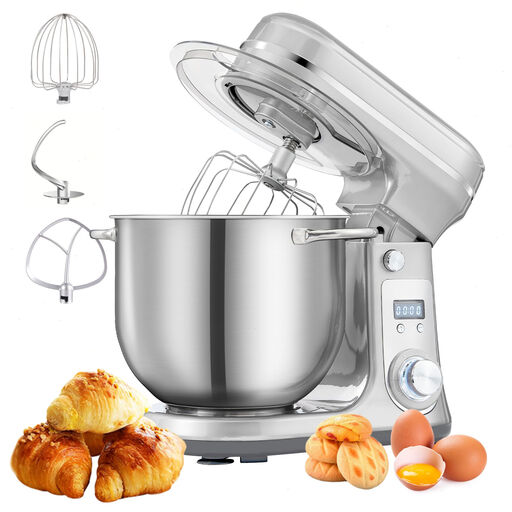 No image available
Worth considering if you’re looking for a larger bowl; compare the cake batter capacity with the weight of your own recipe.
Bowl: 6 L. Six speeds and a pulse function.
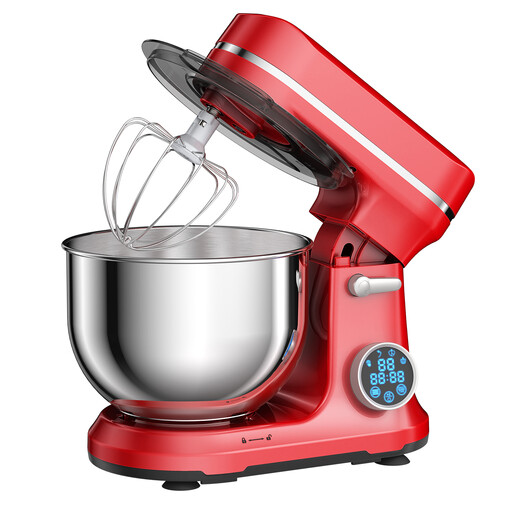 No image available
Worth comparing if you’re looking for a 5 L bowl and several speed settings for mixing batter.
Bowl: 5 L. Eleven speeds. The product name states that some parts are dishwasher-safe; check the cleaning instructions for each part.
 No image available
Worth comparing if you’re considering a 5 L bowl and several speed settings for your batter recipe.
Bowl: 5 L. Ten speeds.
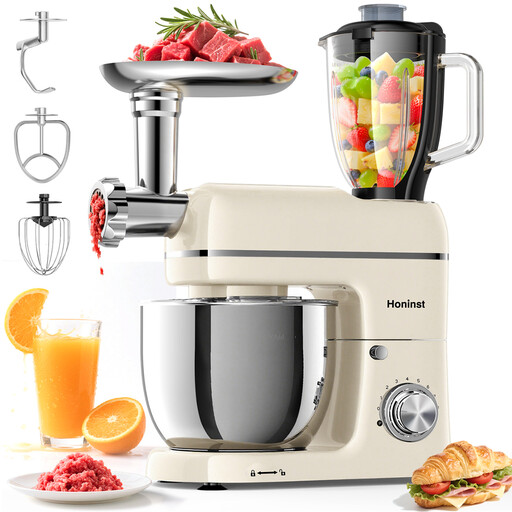 No image available
Worth comparing if you’re looking for a bowl with the stated capacity and several speed settings.
Bowl: 6.5 QT. Eight speeds.
 No image available
A compact option worth considering if you’re mindful of the space available on your worktop. Kenwood gives the KZM35.000GY a height of 30 cm.
For the Kenwood Go KZM35.000GY, Kenwood lists a 4-litre bowl and a maximum of 1.8 kg of cake batter. Compare this limit with the weight of your own recipe per batch.
No, not from the bowl capacity alone. Compare the weight of your batter per batch with the stated cake batter capacity of the exact model; Kenwood and Bosch list both figures for specific models.
Follow the mixer and recipe instructions, and check which attachment is included with your version. Tristar describes the MX-4817 as having a beater for cake batter; Bourgini says the flat beater included with the Kitchen Chef Plus 5.5L is suitable for batter.
Kenwood says the bowl can go in the dishwasher, but recommends hand-washing the K-beater, whisk and dough hook. Follow the cleaning instructions for each part.
An additional manufacturer’s guarantee doesn’t replace your statutory rights. ACM ConsuWijzer explains that statutory warranty rights apply alongside any manufacturer’s or seller’s guarantee. The seller may be responsible if a product doesn’t do what you could reasonably expect during normal use.
If food is sold at a market or event, the Netherlands Food and Consumer Product Safety Authority (NVWA) says that private individuals must also prepare, store and sell it safely and hygienically. The NVWA says a HACCP food safety plan is compulsory for anyone who prepares and sells food more than once a year. Businesses offering food to consumers must also, by law, provide information about any allergens present.
No. The Netherlands Nutrition Centre advises against tasting raw cake batter, as raw eggs and flour can contain harmful bacteria.