
Baker making several cakes
You want to know whether the batch for your coffee morning will fit in the mixer at once, or whether it’s better to work in batches.


First, work out how much cake batter you’ll make per batch and compare it with the cake capacity specified for the exact model. Bowl capacity in litres isn’t a substitute. Then check whether the included whisk or mixing attachment suits your recipe, and weigh up extra capacity and features against the space you have, cleaning requirements and how you like to work. Manufacturers’ capacity figures aren’t based on independent batter tests.
You want to know whether the batch for your coffee morning will fit in the mixer at once, or whether it’s better to work in batches.
You’re looking for the right attachment for cake batter, and a practical way to add ingredients and tidy up afterwards.
You want to use a stand mixer without the appliance, bowl and stored attachments taking up too much space.
When making batter for a coffee morning with friends, start by considering how much you’ll make per batch. Then take the mixing attachment and the space available into account.
| What to consider | What to look for | Who is this important to? |
|---|---|---|
| Batter per batch | Weigh the ingredients for your recipe and compare the batch with the cake capacity of the exact model. Don’t use bowl capacity as a substitute. | If I’m making several cakes for a coffee morning, I want to know whether my recipe will fit in one batch. Around 36% of consumers focus mainly on batch size. |
| Mixing attachment | Check whether the model includes a whisk or flat beater suitable for cake batter. | If I mainly make cake batter, I want the right attachment included with the mixer. Around 29% of consumers consider this first. |
| Space and cleaning | Compare the dimensions, the number of bowls and the cleaning instructions for the included parts. | If I have limited worktop or storage space, I want to know in advance how much room the appliance and attachments will take up. Around 21% of consumers prioritise space and tidying up. |
| Weighing and extra features | Check whether the mixer has a built-in scale and which accessories are actually included with the model you’re considering. | If I like to weigh ingredients directly into the bowl or make other recipes too, I’ll check which extra features I’ll really use. Around 14% of consumers focus mainly on features like these. |
The percentages show the main reason for buying in this specific context; they are not statistics for the Dutch market.
Manufacturers list cake capacity and bowl capacity separately. The Consumentenbond includes mixing, ease of use and noise among its test criteria; these criteria aren’t scores for the mixer models on this page.
A bowl’s capacity in litres doesn’t tell you how many kilos of cake batter the manufacturer says the mixer can handle.
Weigh the ingredients for one batch and check the cake capacity for the exact model you’re considering.
A similar model code doesn’t, by itself, tell you whether a product is a stand mixer or a different type of appliance.
Check the full model code, product category, bowl and included parts on the product page.
An accessory bundle may include parts you don’t need for cake batter. A paid extended warranty may overlap with rights you already have.
Check what’s included in the bundle. Before paying for an extended warranty, compare the cover it adds to your legal rights as a consumer.
Parts or cover you don’t use could mean unnecessary expense.
The Bosch MUM58200 may be worth considering if its stated batch capacity and included patisserie set suit your recipe. Bosch lists a 3.9-litre bowl and a maximum of 2.7 kg of cake batter for this model.
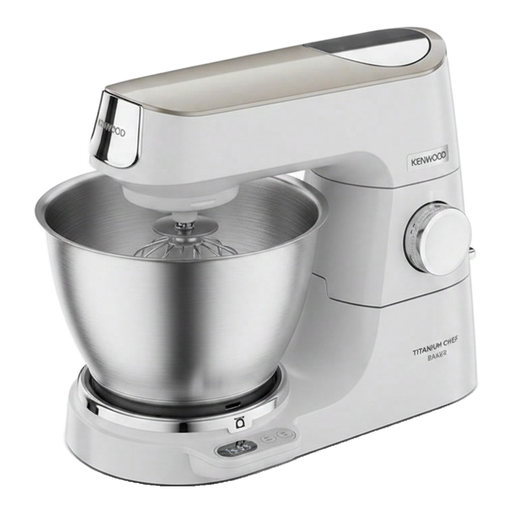
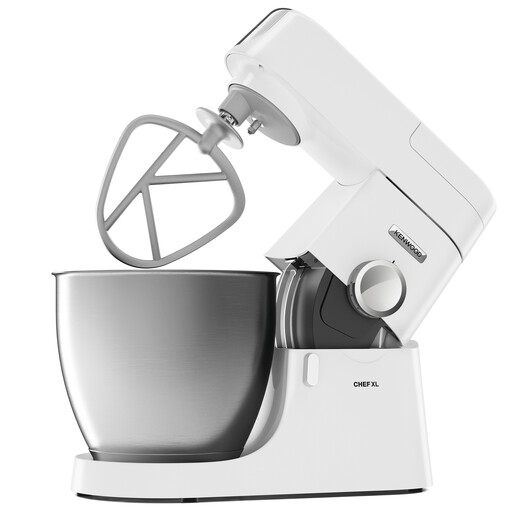
The Kenwood models reviewed here cater to different needs: a larger bowl with the Chef XL KVL4100S, or weighing ingredients as you go with the Titanium Chef Baker KVC65.001WH.
The KitchenAid Artisan 5KSM175PS model reviewed here may suit you if you want two bowls and several mixing attachments.
These stand mixers at Joybuy are suited to making cake batter, with differences in bowl capacity, included mixing attachments and features such as built-in weighing.
 No image available
The product details list a mixing attachment for batter and cake, making this an option if you’re looking for a mixer for baking.
Bowl: 5 litres. The title lists 10 speeds and a 400 W motor.
The product details also list a whisk, dough hook, tilt-head design and splash guard.
 No image available
The product details list mixing and whisking as uses, with a K-beater and whisk included.
Bowl: 4 litres. The description lists six speeds and a pulse function.
Described as compact, the mixer has a rotating splash guard with a built-in measuring scoop.
 No image available
This model may suit you if you want to weigh ingredients directly into the bowl as you prepare your recipe.
Bowl: 5 litres. The product details list a K-beater, whisk and dough hook; Kenwood specifies a cake capacity of 2 kg for model KVC65.001WH.
 No image available
The larger bowl may be useful if you’re considering making a bigger batch. Be sure to compare your recipe with the capacity specified for this exact model.
Bowl: 6.7 litres. The product details list a K-beater, whisk and dough hook.
 No image available
The product description mentions cake batter and a flat beater, so you can compare this attachment if you’re making cakes.
Bowl: 5 litres. The product name lists eight speeds, a dough hook, flat beater and whisk.
The description mentions a tilt-head design and dishwasher-safe accessories.
No. Bowl capacity alone doesn’t tell you how much cake batter will fit in one batch. Compare the weight of your recipe with the cake capacity specified by the manufacturer for the exact model. Manufacturers list these figures separately.
Check which attachment comes with your model and follow the instructions. KitchenAid says its flat beater is suitable for cake batter. Don’t let anyone taste raw batter: according to the Voedingscentrum, raw eggs and flour can contain harmful bacteria.
As a consumer in the Netherlands, you have a legal guarantee. According to the Rijksoverheid, if there’s a problem, the seller must provide a solution. Before taking out a paid extended warranty, compare the extra cover it provides with the rights you already have. A manufacturer’s warranty is separate from these rights.
If you sell food at a market or event, the NVWA says you must prepare, store and sell it safely and hygienically; this also applies to private sellers. When selling or supplying unpackaged products, you must be able to tell customers about any allergens they contain. If you provide this information verbally, it must be clear that customers can ask for it. Whether the rules for selling at markets and events apply to your coffee morning depends on how it is organised.