
Baking for a large group
Before the get-together, you want to work out whether the filling will fit in one batch or whether you’ll need to make it in portions. Bowl capacity is a starting point, not a confirmed filling capacity.


When choosing a stand mixer for cheesecake filling, consider how much you want to make per batch and whether it comes with a flat beater or mixing attachment for the cream cheese. A smaller bowl may be enough if you work in batches; the stated bowl capacity is not a proven capacity for cheesecake filling, so allow for scraping down and cleaning too.
Before the get-together, you want to work out whether the filling will fit in one batch or whether you’ll need to make it in portions. Bowl capacity is a starting point, not a confirmed filling capacity.
You choose the attachments and speed based on mixing the cream cheese and any lighter ingredients in your recipe. You also want to be able to scrape down the sides of the bowl as you go.
You want a machine you can put away after the neighbourhood get-together and use for smaller batches too; making extra batches may be an acceptable trade-off.
| What to consider | What to look for | Who this matters to |
|---|---|---|
| Amount per batch | Compare the recipe volume with the bowl and the usage limits of the exact model; plan to work in batches if needed. | I want to know in advance whether my recipe will fit in one go or whether I’ll need to make several batches. Around 33% of consumers prioritise the amount they can mix per batch. |
| Texture and beater | Check whether a flat beater or mixing attachment is included, which speeds you can select and how easily you can reach the sides of the bowl. | When mixing cream cheese for my recipe, I pay attention to the attachment and to scraping down the bowl as I go. Around 33% of consumers prioritise mixing texture and a suitable beater. |
| Storage and cleaning | Check the dimensions of the machine and bowl, and read the cleaning instructions for each component. | I want to be able to put the mixer away and clean it easily after the get-together, even if that means working in batches. Around 17% of consumers prioritise space and cleaning. |
| Purchase and aftercare | Compare the accessories supplied with the exact version and check which attachments fit and who to contact if something is faulty. | I only want to choose accessories I need for my recipes, and I want to know in advance how parts and aftercare are handled. Around 17% of consumers prioritise purchase and aftercare. |
A stated bowl capacity or maximum quantity of dough or cake batter is not a tested limit for cream cheese filling.
Work out the volume of your own recipe and check the usage limits for the exact model before planning to make it all in one batch.
If the recipe won’t fit in one go, you may need to mix and wash up more than once.
The attachments supplied vary by version. A whisk is not automatically the right attachment for every step of making cheesecake filling.
Check what’s in the box and follow your recipe. The KitchenAid cheesecake recipe reviewed uses a flat beater for the cream cheese and says to scrape down the bowl as you go.
If a suitable attachment isn’t included, check whether you can buy it separately.
According to the Dutch Government, there is no fixed statutory guarantee period in the Netherlands; if a product is faulty, the seller must provide a solution.
Keep your proof of purchase and compare any additional guarantee with your statutory rights.
The Netherlands Nutrition Centre advises not leaving highly perishable food out of the fridge for more than two hours.
As well as mixing, plan for the fridge space you have available and when you’ll serve it.
According to Bosch, the Dutch Serie 2 MUMS2VM00 reviewed has a 3.8 l bowl, while the Serie 4 MUM58710 has a 3.9 l bowl. Compare the exact version if you plan to work in batches.
According to KitchenAid, the Artisan version 5KSM175PSECA reviewed has a 4.7 l bowl and an extra 3 l bowl.
According to Kenwood, the kMix KMX750ABK reviewed has a 5 l bowl and comes with a K-beater; the GO is a separate compact product range.
According to Smeg, the Dutch SMF05PKEU has a 4.8 l bowl and comes with a flat beater with flexible edges.
This selection includes stand mixers with different bowl configurations and accessories. Compare the listed details with the volume of your recipe; bowl capacity does not confirm how much cheesecake filling a mixer can handle.
 Image unavailable
The stated bowl capacity gives you a point of comparison if you’re planning a larger batch, but it doesn’t confirm how much cheesecake filling will fit in one go.
The product name lists 5.5 l and 11 speeds.
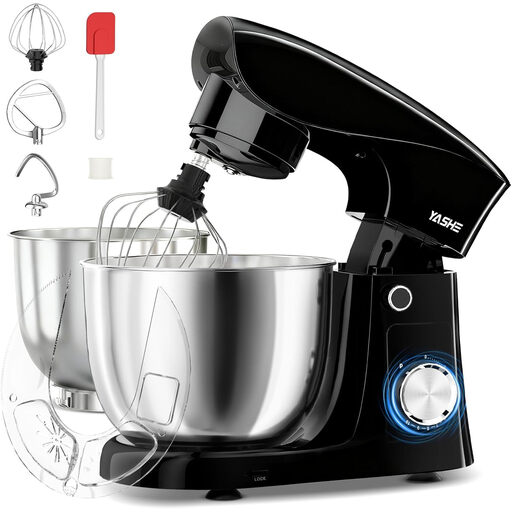 Image unavailable
The two stated bowl sizes give you different options for planning batches or recipes one after another.
The product name lists 4.5 l and 5 l bowls, a tilt head and a dough hook. The product description also lists a beater, dough hook and whisk.
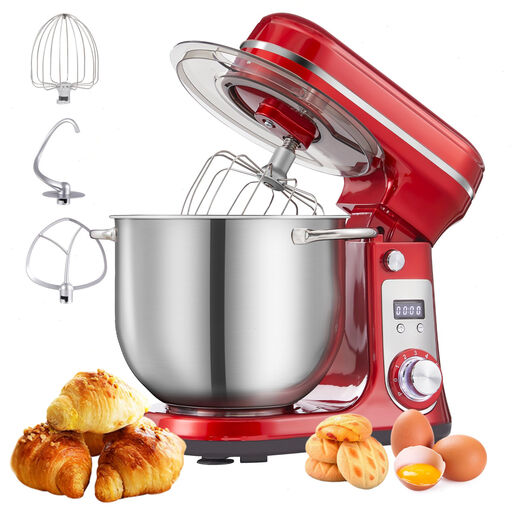 Image unavailable
The stated bowl capacity can help you compare it with your planned recipe volume, but it is not a confirmed capacity for cheesecake filling.
The product name lists 6 l, 1200 W, an LCD screen, timer, six speeds and a pulse setting.
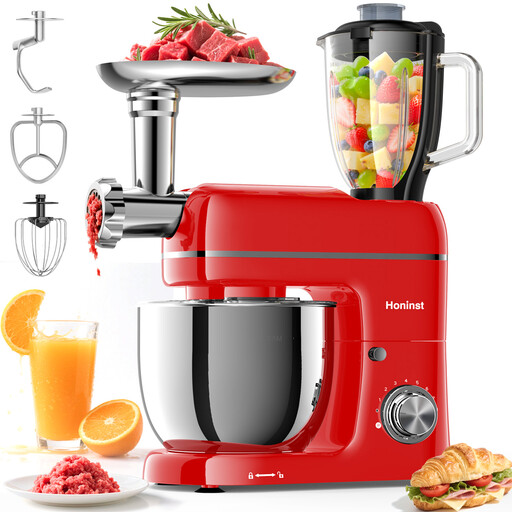 Image unavailable
The stated bowl size and beater are details to compare with your recipe volume and the attachments you need; they don’t confirm a maximum quantity of cheesecake filling.
The product name lists 6.5 QT, eight speeds, a tilt head, dough hook, beater and whisk.
 Image unavailable
This compact version may suit you if storage is a priority; bear in mind that you may need to work in batches for a larger recipe.
The product description lists a 4 l bowl, K-beater, whisk, dough hook, six speeds and a pulse setting.
The KitchenAid recipe reviewed starts by using a flat beater for the cream cheese, then uses a wire whisk later and says to scrape down the bowl as you go. Follow the instructions for your recipe and mixer; there’s no evidence that one attachment is suitable for every type of cheesecake.
No, don’t assume so without checking. Kenwood recommends hand-washing the K-beater, whisk and dough hook for the GO KZM35.000GY. Check the manual for your exact model and unplug the mixer before cleaning.
The Netherlands Nutrition Centre recommends storing highly perishable food in a fridge at 4 °C and not leaving it out of the fridge for more than two hours. If a no-bake version contains raw egg, the Centre recommends keeping it chilled for no more than 24 hours and advises against serving such dishes to, among others, pregnant people and those with a weakened immune system.
According to the Dutch Government, the seller must provide a solution if a product is faulty; the Netherlands has no fixed statutory guarantee period. For online purchases from a business, a 14-day cooling-off period applies in many cases. Check which terms apply to your purchase.
Electrical equipment covered by the relevant harmonised EU rules must carry CE marking before it can be placed on the market; this is a declaration by the manufacturer, not an independent quality mark. The Dutch Food and Consumer Product Safety Authority (NVWA) rules consulted about food safety plans concern repeated sales from home and do not automatically apply to a one-off occasion when you share food with neighbours. Whether any additional rules apply depends on what you’re organising.