
Baker making several cakes
Wants to prepare filling efficiently for several cheesecakes for a sales event, so weighs up the recipe quantity, bowl space and number of batches.


For cheesecake filling, a mixing paddle or flat beater on a low speed is a sensible starting point: KitchenAid describes its flat beater as an attachment that mixes with less air than a whisk. Then choose the bowl capacity and machine size based on your recipe, the number of batches you’ll make, and the worktop and storage space available. The stated bowl capacity is not a confirmed maximum quantity of cheesecake filling. A mixer also doesn’t take care of chilled storage or hygienic selling.
Wants to prepare filling efficiently for several cheesecakes for a sales event, so weighs up the recipe quantity, bowl space and number of batches.
Would rather carefully prepare one or a few cakes, focusing on a mixing paddle and a low speed instead of simply choosing the highest whisking speed.
Has limited worktop or storage space and weighs up a more compact machine against preparing smaller batches.
First, work out how much filling your recipe requires and which attachment you want to use. Then measure the space where the mixer will sit while in use, as well as where you’ll store it.
| What to consider | What should you look for? | Who is this most important for? |
|---|---|---|
| Batch size | Calculate the total recipe quantity and check the instructions for the exact model. Don’t compare bowl capacity with the capacity stated for a different type of mixture. | If you’re making filling for several cakes, you’ll want to know whether the recipe will fit in one batch or several. Around 33% of consumers consider batch size their top priority. |
| Mixing control | Check whether a mixing paddle or similar beater is included and whether the machine has a low-speed setting. Follow your recipe’s mixing instructions. | If you want to mix cream cheese filling carefully, focus on the attachment and lower speed settings. Around 27% of consumers put mixing control first. |
| Space | Measure your worktop, storage space and the clearance above the machine. Compare these with the dimensions of the exact model. | If space is limited, you’ll want to use and store the mixer without its size becoming an issue. Space is the top priority for around 20% of consumers. |
| Cleaning and use | Check the cleaning instructions for each part and see which accessories are included with the full model code. | If you’re preparing several batches in a row, you’ll want to know how much cleaning is needed between batches and which accessories are suited to the task. Around 20% of consumers consider this first. |
A stated capacity in litres doesn’t confirm how much cheesecake filling you can mix at once. Nor does a stated capacity for dough or cake mixture set a definite limit.
Calculate the quantity in your recipe and check the instructions for the exact machine. Bear in mind that a large quantity may require several mixing and cleaning sessions.
A different model code or stated bowl capacity may mean you’re looking at a different version from the one you expected.
Compare the full model code with the manufacturer’s information and check which parts are actually included with the version you’ve chosen.
The included accessories may also vary between versions.
If you’re selling perishable cheesecake, you’ll also need to consider chilled storage; a stand mixer won’t take care of that.
Plan how you’ll chill, transport and display it in advance. For perishable food sold at markets and events, the NVWA specifies a storage temperature of no more than 7 °C.
You may also need chilled storage and temperature monitoring for selling.
Kenwood’s range includes the compact Go KZM35.000GY, with a 4 l bowl, and the Titanium Chef Baker XL KVL65.001WH, with a 7 l bowl. The models differ in size and bowl capacity, so measure the space available before choosing.
The Artisan 5KSM125EMH is a medium-sized model supplied with a mixing paddle. KitchenAid lists a 4,7 l bowl and ten speeds for this model.
The Bosch MUMS2VM00 is a Series 2 model with a 3,8 l stainless steel bowl and a patisserie set.
For the SMF04CREU, Smeg lists a 4,8 l bowl, a flat beater and ten speeds.
The Philips 7000 Series HR7962/01 is worth considering if you’re also looking for a timer and bowl light as well as mixing functions.
These Joybuy picks are stand mixers for mixing tasks. Compare the stated bowl capacity and features with your recipe, the level of mixing control you want and the space available.
 No image available
The stated bowl capacity is useful when planning portions, but it doesn’t tell you exactly how much cheesecake filling you can mix at once.
5,5 l bowl; 11 speeds; 4,5-inch touchscreen.
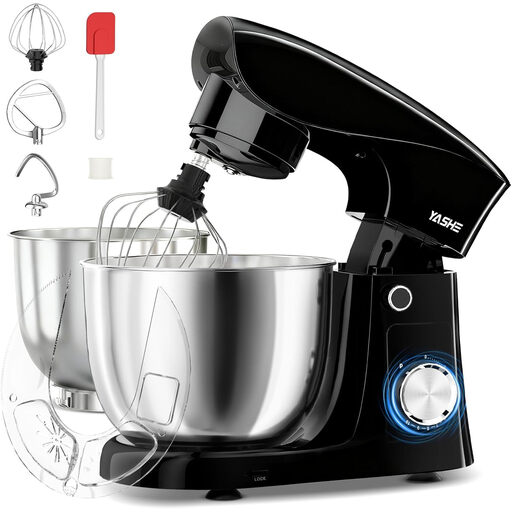 No image available
The version with two bowls may be worth considering if you want to work with more than one mixing bowl while baking. Check the bowl capacities against your recipe.
Two bowls; tilt-head; dough hook.
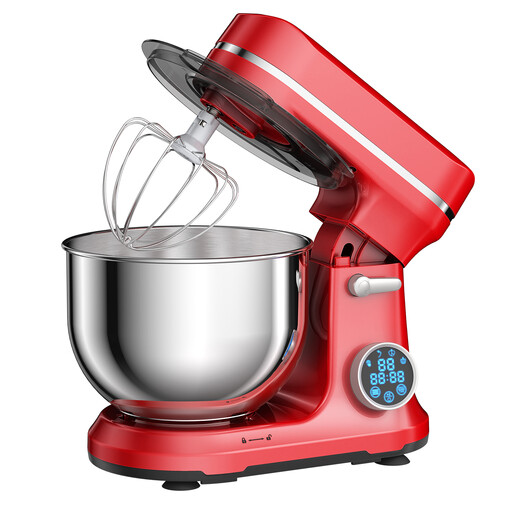 No image available
The stated bowl capacity gives you a specific measurement to compare with your recipe, but it isn’t a confirmed maximum quantity of cheesecake filling.
5 l bowl; 11 adjustable speeds; OLED touchscreen; 1200 W.
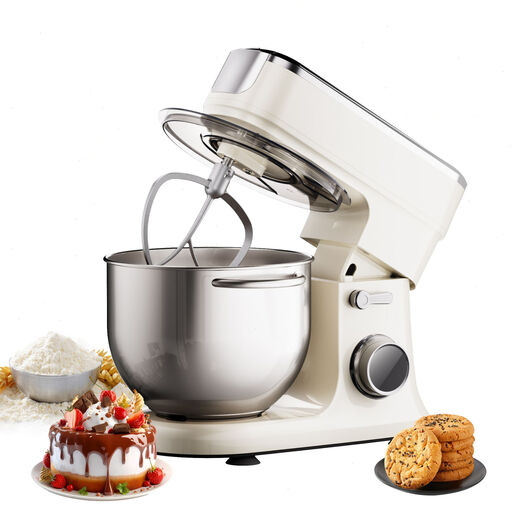 No image available
The 7 l bowl capacity is a stated measurement to factor into your batch planning; check the instructions for the exact model before making one large batch.
7 l bowl; OLED touchscreen; adjustable speeds.
 No image available
A mixing paddle is listed for this version; check whether the included attachment and low-speed settings suit the way you want to mix cheesecake filling.
5 l bowl; 10 speeds with pulse; tilt-head; dough hook, whisk and mixing paddle.
For gentle mixing, a flat beater is a sensible starting point: KitchenAid describes it as an attachment that mixes with less air than a whisk. Follow your recipe’s steps; the attachment alone won’t guarantee a particular texture.
No. The quantity in your recipe and the instructions for the specific model determine whether you can mix it all at once. A bowl capacity in litres isn’t a set working capacity for cheesecake filling.
Clean parts that come into contact with food according to the instructions for the exact model, and avoid cross-contamination. The Netherlands Food and Consumer Product Safety Authority requires materials that come into contact with food to be thoroughly cleaned when selling at events.
According to the Netherlands Food and Consumer Product Safety Authority’s step-by-step guide, you need to register if you sell food several times a year; the guide says registration isn’t necessary if you sell food once a year. For more than one sale a year, the NVWA also requires a food safety plan. First, work out which situation applies to your sales event.
For perishable food sold at markets and events, the Netherlands Food and Consumer Product Safety Authority specifies a maximum temperature of 7 °C, in addition to any storage instructions on the packaging. Chill the prepared product to 7 °C or below as quickly as possible; a stand mixer doesn’t replace chilled storage.
If you sell your cheesecake unpackaged, you must tell customers about the allergens it contains before they buy it. Check the ingredients in your full recipe, including the base and toppings, and make sure the information is available where you’re selling the product.