For cheese cracker dough in a shared kitchen, choose a stand mixer based on your usual batch size and the space available for using and storing the appliance, not just bowl capacity or wattage. KitchenAid’s cheese cracker recipe recommends using a flat beater or dough hook on speed 2; check which attachment is included with your chosen model and what batch sizes are covered in the manual. Also compare the cleaning instructions for each part, along with the model-specific information on food contact and applicable electrical requirements.
Who is this for?
Small-batch baker
If you usually make a modest amount of cheese crackers, check whether the beater can reach the dough in your recipe. Bowl capacity alone won’t tell you whether it can. KitchenAid’s cheese cracker recipe recommends using a flat beater or dough hook.
User with limited personal space
If you share worktops and cupboards, the mixer’s dimensions and weight matter when it comes to using and storing it. The Consumers’ Association also recommends considering how you’ll use a food processor and the space available when choosing one.
User who wants to tidy up quickly
If you want to clear the shared worktop after mixing, check how the bowl and attachments come off and what the cleaning instructions are for each part. The Consumers’ Association lists ease of use as something to consider when choosing a food processor.
What should you look for when buying?
Start with the quantity in your own recipe and the mixing attachment. Then compare the space required, cleaning needs and any other baking recipes you want to use the mixer for.
| What to consider |
What to look for |
Most relevant to |
| Mixing small batches |
Check which attachment is suitable and what the instructions say about small quantities. |
I usually make one small batch and want the beater to reach the ingredients; around 33% of consumers give mixing small batches top priority. |
| Using and storing the mixer |
Compare the dimensions and weight, and check how much space is needed to operate the mixer head. |
I share the worktop and want to be able to put the mixer away after use; around 27% of consumers consider worktop and storage space most important. |
| Cleaning after use |
Check the cleaning instructions for the bowl and each attachment separately. |
I want to clear away dough residue quickly after baking; around 20% of consumers give cleaning top priority. |
| Noise when sharing the kitchen |
Look for a model-specific test with a clearly explained method of measurement. |
I use the kitchen at the same time as other people in my household and take noise into account; around 13% of consumers put this first. |
| Other batch sizes and recipes |
Check the capacity for your type of dough and which attachments are included. |
I want to make other recipes or larger batches as well as crackers; around 7% of consumers give this need top priority. |
Buying pitfalls
-
Choosing the biggest bowl for a small cracker recipe
The stated bowl capacity doesn’t tell you whether the attachment can reach a small amount of dough effectively.
Start with the quantity in your own recipe and check which attachment and small-batch instructions apply to the exact model.
-
Looking at wattage alone
Wattage or maximum dough capacity isn’t a comparative test of how a mixer handles cheese cracker dough, noise or small batches.
Compare the attachment, bowl and dimensions for each model. Only rely on tests that measure the mixing task you’re actually interested in.
-
Assuming the product title confirms the exact version
The title alone may not be enough to establish which model variant and parts are included with a product.
Before buying, check the full model code and the specifications for the version on offer.
Brands to consider
Kenwood
The Kenwood Go KZM35.000RD is a compact option to compare; the kMix KMX750ABK has a larger bowl for anyone who makes other batch sizes too.
- Kenwood lists a 4 l bowl, K-beater and 30 cm height for the Go. For the kMix KMX750ABK, Kenwood lists a 5 l bowl and a weight of 9,26 kg.
- These manufacturer specifications aren’t a comparative mixing or noise test for cheese cracker dough.
Bosch
The Serie 2 MUMS2VM00 is worth considering if you’re looking for a beater mixer with removable baking accessories.
- Bosch lists a 3,8 l bowl, a beater mixer and dishwasher-safe accessories for this model.
- The stated maximum dough capacity doesn’t tell you how it handles a small batch of cracker dough.
KitchenAid
KitchenAid’s cheese cracker recipe describes which attachments to use for this dough. KitchenAid also offers a tilt-head mixer with a 3,3 l bowl for anyone short on space.
- The recipe mentions a flat beater or dough hook.
- The recipe instructions aren’t a comparative performance test. Check the version and included parts when you buy.
Smeg
The SMF03DGEU is an example of a stand mixer with a 4,8 l bowl and several attachments.
- Smeg lists a flat beater, whisk and dough hook for this version.
- These specifications don’t show whether the model is more convenient for small batches or a shared workspace.
Stand mixers at Joybuy
These stand mixers are options to consider for preparing dough. Check which attachment is included with each model, whether it’s suitable for your batch size and how the parts should be cleaned.
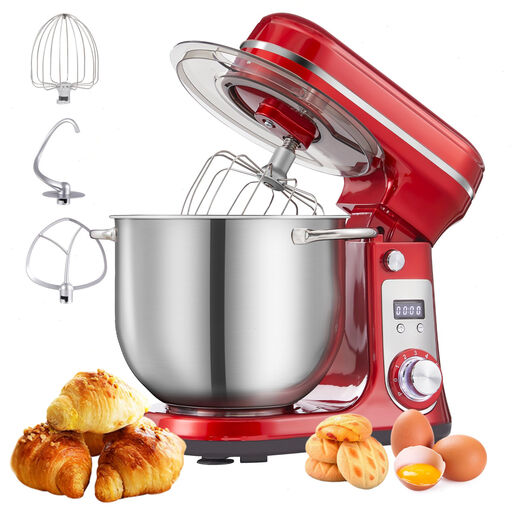 Image unavailable
BioloMix BM601 stand mixer, red
An option to consider if you also want to prepare larger quantities; a 6 l bowl on its own doesn’t tell you how well it handles a small batch.
The product name lists a 6 l bowl, 1200 W, an LCD screen with timer, six speeds and a pulse setting.
View at Joybuy
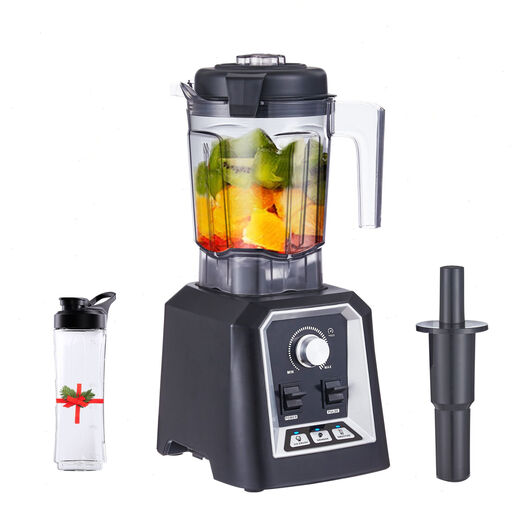 Image unavailable
BioloMix T5800 stand mixer
If you’re considering this model, compare the stated bowl capacity with the quantity in your recipe; the name doesn’t specify a minimum batch size.
The product name lists 2200 W, a 1600 ml bowl, three programmes and variable speed control.
View at Joybuy
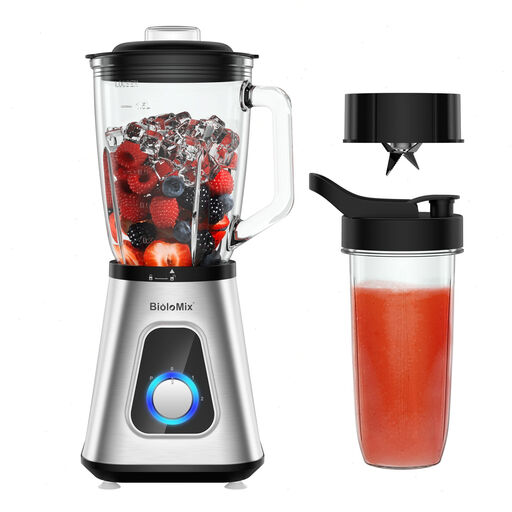 Image unavailable
BioloMix SF701 stand mixer
Check whether the listed accessories and features suit your recipe and tidying routine; the product name doesn’t indicate how it performs with cheese cracker dough.
The product name lists a 1300 W motor, a 1,5 l glass bowl, a 600 ml bottle and a self-cleaning function.
View at Joybuy
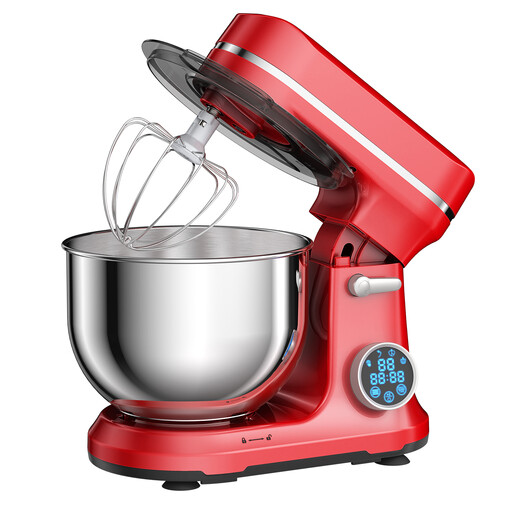 Image unavailable
BioloMix BM602E stand mixer, red
An option to compare if you make other batch sizes as well as small batches of crackers; check the suitable quantity for your recipe and which attachment is included.
The product name lists a 5 l bowl, planetary mixing system, 1200 W, an OLED touchscreen and eleven speeds.
View at Joybuy
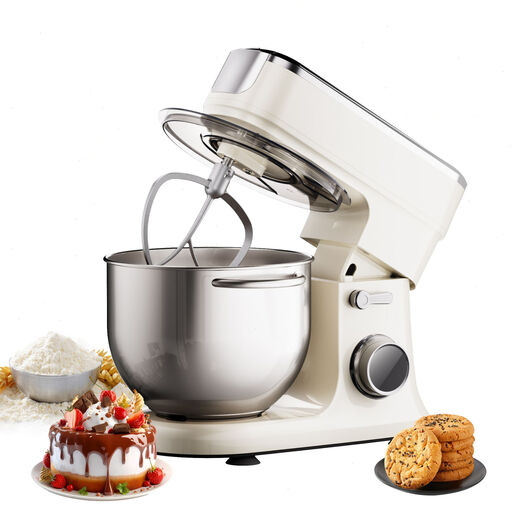 Image unavailable
BioloMix BM606E stand mixer
If you need a larger bowl, compare its capacity and the storage space required with your usual recipes; bowl capacity doesn’t tell you how it handles a small batch.
The product name lists a 7 l bowl, a 1200 W motor, a digital OLED touchscreen and adjustable speeds. It also mentions dishwasher-safe parts; check which parts these are.
View at Joybuy
Frequently asked questions
Do I always need to use the dough hook for cheese cracker dough?
No. KitchenAid’s cheese cracker recipe mentions both a flat beater and a dough hook, and uses speed 2. For another model, follow the manual and check whether the attachment you need is included.
How can I put the mixer away safely after use?
Switch off the mixer and unplug it before adjusting an attachment. Follow the cleaning instructions for your model and each part; dishwasher-safe accessories don’t automatically mean the whole appliance can go in the dishwasher. Kenwood advises unplugging the mixer before adjusting an attachment.
Do I need an additional warranty package?
Not necessarily. According to the Dutch government, a manufacturer’s or seller’s warranty is in addition to your statutory rights; if there’s a problem, the seller must provide a solution. Compare the cost of paid extra cover with the rights you already have.
Which rules apply to stand mixers in the Netherlands?
Products intended to come into contact with food are subject to the applicable Dutch rules, including the Commodities Act Decree on Packaging and Consumer Articles, as explained by the Netherlands Food and Consumer Product Safety Authority. Electrical equipment for which EU rules require CE marking must meet the applicable requirements and carry the mark. The European Union’s Your Europe website explains that CE marking isn’t approval by a central EU body.


