
Workshop leader running several dough batches
Wants to plan portions and changeovers based on the recipe weight, not just the bowl’s capacity in litres.


Start with the mixing attachment: for firm, biscuit-style cheese cracker dough, a suitable flat beater or K-beater is a more sensible choice than a whisk. Then consider the weight of your own recipe batch, the space available and how you’ll clean between batches. Manufacturers specify capacities for other types of dough or batter; these figures do not establish a proven maximum for cheese cracker dough.
Wants to plan portions and changeovers based on the recipe weight, not just the bowl’s capacity in litres.
Needs space for participants and to add and remove ingredients safely. A compact mixer may be suitable if smaller batches are acceptable.
Needs to consider food safety as well as the mixer and, where applicable, allergen information for unpackaged crackers.
First, consider which attachment suits your recipe and how much dough you want to mix per batch. Then check that the mixer will work practically in your workshop space and fit your way of working.
| What to consider | What should you check? | Who is this important for? |
|---|---|---|
| Attachment for firm dough | Check whether the exact model includes a flat beater or K-beater. KitchenAid describes its flat beater as suitable for cookie mixtures. | When mixing firm cheese cracker dough, I want an attachment that suits my mixer and recipe. Around 36% of consumers prioritise having the right mixing attachment. |
| Batch size for each workshop session | Weigh your recipe batch and compare it with the capacity specified for the type of dough in question. Bosch gives maximum capacities for cake batter and yeast dough for the MUM58L20; Kenwood publishes separate capacity figures for flour and dough, among other things. | When planning participants and batches, I want to know how much of my own recipe will fit at a time. Around 29% of consumers prioritise planning the batch size. |
| Cleaning between batches | Check the manual to see which parts can be cleaned, and take your workshop process into account. The NVWA describes the applicable food safety approach for businesses serving food. | When participants take turns, I want to be able to clean the bowl and attachments according to my process. Around 21% of consumers see cleaning and safe working practices as their main consideration. |
| Space and operation | Measure the available table and storage space and check that you can operate the bowl and mixer comfortably there. Kenwood lists the Go KZM35.000RD as measuring 38 × 23 × 30 cm. | When my worktable is small, I want to leave room for ingredients and participants. Around 14% of consumers prioritise available workspace or storage over other considerations. |
Manufacturers give capacities for different categories, such as cake batter, yeast dough and flour for pastry. These figures are not directly comparable and do not prove a maximum batch size for this recipe.
Weigh your own recipe batch and check the figures for the exact mixer and type of dough before planning your workshop sessions.
A larger recipe batch may mean extra mixing sessions and cleaning between batches.
The attachments and bowls included vary by model and version. The mixing attachment is particularly relevant for firm, biscuit-style dough.
Check what’s included in the box and confirm compatibility for the full model number, not just the brand.
With some versions, you may need to buy a suitable attachment or extra bowl separately.
If you’re a business serving food to customers, food safety and, where required, allergen information are separate considerations. The NVWA sets out the applicable requirements.
Decide how food will be served at your workshop and, where applicable, adapt your food safety plan or hygiene code and allergen information accordingly.
The 5KSM175PSEFL is worth considering if you want a flat beater, a beater with a flexible edge and two bowls in the pack.
The Go KZM35.000RD and kMix KMX760AGR have different dimensions and bowl capacities; both versions mentioned include a K-beater.
The MUM58L20 is an option to compare if you want to look at a model supplied with a whisk and published maximum capacities for specific types of batter and dough.
These stand mixers are selected for comparison by bowl capacity, recipe batch size and listed features. Check which mixing attachment comes with each version.
 No image available
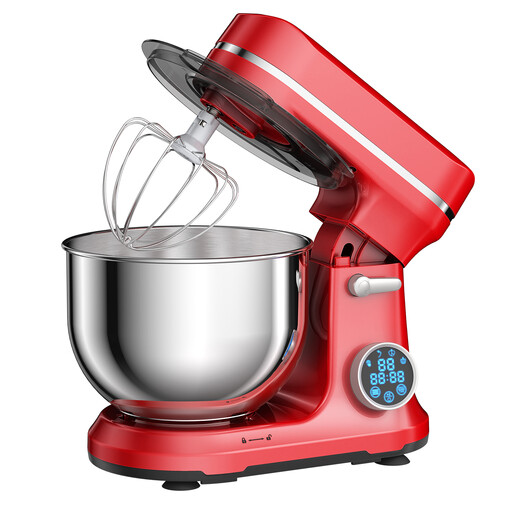
The listed bowl capacity gives you a useful figure to compare with the weight of your recipe batch.
The product name lists a 5.5-litre bowl, 11 speeds and a 4.5-inch LED touchscreen. The bowl capacity does not establish a proven maximum batch size for cheese cracker dough.
 No image available
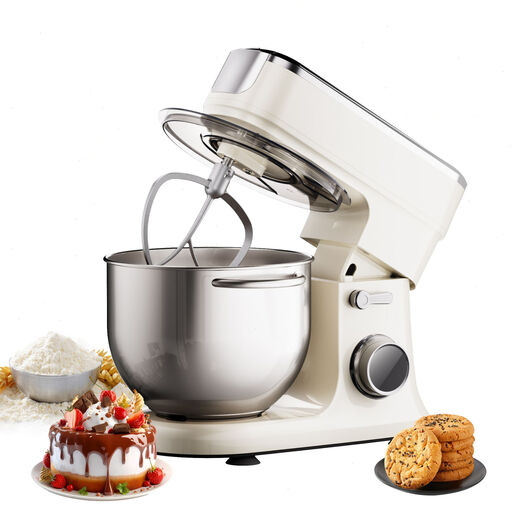
The bowl capacity can help you compare the mixer with your own batch size for each workshop session.
The product name lists a 5-litre bowl, planetary mixing action, a 1200 W motor, 11 adjustable speeds and an OLED touchscreen. It also states that the bowl is dishwasher-safe.
 No image available
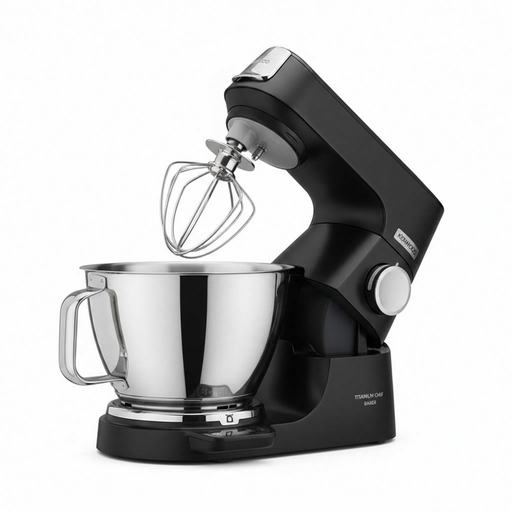
The larger listed bowl capacity can be a useful point of comparison; still, check your batch size against the mixer instructions and your recipe.
The product name lists a 7-litre bowl, a 1200 W DC motor and a digital OLED touchscreen. Adjustable speeds and a dishwasher-safe design are also mentioned.
 No image available
The extra bowl and built-in scales mentioned may be useful if you prepare batches and switch between workshop sessions.
The product information lists a 5-litre bowl, an extra bowl and built-in scales. Check what’s included with the exact version.
 No image available
The listed flat beater makes it worth checking whether this attachment suits your biscuit-style recipe.
The product information lists a 5-litre bowl, a flat beater and a dough hook. The product name also mentions 8 speeds and a peak power of 1000 W.
For biscuit-style dough, start with a suitable flat beater or K-beater and follow the instructions for your mixer and recipe. KitchenAid describes its flat beater as suitable for cookie mixtures; the Consumers’ Association describes the dough hook as suitable for thick dough. This does not establish which attachment works best for every cheese cracker recipe.
No, not as a set limit for cheese cracker dough. Bosch specifies capacities for yeast dough and cake batter for the MUM58L20, while Kenwood lists other categories. Compare your recipe batch with the guidance for the exact mixer and adjust the batch size if needed.
Switch off the machine and unplug it. Kenwood recommends checking the clearance between the beater and the bowl and explains how to adjust the height. The beater should just clear the bottom.
The Dutch government distinguishes between statutory guarantees and additional guarantees. As it’s not clear whether you’re buying the mixer privately or for business use, or which terms of use apply to the model you choose, it’s not possible to determine the guarantee cover for this workshop without more information. Check the terms of purchase and use before buying.
If you’re a business serving food to consumers, the NVWA requires you to handle food safely, using a food safety plan or the applicable hygiene code. If you serve unpackaged crackers to customers, you must tell them about any allergens present. Whether and how these business requirements apply to a private or non-commercial workshop depends on the precise set-up.