What should you look for when choosing?
Start with the right mixing attachment, then decide on the portion size for each batch, and check cleaning requirements, allergens and the space available.
| What to consider |
What to look for |
Who this matters to |
| Controlled mixing |
Check that the flat beater or K-beater is compatible with the exact model, and follow the speed guidance for your recipe. |
If you want the ingredients to come together in a controlled way, prioritise a suitable mixing attachment. Around 36% of consumers put control over mixing first. |
| Portion size per batch |
Weigh your recipe and compare it with the applicable limit for the exact model and type of dough; plan smaller batches if needed. |
If you want to plan a workshop session without unnecessary waiting, the amount mixed per batch is key. Around 29% of consumers start with portion size. |
| Cleaning and allergens |
Check the cleaning instructions for both bowls and attachments, and plan how to keep ingredients and equipment separate between recipes. |
When preparing different recipes one after another, you’ll want to know how to clean your equipment and manage allergen information. Around 21% of consumers make this their first priority. |
| Space and included parts |
Measure the available worktop and storage space, and check what comes in the box for the exact version. |
If you have limited worktop or storage space, you’ll want to know in advance whether the mixer will fit and which parts are included. Around 14% of consumers look at this first. |
Stand mixers at Joybuy
This selection focuses on stand mixers for mixing dough and planning workshop batches. For each specific version, compare the listed attachments, bowl details and usage limits with your recipe.
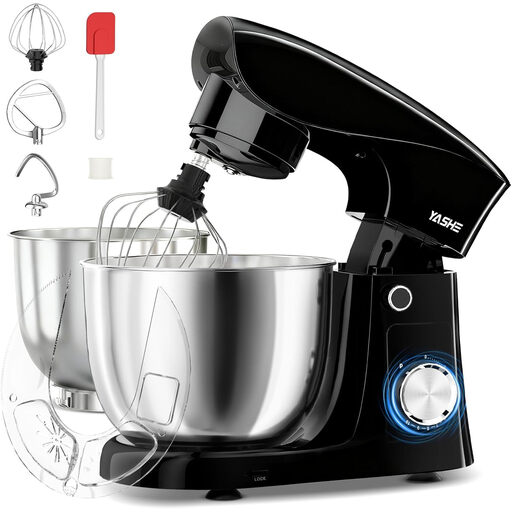 Image unavailable
YASHE SM-2548A stand mixer, two bowls
The two bowls may be useful when preparing different workshop batches; check that the mixing attachment supplied suits your recipe.
The product title mentions two bowls, a tilt-head and a dough hook.
View at Joybuy
 Image unavailable
AUCMA stand mixer, 5 litres, 10 speeds
The listed speed settings give you options while mixing; check the model-specific instructions for your dough.
The product title lists a 5-litre bowl, a tilt-head and a 400 W motor. It also mentions a beater, dough hook and whisk.
View at Joybuy
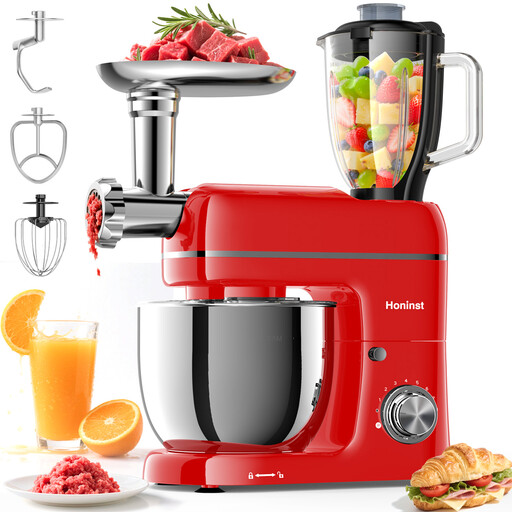 Image unavailable
Honinst 7-IN-1 stand mixer, 6.5 QT, 8 speeds
The product title lists several accessories; check that this version includes the parts you need for your recipe.
The title lists a 6.5 QT bowl and eight speeds. The usage information states that the appliance is intended for domestic use only.
View at Joybuy
 Image unavailable
Kenwood Go KZM35 stand mixer, grey
For this specific version, check which mixing attachment is included and whether it’s suitable for your cheese biscuit dough according to the model-specific instructions.
View at Joybuy
 Image unavailable
Monsga SM100 stand mixer, 5 litres, 8 speeds
The product title lists a flat beater alongside other attachments; check whether it’s suitable for your recipe.
The title lists a 5-litre stainless steel bowl and eight speeds.
View at Joybuy
Frequently asked questions
Should you use a whisk or a flat beater for cheese biscuit dough?
Start with your recipe and the manual for the exact model. KitchenAid recommends the flat beater for cookie mixtures and advises starting at a low speed; Kenwood says the K-beater is suitable for cookie dough. That doesn’t automatically make a whisk suitable for this dough.
Should the K-beater touch the sides of the bowl?
No. Kenwood says the K-beater shouldn’t touch the sides of the bowl, as this could damage the bowl and attachment. The brand recommends scraping down the sides of the bowl with a spatula as needed.
Can you use the stated maximum quantity for yeast dough as the limit for cheese biscuit dough?
Not necessarily. Bosch gives separate maximum quantities for cake batter and yeast dough for the MUM58251, while Kenwood lists capacities for other types of dough or flour. Weigh your recipe and check the relevant model instructions; this information doesn’t confirm a limit for cheese biscuit dough.
What should you look for in bowls and accessories for different workshop batches?
Check what’s included with the exact version and whether the attachments suit your recipe. The KitchenAid set reviewed here is described as including two bowls and two flat beaters; compare the model code and what’s supplied before choosing accessories.
Which Dutch food regulations may apply if participants receive the biscuits?
The requirements that apply depend on how the workshop and any sales or supply are organised. The NVWA says that businesses preparing, processing or selling food must work with an HACCP food safety plan or an applicable hygiene code. When selling or supplying unpackaged products to customers, allergen information must be available; milk and cereals containing gluten are on the relevant list.


