
Baker with a full kitchen cupboard
You want to mix batter regularly, but need to put the machine away after use. Measure your cupboard and think about where you’ll keep the bowl and attachments too.


If you regularly want to mix carrot cake batter hands-free, a compact stand mixer is a sensible choice, provided the machine, bowl and attachments all fit in your cupboard. Check the beater and usable bowl capacity too. If you mainly grate carrots or only bake occasionally, a food processor for the preparation or a hand mixer with a separate bowl may be more practical. However, you’ll need to handle the tasks separately.
You want to mix batter regularly, but need to put the machine away after use. Measure your cupboard and think about where you’ll keep the bowl and attachments too.
You start with whole carrots and want to know whether the machine can handle the preparation as well. The Consumers’ Association (Consumentenbond) distinguishes between mixing and whisking, and grating and chopping, so work out whether you’ll need a separate tool for those tasks.
You’re making a large cake or baking several cakes at once. Compare the amount of batter your recipe calls for with the capacity stated by the manufacturer for the exact model.
Choose this if: you regularly want to mix batter hands-free and have a suitable place to store the machine.
Trade-off: the machine takes up storage space; you may need a separate tool to grate carrots.
Choose this if: you bake occasionally and want an appliance you can put away after use.
Trade-off: you’ll need to hold the mixer while mixing and use a separate bowl; it won’t grate carrots for you.
Choose this if: processing carrots or nuts is the main task you want a machine to handle.
Trade-off: you may still need a mixer for the batter itself. The Consumers’ Association (Consumentenbond) describes stand mixers as suitable for mixing and whisking. In a KitchenAid carrot cake recipe, a food processor is used for the carrots and a mixer for the batter.
This guide to making carrot cake batter when cupboard space is tight is for consumers looking for a machine for this type of baking and taking their available storage space into account.
| Consideration | What to look for | Who should prioritise this? |
|---|---|---|
| Storage space and ease of handling | Measure the available width, depth and height. Remember to allow space for the bowl and loose parts too. | If I have to put the machine away after every use, I also want to know where the bowl and attachments will go. Around 36% of consumers give storage space top priority. |
| Mixing batter and preparing carrots | Check whether a whisk or flat beater is included. Decide separately how you’ll grate or chop the carrots. | I want an attachment that suits my batter and need to know which steps I’ll have to do myself. Among consumers who prioritise mixing, around 29% rank it as their top priority. |
| Bowl capacity for your recipe | Compare your recipe with the batter capacity stated by the manufacturer for the exact model; bowl volume and batter capacity are not the same thing. | If I’m making a large cake or several cakes, I don’t want to go by the number of litres alone. Around 21% of consumers prioritise the portion size they want to make. |
| Cleaning and extra parts | Check the cleaning instructions, what’s included and whether you’ll need a separate tool for grating. | After baking, I want to know how much cleaning and extra storage will be involved. Around 14% of consumers give maintenance and required parts top priority. |
Preparing carrots and mixing batter are two different tasks. A beater isn’t automatically a grater.
First decide whether you’ll use whole or pre-grated carrots. Then check whether a grating attachment is available for and compatible with the exact machine.
For grating, you may need a hand grater, a compatible attachment or a separate food processor.
Your available cupboard space needs to fit the whole machine and its parts. The number of litres doesn’t tell you how much batter your recipe will make.
Measure your storage space, then compare the dimensions of the exact model and the manufacturer’s stated batter capacity with your recipe.
A Joybuy product title for the Bosch MUMS2AW00 lists 1000 W and 5.5 litres, while Bosch gives 700 W and 3.8 litres for that model code.
Before deciding, check the full model code, bowl capacity and power against the manufacturer’s information.
The Go range may be worth considering if you’re looking for a stand mixer that needs to be put away after use. Check the full model code and version.
The MUM Series 2 is a compact stand mixer to compare if you need its dimensions and bowl capacity to suit your cupboard and recipe.
The 3.3 L tilt-head mixer is worth comparing if a smaller bowl and easy access to it are important to you.
The MX-4817 may be worth considering if bowl capacity matters more to you than having the shortest possible machine.
These Joybuy products are stand mixers and dough machines for mixing or preparing batter. Compare their features with your recipe and measure the space needed for the whole machine. For the specific electrical model, check the CE marking too. The NVWA states that CE marking is mandatory for electrical products.
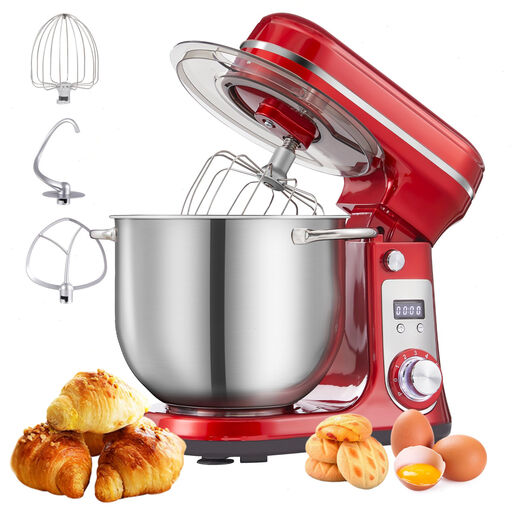 No image available
The product description says it can mix cake batter. Compare the bowl capacity with your recipe and measure your available cupboard space.
The product title lists 6 L, 1200 W, 6 speeds, a pulse function, an LCD screen and a timer.
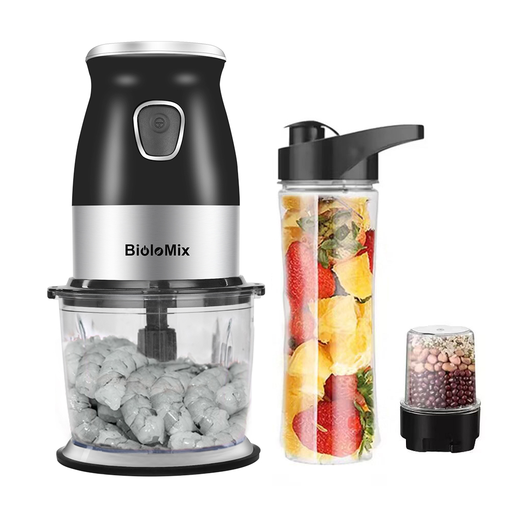 No image available
The product description mentions mixing batter. Check that the bowl capacity suits your recipe and that the machine will fit in your cupboard.
The product title lists a 500 W motor, one-button control, stainless steel blades and a food-safe bowl.
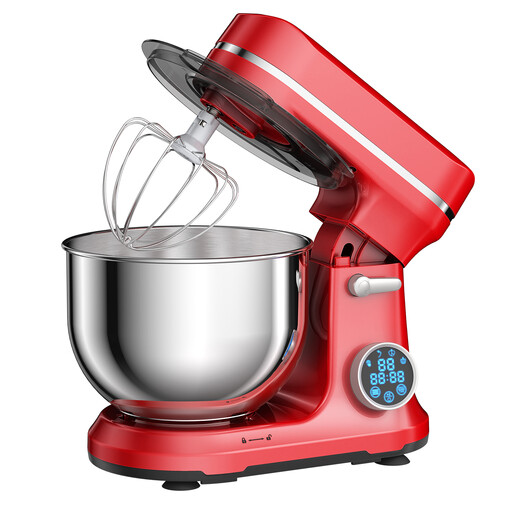 No image available
The product description mentions cake batter and removable parts. Check the cleaning instructions for your version.
The product title lists 5 L, 1200 W and 11 speeds, and says the removable parts are dishwasher-safe.
 No image available
The product description mentions a beater for mixing batter. Compare the stated external dimensions with your cupboard.
The product title lists 5 L, 10 speeds and a 400 W motor. The product description gives dimensions of 35.4 × 22.5 × 29.6 cm and mentions a tilt-head design.
 No image available
This machine is described as suitable for mixing and kneading. Check whether the instructions also cover the batter for your carrot cake.
The product information lists a 5 L bowl and a maximum dough capacity of 2.5 kg. This is not a stated capacity for cake batter.
No, not if you’re adding pre-grated carrots or using a hand grater. If you want a machine to handle the preparation, check whether a compatible grating attachment is available for the exact model. A beater isn’t designed for grating.
A flat beater or similar attachment is a sensible choice, if one is supplied with your machine. KitchenAid uses a flat beater for the batter in its recipe. Follow the instructions for your own recipe and machine too.
Check that you can remove the bowl and operate any tilt-head design where you plan to bake. The stated external dimensions don’t tell you exactly how much working space you’ll need.
Follow the cleaning instructions for the exact model and attachment. Bosch lists dishwasher-safe accessories for the MUMS2EW00, while Tristar says the parts for the MX-4817 are not dishwasher-safe.
The NVWA says CE marking is mandatory for electrical products sold in the Netherlands. Check the marking and product information for the specific model. CE marking does not compare mixing performance.