
Weekend baker making one cake
You mainly want to mix and whisk batter, without making extra room for features you won’t use. Consumentenbond lists cake and sponge batter among the uses for a food processor.


For a single everyday weekend cake, a stand mixer with a suitable mixing beater or whisk and a bowl that suits your recipe is a sensible starting point; extra capacity or attachments aren’t automatically more useful. If you bake larger batches, have limited storage space or want to weigh ingredients in the bowl, those needs may change your choice. Before you buy, check the CE marking and the requirements for food-contact parts for the exact model.
You mainly want to mix and whisk batter, without making extra room for features you won’t use. Consumentenbond lists cake and sponge batter among the uses for a food processor.
You want to be able to leave the appliance out or put it away after baking. So, check the dimensions of the exact model and allow enough space to operate the mixing arm.
You sometimes make several cakes and want to compare the stated batter capacity with the weight of your recipe. Check the capacity for batter, not just the bowl volume.
| What to consider | What should you look for? | Who is this important for? |
|---|---|---|
| Mixing attachments | Check whether the exact model includes a mixing beater or whisk; a dough hook is designed for kneading. | If you mainly want to mix batter for one weekend cake and don’t need unnecessary attachments, the right mixing tool matters. Around 42% of consumers rank this as their top priority. |
| Space | Compare the dimensions with your worktop or cupboard, and allow room for the mixing arm. | If space is limited and you want to put the mixer away after use, the room it needs may be the deciding factor. Around 25% of consumers give space their highest priority. |
| Amount of batter | Compare the weight of your recipe with the stated maximum quantity of cake batter; bowl capacity in litres is not the same as batter weight. | If you make larger cakes or several batches, you’ll want to know whether the batter is within the stated capacity. Around 17% of consumers prioritise batch size. |
| Cleaning and aftercare | Check the cleaning instructions for each part and whether replacement parts are available. | If you want to keep cleaning to a minimum after baking and are thinking about longer-term maintenance, cleaning and aftercare are worth considering. Around 16% of consumers give these points top priority. |
Bowl volume in litres and batter weight in kilograms measure different things. For the exact model, check the stated cake batter capacity and compare it with the weight of your recipe.
If capacity information is inconsistent, don’t treat any of the stated maximums as confirmed; ask for a clear specification for the model before buying.
A dough hook is designed for kneading. A product specification about dough on its own says nothing about the results you’ll get with vanilla cake batter.
Check which mixing attachments are included, and compare only information that actually relates to batter or cake making.
According to the Dutch government, there is no fixed statutory warranty period in the Netherlands. If a product doesn’t meet what you could reasonably expect, the retailer is your point of contact for a solution; a manufacturer’s warranty comes on top of your statutory rights.
Check exactly what an additional warranty offer covers, and keep its terms separate from your statutory rights.
The Go KZM35.000RD may be worth considering if a more compact design matters to you; carefully compare its batter capacity with your recipe.
The MUM5X720 is worth considering if weighing ingredients in the bowl or the ability to handle larger stated quantities is important to you.
The 7000 Series HR7962/21 is worth considering if you’d also use the included blender and meat mincer as well as baking.
The Artisan 5KSM125EER is an option if a mixing beater, whisk and scope for additional attachments suit the way you’ll use it.
This selection includes stand mixers and food processors for mixing batter, with a range of bowl sizes and features. Before you buy, check the CE marking for the exact model and whether parts that come into contact with food meet the applicable requirements.
 Image unavailable
The product name lists cake batter as a use; check whether its capacity suits the quantity in your recipe.
The product name lists a 5.5-litre bowl, 11 speeds and a 4.5-inch touchscreen. According to the product description, the bowl and accessories aren’t dishwasher-safe.
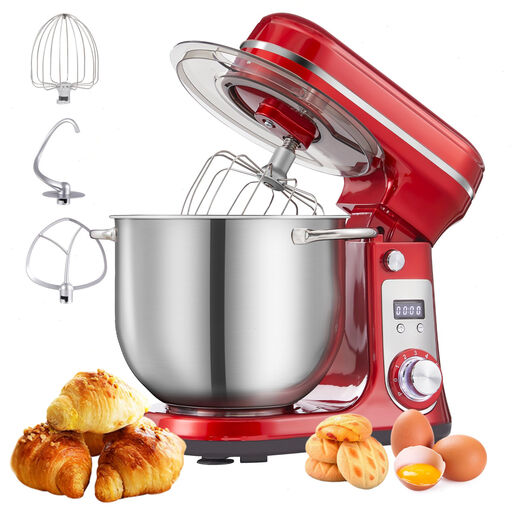 Image unavailable
The title describes this model as a stand mixer; compare the bowl capacity with the amount of batter you want to make.
The product name lists a 6-litre bowl, 6 speeds, a pulse setting and an LCD display.
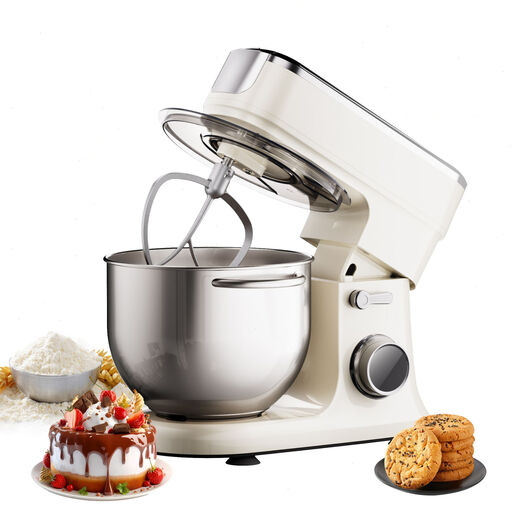 Image unavailable
The product name mentions cake making; check whether the stated bowl capacity suits your recipe.
The product name lists a 7-litre bowl, a 1200 W motor, a digital display and adjustable speeds. It describes the bowl and accessories as dishwasher-safe.
 Image unavailable
The product name describes a stand mixer with additional food preparation features; only consider them if you’ll use them too.
The product name lists a blender, meat mincer, citrus press and food chopper. The product description says the appliance is intended for domestic use.
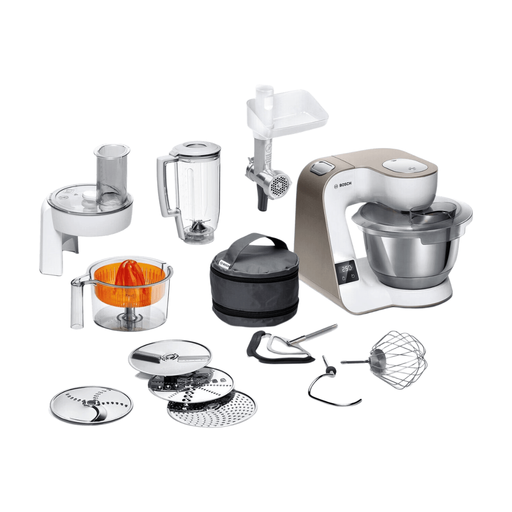 Image unavailable
This food processor may suit you if you’re looking for a Bosch model; check which features and attachments come with the exact version.
The product name lists a power rating of 1000 W.
A mixing beater may be suitable for ordinary cake batter; KitchenAid describes its flat beater as suitable for cake batter. A whisk is also designed to whip ingredients such as egg whites or cream until light and airy, while a dough hook is mainly for kneading. Check which attachments are included with the exact model.
Follow the manual when fitting the bowl and attachments, and check the cleaning instructions for each part. Consumentenbond warns that accessories aren’t always dishwasher-safe.
No. According to the Dutch government, there is no fixed statutory warranty period in the Netherlands. You’re entitled to a product that meets what you could reasonably expect; if there’s a fault, the retailer is your point of contact for a solution. A manufacturer’s warranty comes on top of your statutory rights.
For online purchases in the Netherlands, you generally have a statutory cooling-off period of up to 14 days after delivery, subject to legal exceptions. Before you buy, check the returns policy and the rules for unpacking and trying out the product.
According to the Netherlands Food and Consumer Product Safety Authority, CE marking is mandatory for electrical products. Parts that come into contact with batter must also meet the applicable requirements for food-contact materials. A product listing alone doesn’t show that a specific item meets these requirements.