
Bakers with limited shared worktop space
You need to move the mixer during or after baking and want to know whether the machine, bowl and attachments will fit.


Choose a stand mixer with a flat beater suited to the cake batter you usually make, and check the stated processing capacity for the exact model. The Dutch consumer association Consumentenbond lists mixing and whisking among the uses of a food processor; in a shared kitchen, storage and cleaning matter too. Don’t infer noise levels from bowl capacity or power: compare measurements for specific models taken under similar conditions.
You need to move the mixer during or after baking and want to know whether the machine, bowl and attachments will fit.
You’re looking for a suitable flat beater and bowl for your usual recipe, without assuming that the stated bowl capacity reflects mixing performance.
You share equipment or worktop space, so you’re considering how easy the parts are to reach and clean, as well as where to store any separate attachments.
Start with the flat beater and the amount of batter in your usual recipe. Then consider whether you can position, clean and store the mixer without taking up too much space in the shared kitchen.
| What to consider | What should you check? | Who should pay particular attention? |
|---|---|---|
| Mixing cake batter | Check which flat beater is included and what batter capacity is stated for the model. | I want my usual cake batter to be a good fit for the beater and the stated recipe capacity; around 29% of consumers put suitability for mixing tasks first. |
| Positioning and storage | Measure the available worktop and storage space, and check the dimensions of the exact version. | If I need to put the mixer away after baking, I want to know whether it will fit in the available space; around 24% of consumers prioritise space. |
| Cleaning | Check the cleaning instructions for each part; don’t assume all attachments are dishwasher-safe. | When sharing equipment with others, I want to be able to clean the parts thoroughly; around 18% of consumers put cleaning first. |
| Noise during use | Compare noise measurements or reviews for the exact models under similar conditions. | If others are in the kitchen at the same time, I want to consider potential noise; around 18% of consumers say noise is their top priority. |
| Replacing parts | Check which parts are available as replacements for the exact model. | If the mixer will be used by several people over a long period, I want to know in advance which parts I can replace; around 11% of consumers prioritise this option. |
A larger stated bowl capacity doesn’t prove that a small portion will mix well. The attachments included can also vary between versions.
Compare the amount in your recipe with the stated capacity for the model, and check which flat beater is included.
Choosing an unsuitable model could mean making your batter in several batches.
Cleaning instructions can vary from part to part, even if some accessories are dishwasher-safe.
Check the instructions separately for the bowl, beater, whisk and any splash guard.
If a part needs to be washed by hand, it will take extra time to tidy up after baking.
A stand mixer holds the bowl in place on the machine; with a hand mixer, you do the mixing yourself. The more practical choice depends partly on how often and how much you bake.
Compare the options based on your usual batch size and the space you have available for the machine.
Any extra attachments you don’t use will still take up storage space in a shared kitchen.
The MUM Serie 2 MUMS2EW00 is worth considering if you make cake batter and want to factor in the space available.
Kenwood positions the Go KZM35.000GY as a compact stand mixer; the kMix is a separate product range.
The Artisan 5KSM125 is an option to compare if you’re considering a 4.7-litre bowl and standard mixing attachments.
The Bake Partner QB525838 is worth considering if you’re also looking at other recipes and attachments besides cake batter.
The SMF03DGEU is worth comparing if you’re considering bowl capacity and the included mixing attachments.
This selection includes stand mixers to compare for cake batter, from compact models to versions with extra features.
 Image unavailable
The listed flat beater makes this model worth comparing for cake batter.
The product name lists a 5 L bowl, 10 speeds, a dough hook, whisk and flat beater.
 Image unavailable
Compare this stand mixer for cake batter and check whether the included flat beater is right for your recipe.
For the exact version, check which parts are included and what quantity is specified for your batter.
 Image unavailable
The compact design of the Kenwood Go makes this model worth considering if you want to put the mixer away after use.
Measure the space available and check which bowl and attachments are included with this version.
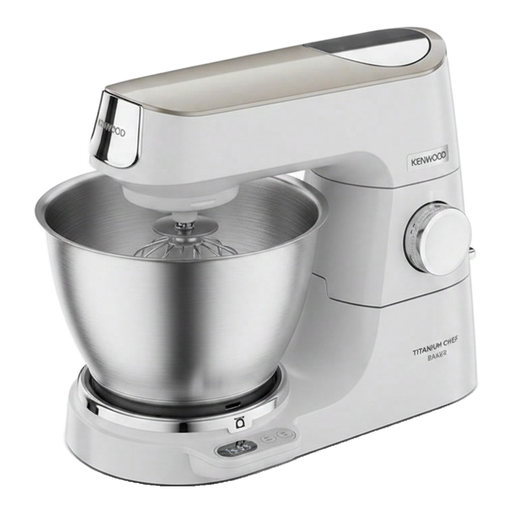 Image unavailable
Compare this version if you want to make other baked goods as well as cake batter.
Check which accessories and bowl come with this exact model and whether they suit your recipes and storage space.
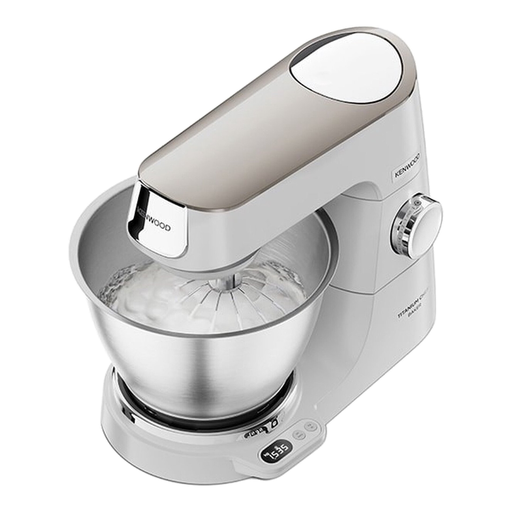 Image unavailable
This version is worth comparing if you’re planning to make other baked goods as well as cake batter.
Before buying, check the stated capacity and included parts for this model variant.
Use the flat beater or paddle attachment recommended by the manufacturer for your machine and recipe. A whisk may be intended for other preparations, so check the manual for the exact model.
Check that the machine fits in the available space and that you can put the bowl and attachments in place and remove them easily. Follow the cleaning instructions for each part; one accessory being dishwasher-safe doesn’t mean they all are.
The Dutch Nutrition Centre (Voedingscentrum) advises against tasting raw cake batter, as raw eggs and flour can contain harmful bacteria. Wash your hands before and after handling raw batter.
A fault after the manufacturer’s warranty expires doesn’t automatically mean you have no rights. According to the Dutch government (Rijksoverheid), consumers are entitled to a product that works as it should, depending on what they could reasonably expect; if a product is faulty, the seller must provide a solution. A manufacturer’s warranty is in addition to these legal rights.
European rules covering electrical safety, among other things, apply to electrical equipment within the relevant voltage range of 50 to 1.000 V AC. The European Union’s Your Europe service explains that the CE marking is a declaration made by the manufacturer, not a certificate issued by a central EU body. Check the conformity information for the exact version.