
Vandaag of morgen in huis

Kwaliteit gegarandeerd

Welkomstaanbiedingen ontgrendelen: GRATIS bezorging | Tot 80% korting | Gratis 30 dagen JoyPlus-proefperiode
Download de app
A stand mixer can make mixing, kneading and whisking considerably easier. Even so, it is unwise to focus only on wattage, the number of speed settings or an eye-catching product photo. As a Joybuy Product Recommendation Officer, I filter market information according to practical features, helping you compare marketing claims with verifiable product specifications.
For home bakers and families, three pitfalls are particularly relevant: a bowl that is too small, a motor that is not suitable for prolonged heavy dough, and accessories that are less versatile than the product title suggests.
Power ratings are not always presented in the same way. Some sellers quote peak power, while others show nominal or continuous power. As a result, a stand mixer with a higher figure is not automatically better suited to bread dough.
Also consider the operating time. For the Honinst models, the instructions state that heavy yeast dough should not be kneaded for longer than around 6 to 10 minutes at a time, after which the motor needs to cool down. The AUCMA models also specify a maximum continuous operating time. Always check the manual and the maximum dough quantity.
A 6-litre bowl may seem spacious, but the maximum amount of flour or dough may be lower. The Kenwood Go has a 4-litre stainless-steel bowl and, according to the product information, is suitable for a maximum of 1.4 kg of dough, with a maximum of 800 grams of flour. The Monsga SM100 is listed with a 6-litre bowl, but a recommended usable capacity of 5 litres.
An overfilled bowl can cause splashing, uneven mixing and additional strain on the motor. So, alongside the bowl capacity, check the stated capacity for dough and batter.
A multifunctional stand mixer can do more than a standard kitchen mixer, but check what is actually included. Some models come with a blender, meat grinder or additional slicing accessories; for others, these extensions are optional.
A standard set with a dough hook, whisk and beater is sufficient for most bakers. A blender or meat-grinder attachment is only useful if you use those functions regularly and have enough storage space.
A stand mixer with a stainless-steel bowl is generally practical for dough, batter and cream. Stainless steel is sturdy, does not absorb odours and is easy to wipe clean. A plastic bowl may be lighter and suit compact models such as the Bosch MUMS2AW00, but in that case pay particular attention to stability and the maximum fill level.
Consider the shape of the bowl, too. A wide bowl makes it easier to mix small quantities. A deeper bowl is useful for larger batches and helps to limit splashing when a splash guard fits securely.
Cake batter requires different settings from bread dough. A kitchen mixer with multiple speed settings gives you greater control:
Six speeds may be enough for everyday baking. Models with eight or ten settings offer more intermediate steps, but the number of settings alone says nothing about mixing quality.
A stand mixer moves while kneading. Non-slip feet, suction cups and a sturdy housing help prevent it from shifting on the worktop. Also check the dimensions: a larger model must not only fit on the worktop, but also be able to be placed beneath kitchen cupboards.
Noise claims come from the manufacturer. For example, Honinst specifies less than 60 dB, while AUCMA quotes around 68 to 72 dB at a distance of one metre. According to the brands’ own information, these are indicative figures; the perceived noise level may vary depending on the speed, surface and ingredients.

Why it suits this profile: This compact model has a 3.8-litre bowl and a basic set for whisking, mixing and kneading. This makes it suitable for smaller households and beginner home bakers.
The product information clearly states a maximum of 1.7 kg of dough and 2.4 kg of batter. This gives you a clearer indication of capacity than simply quoting a large bowl volume.
3D planetary mixing, 3.8L bowl, dough hook, whisk and beater. The motor power specified in the product details is 700W.
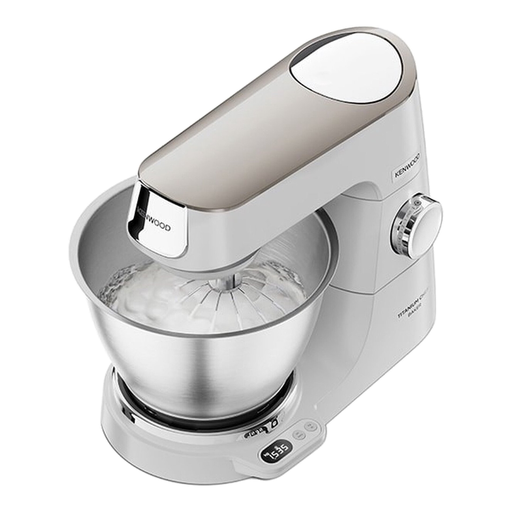
Why it suits this profile: For those who bake regularly and want to weigh ingredients directly in the bowl, this model offers features that go beyond those of a standard electric mixer.
The built-in scales reduce the number of separate tools needed on the worktop. The LightLift head makes it easier to add ingredients without removing the bowl completely.
1200W, 5-litre stainless-steel bowl, variable speed with pulse function, plus dough hook, whisk and K-beater included.
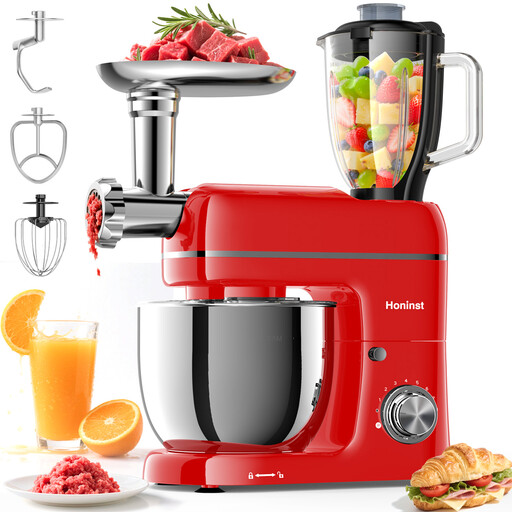
Why it suits this profile: This model is aimed at households that want to use a blender and meat grinder as well as mix, knead and whisk.
The included functions are clearly described: stand mixer, blender and meat grinder. Before buying, however, check which parts are included in the offer you have selected.
Maximum stated power of 1300W, 6 QT stainless-steel bowl, eight speeds plus pulse function, and a safety switch when the head is raised.
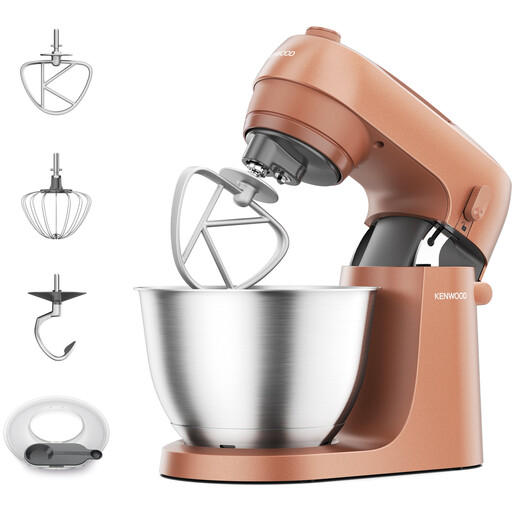
Why it suits this profile: Its compact dimensions of 33.5 × 18 × 30 cm are convenient for kitchens with limited worktop space.
The maximum dough quantity is stated, making it less likely that you will overload a compact bowl. The rotating splash guard also helps when adding ingredients.
800W, 4L stainless-steel bowl, six speeds plus pulse function, and three accessories: K-beater, whisk and dough hook.
We have compiled a complete, up-to-date list of products that fully meet these strict selection criteria and the applicable European safety regulations.
Yes, a stand mixer with a dough hook can knead bread dough. However, check the maximum dough capacity and recommended operating time. Heavy yeast dough places more demand on the motor than cake batter. It is better to work with smaller batches when the manual recommends this.
For single-person households or small batches, 3.8 to 4 litres may be sufficient. Families and frequent bakers may benefit from 5 to 7 litres. Alongside the bowl capacity, always check the usable quantity of dough and batter.
The stated wattage is not the same as the actual consumption during every preparation. The machine generally uses less energy when mixing briefly than when kneading under a heavy load for a prolonged period. Choosing a suitable size, using the right speed and taking breaks between heavy dough batches can help limit unnecessary strain and energy consumption.
