
Vandaag of morgen in huis

Kwaliteit gegarandeerd

Welkomstaanbiedingen ontgrendelen: GRATIS bezorging | Tot 80% korting | Gratis 30 dagen JoyPlus-proefperiode
Download de app
A stand mixer can make bread dough, cake batter and whipped cream much easier to prepare. But a high power rating isn’t everything. A mixer may look powerful on paper, yet prove unstable in use, make too much noise or come with a bowl whose full stated capacity isn’t practical to use.
For home bakers, families and keen cooks, there are three main pitfalls to watch out for:
An electric mixer with 400 to 500 watts may be suitable for cakes, biscuit dough and smaller batches of bread dough. If you regularly make heavy dough, the rated or maximum power isn’t the only thing to consider. Check:
A product description may claim a “powerful motor”. Treat this as a marketing claim and check the stated wattage, construction and safety instructions instead. For example, AUCMA lists a 450W pure-copper DC motor for one of its 6-litre stand mixers, while Monsga states 1000W peak power and 600W rated power. These figures aren’t directly comparable.
A stand mixer with a bowl of 5 to 6 litres gives you room to make family-sized batches, but the usable capacity is usually less than the bowl’s total volume. This helps prevent splashes and overloading. Look for:
A 6-litre bowl is handy for larger batches of cake batter or several loaves, but it also takes up more space. Measure the space on your worktop beforehand, and check the height needed when the head is tilted back.
A good stand mixer needs to do more than spin quickly. For different recipes, a gentle starting speed, several settings and sometimes a pulse function can be more useful. The most common attachments are:
Non-slip feet or suction cups help keep the machine in place. Check the noise level too. A stated figure, such as 68 to 72 dB or less than 60 dB, is usually a manufacturer’s specification and may vary depending on distance, speed and what you’re making. Don’t take it as a guarantee that the machine will be completely silent.

Why it suits this profile: This stand mixer is a good choice for beginners who want to make cakes, biscuits, pizza and smaller batches of bread dough without going straight for a large appliance.
The product specifications list a 5-litre bowl, 10 speeds, a pulse function and overheat protection. This makes its capacity clearer than that of models that focus only on a high wattage.
400W pure-copper AC motor, according to the product information, stainless steel bowl, dough hook, whisk, mixing beater and four suction cups.
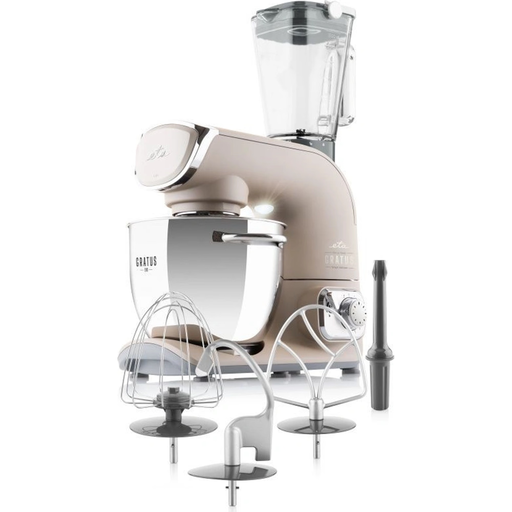
Why it suits this profile: This model is a good fit for home cooks who want extra functions as well as a sturdy, heavier machine for regular use.
The listed specifications include a metal housing, metal gears, thermal protection, a safety lock and a non-slip base. These are points you can check in addition to the power rating.
Rated power of 1500W, 5.5-litre stainless steel bowl, planetary mixing action and a 1.5-litre glass blender jug.
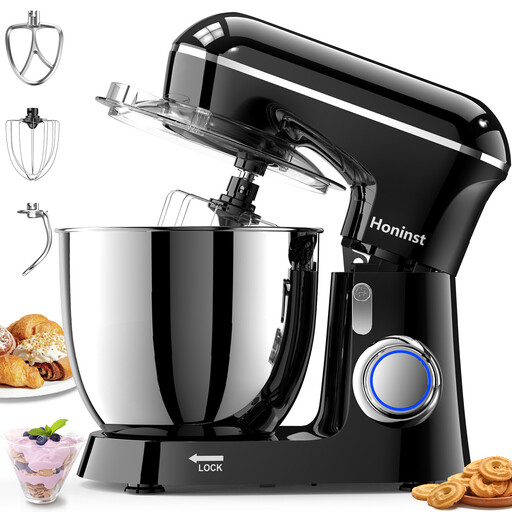
Why it suits this profile: The 6.5-quart bowl and 10 speeds make this an interesting option if you regularly make bread, pizza, pastries or larger batches of batter.
The manufacturer lists overheat protection, non-slip feet and a maximum continuous running time for heavy yeast dough. Check the manual before making large batches.
10 speeds, planetary mixing action according to the product description, 6.5 QT stainless steel bowl and three attachments: whisk, mixing beater and dough hook.
We’ve put together a complete, up-to-date list of products that meet these strict selection criteria and the applicable European safety regulations.
A stand mixer will generally last longer if you use it within the stated limits. Bear the following points in mind:
A hand mixer may be enough for the occasional cake or batch of whipped cream. If you often make bread dough, a stand mixer is usually a better choice, as the bowl and motor unit do the work for you. In a small kitchen, a compact 5-litre stand mixer may be more practical than a heavy model with extra blender and mincer attachments.
Yes, as long as the model has a dough hook and you stay within the stated limit. For heavy yeast dough, use a low to medium speed and follow the maximum running time in the manual.
For a household, 5 to 6 litres is often a useful size. A 6-litre stand mixer gives you room to make larger batches, but always check the working capacity for dough. The bowl’s total capacity isn’t the same as the maximum quantity of ingredients you can use.
Energy use depends on the actual power, speed and running time. A 1000-watt motor doesn’t automatically use 1000 watts continuously. Check the stated rated power and don’t run the appliance for longer than necessary.
