
Vandaag of morgen in huis

Kwaliteit gegarandeerd

Welkomstaanbiedingen ontgrendelen: GRATIS bezorging | Tot 80% korting | Gratis 30 dagen JoyPlus-proefperiode
Download de app
A good stand mixer can be the difference between a fun afternoon of baking and a kitchen full of frustration. But with so many models and so much marketing jargon, making the right choice is difficult. Many home bakers and amateur cooks fall into the same traps, ending up with an appliance that quickly starts gathering dust. As a Joybuy Product Recommendation Officer, I'm here to help you cut through the noise so you can make an informed decision.
Before you pull out your wallet, watch out for these three common missteps:
To avoid buyer's remorse, it's better to focus on a few concrete specifications. These determine whether a stand mixer does its job well and for a long time.
Look beyond the wattage and pay attention to the quality of the motor. Models with a copper motor are generally more durable and efficient. Another important feature is planetary mixing action. This means the head rotates in one direction while the accessory rotates in the opposite direction. This ensures every part of the bowl is reached and ingredients are mixed evenly, whether you're mixing light batter for cakes or preparing a sturdy dough.
The bowl is where all the action happens. The capacity, expressed in litres, determines how much you can prepare at once. For an average family, a bowl of 4.5 to 6 litres is usually sufficient. A stainless steel mixing bowl is a solid choice. This material is sturdy, easy to clean, doesn't absorb odours or flavours, and is built to last. A mixer with a bowl that has a handle is extra practical for pouring out batter.
A good electric mixer becomes a true dough kneading machine or an all-rounder with the right attachments. The following three are indispensable:
A splash guard is also a handy addition to keep your kitchen clean.
To help you get started, we've selected a few models that suit different needs and budgets, based on their specifications.

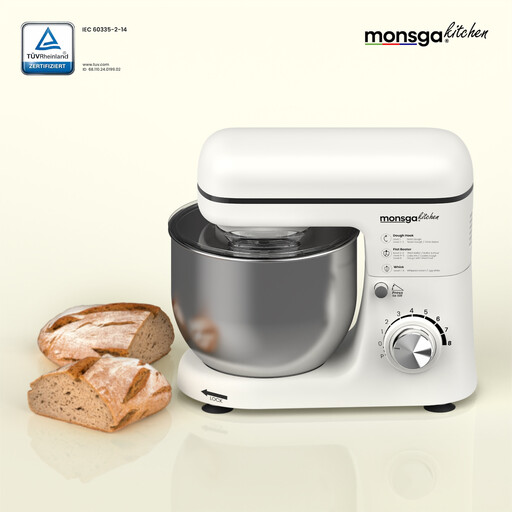
Why This Fits Their Persona: Ideal for those starting out with baking who want a functional appliance without paying a premium. This machine offers the essential features for the most common recipes.
This model comes with the three essential accessories (dough hook, whisk, beater), so there are no hidden costs. The 400W copper motor is designed for efficiency, not just as an empty marketing claim.
A 5L stainless steel mixing bowl is spacious enough for most recipes. The 10 speeds plus a pulse function give you precise control over the mixing process.
Why This Fits Their Persona: For the cook who regularly bakes and needs a reliable, powerful machine that can handle various tasks, from light batters to heavy bread dough.
The 1000W motor is combined with a planetary mixing system, which puts the focus on performance. The dough hook has a non-stick Teflon coating, indicating attention to the durability of the accessories.
According to the manufacturer, the noise level is relatively low (under 75 dB). The 5.0L stainless steel mixing bowl with a handle is practical and spacious enough for family-sized portions.
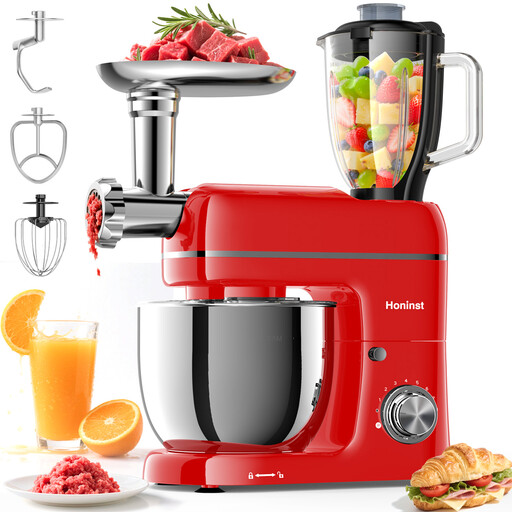
Why This Fits Their Persona: Perfect for those looking for a single appliance that combines multiple functions. This not only saves money but also precious counter space.
This model tackles the incomplete set pitfall head-on by being a mixer, meat grinder, and blender in one. The 1300W motor is functional here, as it also needs to handle tougher tasks like grinding meat.
The 7-in-1 functionality is its biggest advantage. The 6.5 QT (approx. 6.2 litre) bowl offers plenty of capacity for various preparations.
We have compiled a complete, up-to-date list of products that meet these selection criteria and comply with Dutch safety regulations.
Don't focus solely on wattage. An efficient kitchen machine with a copper motor and planetary mixing action can handle most home tasks perfectly well with 400-1000 watts. For very heavy and frequent use, such as with bread dough, a higher power rating combined with a quality motor can be useful, but for the average home cook, the motor's efficiency is more important than the number on the box.
Yes, a good dough kneading machine certainly can. Look for a model with a strong, efficient motor, metal internal components (gears), and a sturdy dough hook. Always start kneading at a low speed to avoid overloading the motor. The non-slip feet on the bottom ensure the machine remains stable on the countertop, even when kneading a heavy bread dough.
The terms are often used interchangeably. A stand mixer (or mixer with a bowl) is specifically the type of appliance discussed in this article: a machine on a stand with a tilt-head or bowl-lift design, a bowl, and attachments like a dough hook and whisk. The term kitchen machine is broader and can also refer to food processors that chop, slice, and grate. However, in common parlance, both terms are often used for the same appliance.
