
Vandaag of morgen in huis

Kwaliteit gegarandeerd

Welkomstaanbiedingen ontgrendelen: GRATIS bezorging | Tot 80% korting | Gratis 30 dagen JoyPlus-proefperiode
Download de app
A stand mixer can knead bread dough, mix cake batter and whip cream while you prepare other ingredients. But buying one doesn’t guarantee success. A stylish design, a high wattage or a large bowl doesn’t always tell you how it will perform in everyday use.
For home bakers and families, there are three common pitfalls to watch out for: confusing power claims, an overstated bowl capacity and accessories that turn out to be less practical than expected. Check the details before you buy and you’ll be able to choose a stand mixer that suits your kitchen, recipes and budget.
Brands sometimes list peak power alongside rated power. The MONSGA SM100, for example, is advertised as having 1000 watts of peak power, while the product information also lists 600 watts of rated power. These two figures aren’t the same. Rated power is a more useful point of comparison for extended use.
Motor power isn’t the only factor to consider in a dough mixer, either. The gearing, drive type and maximum dough quantity all affect how suitable it is for heavy bread or pizza dough. Always check the manual and the recommended quantities.
A 6-litre bowl sounds spacious, but its safe working capacity may be lower. The MONSGA SM100 has a total capacity of 6 litres, according to the product description, with a recommended usable capacity of 5 litres. When choosing a stand mixer for baking, the recommended capacity is more relevant than the maximum volume.
For a family, a 5-litre stand mixer may be enough for cakes, biscuits and a regular batch of bread dough. If you often make several loaves at once, you may need more room. Check the maximum quantity of flour or dough it can handle, not just the bowl’s capacity in litres.
Noise levels are usually measured in decibels. According to its product details, the MONSGA SM100 produces noise levels of up to 75 dB. Honinst states in its own product information that certain models produce less than 60 dB. These figures are only directly comparable if the measuring distance, speed and load are the same.
An electric mixer with a heavy dough hook may sound different when kneading than when whisking egg whites. Also check that the appliance stays steady on the worktop. Non-slip feet, suction cups and a sturdy work surface help reduce movement and vibration.
A stand mixer with several speeds is useful for cakes and pastries. Start on a low setting to minimise splashing, then increase the speed gradually. For bread dough, a low to medium speed is especially important. A pulse function can be useful for short bursts of mixing, but it’s no substitute for a suitable continuous setting.
As well as wattage, compare:
For example, Honinst lists 10 speeds for its 6.5QT model and advises against kneading heavy yeast dough continuously for more than 10 minutes. The AUCMA 6L is listed as having a maximum running time of 6 minutes without a break, according to the product information. Always follow the manual for the model you choose.
A stainless steel bowl is generally practical for everyday use and easy to clean. Check whether it has a handle, locks securely into place and is shaped to handle both small and large quantities.
Look out for the difference between:
A larger bowl also takes up more room on the worktop. Measure the depth, height and space needed when the tilt-head is raised before you buy.
The standard set usually consists of a whisk, flat beater and dough hook. The whisk is for cream and egg whites, the beater for cake batter and the dough hook for bread, pizza and other yeast doughs.
A stand mixer with accessories may offer extra functions, but check whether you’ll actually use them. According to the product description, the Honinst 7-in-1 includes a meat grinder and blender attachment, among other accessories. This can save space, but it also means more parts to store and clean.
Check whether each attachment is dishwasher-safe. On some models, certain metal parts must be washed by hand. The main unit must not be immersed in water.

Why it suits this type of user: The 5-litre bowl and three essential attachments are ideal for everyday baking, without the need for a large appliance with lots of extra functions.
The product information lists a 400W motor, a 5L bowl and 10 speeds. This makes it easier to compare the key specifications than with a model that only lists peak power.
10 speeds, pulse function, stainless steel bowl, dough hook, whisk, beater and overheating protection, according to the product description.
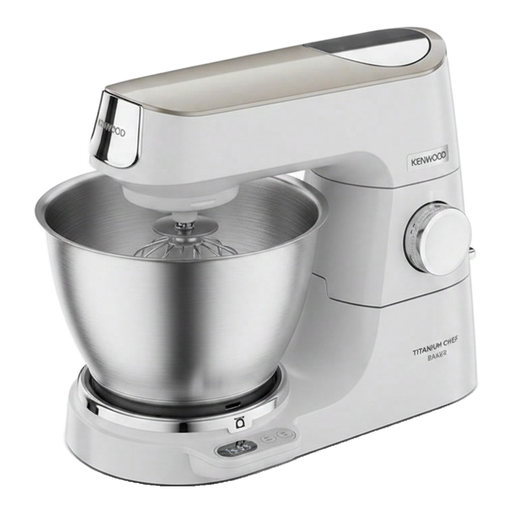
Why it suits this type of user: Ideal for bakers who want precision and value extra convenience when working through several preparation steps.
The built-in scales mean you don’t need a separate set of scales for every step. The product information lists 1200W, a 5L stainless steel bowl and variable speed with a pulse function.
Built-in scales, 5L stainless steel bowl, dough hook, whisk and K-beater; according to the product information, a statutory EU guarantee of at least 2 years applies.
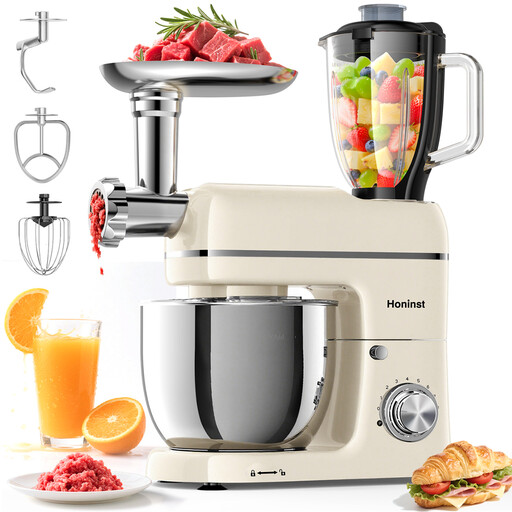
Why it suits this type of user: An option for households that want to grind meat or blend ingredients as well as knead, mix and whisk.
The product description lists a maximum motor power of 1300W, a 6QT stainless steel bowl, a safety switch and a pulse function. Before buying, check the actual accessories and maximum quantities it can handle.
According to the product information, this model combines a mixer, meat grinder and blender with a dough hook, whisk and beater.
We’ve put together a complete, up-to-date list of products that meet these strict selection criteria and the applicable European safety regulations.
For a household that regularly makes cakes, biscuits and one loaf of bread, a 4 to 5-litre bowl is often practical. A 5 to 6-litre bowl may be more convenient for larger families or multiple batches of dough. Always check the recommended usable capacity and maximum dough quantity.
There’s no single wattage that suits every recipe. Consider the rated power, motor protection, dough hook and maximum dough capacity. A model with a high peak power may look powerful on paper, but its running time and recommended load are just as important.
Its lifespan depends on build quality, load, cleaning and running time per cycle. A stand mixer will generally last longer if you stick to the maximum quantities, avoid mixing heavy dough continuously for too long and only use approved attachments. Also check the statutory guarantee and service conditions before you buy.
