
Vandaag of morgen in huis

Kwaliteit gegarandeerd

Welkomstaanbiedingen ontgrendelen: GRATIS bezorging | Tot 80% korting | Gratis 30 dagen JoyPlus-proefperiode
Download de app
A stand mixer can make kneading, whisking and mixing much easier. But a shiny finish or a high wattage doesn’t guarantee that a machine is right for your kitchen. If you mostly bake bread, you’ll have different needs from someone who only makes cake batter now and again.
So when comparing models, look beyond the price and appearance. The biggest differences often come down to usable bowl capacity, stability while kneading and the accessories included. Read on to find out what to look for and which models suit different needs.
Manufacturers sometimes use peak power, rated power and motor power interchangeably. So a stand mixer advertised as “1000 W” isn’t automatically more powerful when handling heavy bread dough than a model with a lower stated wattage. Check the maximum dough capacity, recommended running time and instructions on when to let the machine rest, too.
For example, the Monsga SM100 is listed as having a peak power of 1000 W, alongside a rated power of 600 W. These are different specifications. Compare like with like, and always check the product manual.
A 6-litre bowl sounds spacious, but the practical amount of batter or dough it can handle is lower. Monsga, for example, lists a maximum capacity of 6 litres and a recommended capacity of 5 litres. The Bosch MUMS2AW00 has a 3.8-litre bowl, with a recommended maximum of 1.7 kg of dough or 2.4 kg of batter.
Overfilling the bowl can lead to splashes, uneven mixing and extra strain on the motor. Choose a capacity to suit the portions you usually make, rather than simply going by the biggest number on the packaging.
A stated noise level is only useful for comparison when the measurements were taken under the same conditions. Monsga lists a noise level below 75 dB, while Aucma gives a figure of 68–72 dB measured within one metre. Honinst lists a level below 60 dB. These figures come from the product descriptions; your actual experience may vary depending on the speed, surface and recipe.
Also look for non-slip feet, suction cups, the machine’s weight and the design of the head. These features matter more than a stylish colour accent, particularly on a stand mixer with a dough hook.
A stainless steel bowl is sturdy, stands up well to everyday use and is easy to clean. A plastic bowl may be lighter and isn’t necessarily unsuitable, but check its capacity and whether it’s dishwasher-safe.
Use this as a guide:
A versatile stand mixer usually comes with:
Check whether the accessories are included or need to be bought separately. A stand mixer with extra attachment hubs may be expandable later, but accessories from different brands usually aren’t interchangeable.
A range of speeds gives you more control when using an electric mixer. Start on a low setting when adding flour and liquids to help prevent splashes. A higher speed is useful for whipping cream or egg whites. A pulse function can come in handy for short bursts of power.
Automatic speed control sounds appealing, but check the controls, stability and permitted running time, too. For heavy dough, a steady low speed is often more important than having lots of speed settings.

Why it suits this type of user: According to the product information, this machine has a 3.8-litre bowl, 700 W of power and a baking set with a whisk, beater and dough hook. It’s a good fit for smaller batches and regular cake making.
The stated dough and batter limits give you a clearer idea of how much you can actually make than the bowl capacity alone.
3D planetary mixing, non-slip feet and dishwasher-safe accessories, according to the product description.

Why it suits this type of user: The product details list 1200 W of power, a 7-litre bowl, automatic speed control and an integrated scale. This makes it a good match for keen home bakers who make larger batches.
The larger capacity and stated features give you more to go on than a high motor wattage alone.
Stainless steel construction, a 7-litre capacity, 1200 W of power and an integrated scale, according to the listed specifications.

Why it suits this type of user: This model is listed with a 5-litre stainless steel bowl, 8 speeds, a dough hook, a whisk and a splash guard. That makes it suitable for a range of recipes for families and keen home bakers.
The recommended capacity of 5 litres makes it clear that the bowl’s maximum capacity shouldn’t automatically be treated as its practical dough capacity.
8 speeds, a 304 stainless steel bowl and, according to the product description, overload protection and non-slip feet.
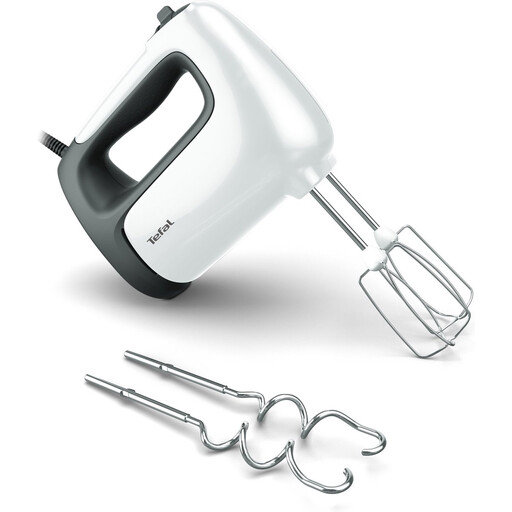
Why it suits this type of user: A hand mixer takes up little space and, according to the specifications, has 500 W of power, 5 speeds and a turbo function. It’s a good choice for cakes, whipped cream and the occasional light dough.
You won’t be paying for a large bowl or fixed stand when you mainly mix small quantities.
5 speeds, a turbo function and dishwasher-safe accessories, according to the product information.
We’ve put together a complete, up-to-date list of products that meet these strict selection criteria and the applicable European safety regulations.
Yes, as long as the model has a suitable dough hook, enough stability and a stated dough capacity. Use a low or medium speed for heavy dough and don’t exceed the maximum quantity. Follow the recommended resting time in the manual, too, to prevent overheating.
It depends on what you’re making. A mid-range model is often powerful enough for cake batter, cream and biscuit dough. If you regularly make bread or pizza dough, the motor design, overload protection, transmission and maximum dough capacity are just as important as the wattage.
A hand mixer is usually more compact and suitable for smaller quantities. A stand mixer takes up more space, but holds the bowl and accessories for you. If you often bake bread or make larger batches, it can make the job easier. As well as the purchase price, compare the accessories, cleaning time and worktop space available.
