
Vandaag of morgen in huis

Kwaliteit gegarandeerd

Welkomstaanbiedingen ontgrendelen: GRATIS bezorging | Tot 80% korting | Gratis 30 dagen JoyPlus-proefperiode
Download de app
A stand mixer can knead bread dough, make cake batter and whip cream without you having to spend ages mixing by hand. But there are big differences between models. A high wattage on the box doesn’t automatically mean a machine is suitable for heavy dough. And a large bowl may offer less usable capacity than you’d expect.
So pay close attention to the build, the accessories and the maximum quantities stated in the instruction manual. Read on to find out which common pitfalls are easy to overlook and which models suit different needs.
A motor rated at 1,000 or 1,300 watts sounds appealing, but that figure doesn’t tell you everything about performance. Manufacturers may use different measurement methods, such as peak or rated power. In some situations, a lower-wattage motor with a suitable transmission may be more practical than one with a higher peak power rating.
So check these details too:
A 6-litre bowl doesn’t mean you can fill it to the brim. Dough needs room to rise and for the ingredients to move around. For example, the Bosch MUMS2AW00 has a 3.8-litre bowl and states a maximum capacity of 1.7 kg of dough or 2.4 kg of batter. The Kenwood Go has a 4-litre bowl and a maximum dough capacity of 1.4 kg.
So look at the maximum dough capacity, not just the number of litres. If your family bakes bread regularly, a stand mixer with a larger bowl may be more practical. For smaller batches, a compact model takes up less room on the worktop.
A multifunctional stand mixer with a blender, mincer and extra attachments may seem appealing. But if you only make cake batter and bread dough, you could be paying for features you rarely use. Check which accessories are included as standard and which are available separately.
For baking, these three attachments are usually enough:
For occasional baking, a compact stand mixer with an average-powered motor is often enough. If you make bread or pizza dough several times a week, it’s worth checking the machine’s stability, drive system and recommended rest periods.
Motor protection won’t stop you from overloading the machine. Stick to the maximum quantities and use a low to medium speed for heavy dough. Some models state a maximum continuous operating time of, for example, six to ten minutes, after which the motor needs to cool down.
A stand mixer with multiple speeds gives you more control over delicate and heavy mixtures. A low setting is suitable for gently combining flour and liquid; a higher setting can be used for whipping cream or egg whites. A pulse function is handy for short bursts of power, but it doesn’t replace a suitable speed setting for extended kneading.
With planetary mixing action, the attachment rotates on its own axis while moving around the edge of the bowl. Some models combine this with the bowl rotating in the opposite direction. According to Bosch’s product description, its 3D Planetary Mixing Technology moves the attachment in three directions while the bowl rotates in the opposite direction. This is a manufacturer’s product specification, not a guarantee that every recipe will mix without you needing to scrape down the bowl.
A stand mixer with a stainless steel bowl is easy to clean and suitable for everyday use. A plastic bowl may be lighter and works well with a compact machine. Also look for non-slip feet, suction cups and a weighty housing. A lightweight machine may move around during kneading, especially on a smooth worktop.
Noise levels aren’t listed for every product. Where a brand gives a figure, it’s its own product specification. For example, Honinst states less than 60 dB for certain models, while Aucma gives a figure of around 68–75 dB for other versions. Your actual experience may depend on the recipe, the surface and the speed.

Why it suits this type of user: This compact stand mixer is designed for home use and comes with a whisk, mixing attachment and dough hook. That gives you what you need to get started with cakes, biscuits and lighter doughs.
The product information gives more than just the 700 W motor rating: it also states the bowl capacity and maximum quantities for dough and batter.
3D planetary mixing action, a 3.8-litre bowl and dishwasher-safe accessories, according to the product description.
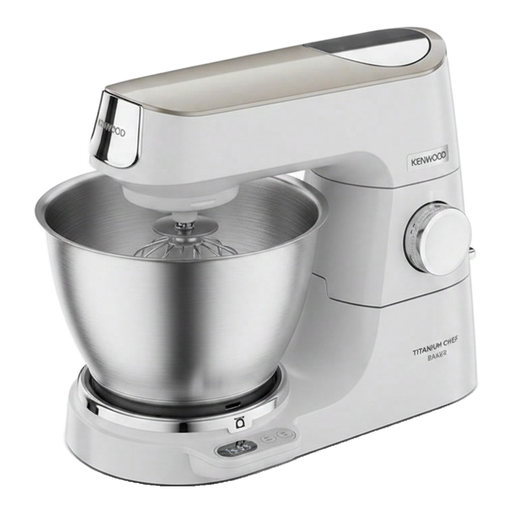
Why it suits this type of user: This model is designed for regular bakers who value convenience and want to weigh ingredients straight into the bowl.
The built-in scales mean you don’t have to rely solely on separate marketing claims about accessories or power.
1200 W, a 5-litre stainless steel bowl, variable speed with pulse function, and a dough hook, whisk and K-beater included.
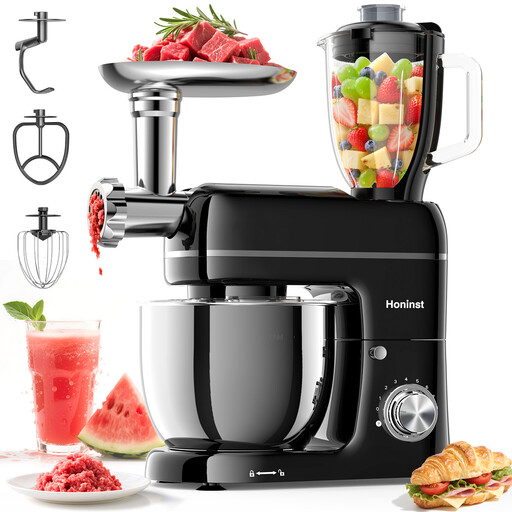
Why it suits this type of user: A good choice for households that want to use a blender and mincer as well as mix and knead.
The extra functions are clearly listed: a blender, mincer, dough hook, whisk and mixing beater. Still, check first whether you’ll actually need these attachments.
Up to 1300 W according to the product information, a 6 QT stainless steel bowl, eight speeds plus pulse function, and a safety lock.
We’ve put together a complete, up-to-date list of products that meet these strict selection criteria and the applicable European safety regulations.
Place the stand mixer on a flat, dry surface and lock the bowl and attachment into place before you start. When mixing batter or dough, begin at a low speed to reduce splashing and avoid overloading the machine. Stop the machine completely before changing the whisk, mixing attachment or dough hook.
Clean the attachments straight after use, following the instruction manual. Some parts are dishwasher-safe; metal or painted parts may need to be washed by hand. Never immerse the motor housing, plug or cable in water. The statutory warranty for many of these products is at least two years within the European Union; additional rights may apply under the relevant Dutch law.
Yes, as long as the model has a dough hook and the instruction manual allows you to make bread dough. Always check the maximum dough capacity and recommended operating time. Heavy dough puts more strain on the motor than batter or whipped cream.
For smaller households, around 3.8 to 5 litres may be enough. If you often make several loaves, pizzas or large batches of cake batter, consider a bowl of 5 to 7 litres. The stated maximum dough quantity is still more important than the bowl’s total capacity.
Energy consumption depends on the power rating and how long you use the machine. A 1,000-watt machine would theoretically use a maximum of 1 kWh in one hour, but the motor doesn’t always run continuously at its stated power while mixing. Shorter preparation times and using the machine correctly can help keep consumption down.
