
Vandaag of morgen in huis

Kwaliteit gegarandeerd

Welkomstaanbiedingen ontgrendelen: GRATIS bezorging | Tot 80% korting | Gratis 30 dagen JoyPlus-proefperiode
Download de app
A stand mixer can take a lot of the work out of baking and cooking. But it’s not a good idea to focus only on the wattage or eye-catching design. A stand mixer that looks suitable for bread dough may have too little capacity in practice, be difficult to clean or sit unsteadily on your worktop.
For home bakers, keen cooks and families, there are three main pitfalls to watch out for:
Read on to find out which specifications matter and which models suit different needs.
Power gives you an initial idea of the motor’s capabilities, but it doesn’t tell you everything about performance. Manufacturers sometimes quote peak power, even though the machine has a lower rated power during normal use.
For example, the Monsga SM100 is listed with 1,000 watts of peak power and 600 watts of rated power. That difference matters if you regularly want to knead heavy bread dough. As a general rule, use a low to medium speed for dough and follow the maximum dough capacity in the manual.
A stand mixer with multiple speeds is more practical for different recipes:
Also consider how the power is used. A planetary mixer moves the whisk or dough hook around the bowl, helping to incorporate ingredients more evenly, according to the product description. This is useful for batter and cream, but it doesn’t replace weighing and adding ingredients correctly.
A stand mixer with a 4 to 6-litre mixing bowl is often a good fit for families, but the usable capacity is lower than the bowl’s total volume. According to its product specifications, the Monsga SM100 has a bowl with a maximum capacity of 6 litres and a recommended working capacity of 5 litres.
When comparing models, look at:
A stainless steel mixing bowl is practical for everyday use. Stainless steel doesn’t retain ingredient odours and is easy to clean by hand. Check whether the bowl is dishwasher-safe, though: that doesn’t automatically apply to every part of a stand mixer.
If you already own a mixer, a separate bowl can be a useful addition. A stainless steel mixing bowl is handy for weighing, mixing or resting ingredients.
A dough mixer has to handle a lot of force while kneading. Non-slip feet, a sturdy base and a bowl that locks into place are practical features to check for. A tilting head makes it easier to change attachments, but always check that the head locks securely.
Noise levels are also worth considering. The Monsga SM100 is listed as producing less than or around 75 decibels. This is a verifiable product specification, but how loud it sounds can depend on the speed, the surface it’s placed on and the amount of dough.
Finally, consider maintenance:
Don’t use wire wool or abrasive cleaners on stainless steel mixing bowls. According to the product information, salt and acidic residue can cause stains or corrosion if left for too long.
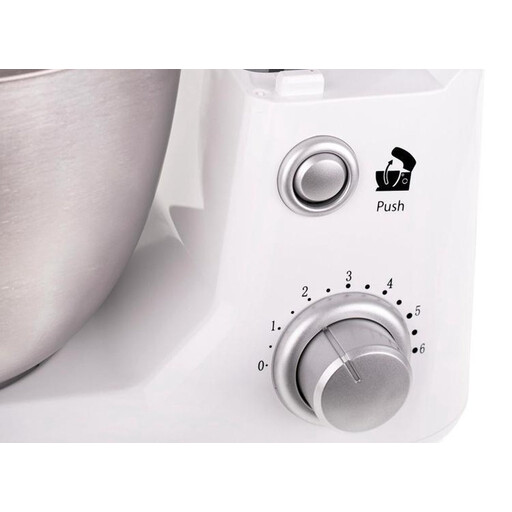
Why it suits this profile: An accessible stand mixer for cakes, batter, whipped cream and smaller batches of dough. The 4-litre bowl is well suited to regular home use if you don’t want a large appliance.
The listing distinguishes between 500 watts of power and 1,000 watts of maximum power, making it clearer which figure you’re comparing.
4-litre stainless steel mixing bowl, planetary mixing action, 6 speeds, splash guard and non-slip suction feet.

Why it suits this profile: A good fit if you’re looking for a larger bowl, multiple speeds and accessories for baking, whipping cream and preparing family-sized portions.
The product information lists both 1,000 watts of peak power and 600 watts of rated power. The recommended bowl capacity is 5 litres, compared with a maximum capacity of 6 litres.
304 stainless steel mixing bowl, 8 speeds, tilting head, splash guard and included whisk, beater and dough hook.
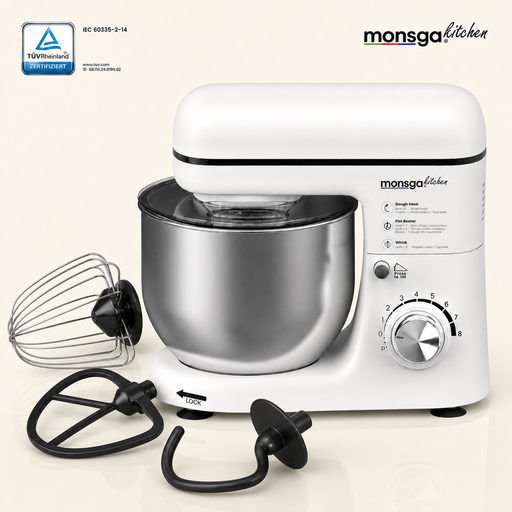
Why it suits this profile: An option for regular bakers who want one appliance with a generous bowl and accessories for dough, batter and whipped cream.
The recommended capacity and rated power are listed in the specifications. This helps you avoid overloading the mixer with quantities that are too large.
6-litre bowl with a recommended working capacity of up to 5 litres, 8 speeds, planetary mixing action and dishwasher-safe accessories according to the product description.
We’ve put together a complete, up-to-date list of products that meet these strict selection criteria and current European safety regulations.
It depends on the rated power, the type of dough and the quantity. So don’t check the maximum wattage alone. Use a low to medium speed for heavy dough and don’t exceed the recommended capacity.
For a household, 4 to 5 litres is often practical. A 6-litre bowl gives you more room, but the usable capacity is still lower than the total volume. Check the recommended quantity of batter or dough in the product specifications.
Its lifespan depends on how often you use it, how hard you work it, how you clean it and how you store it. Don’t leave the motor running for longer than necessary, use the right speed for dough and remove the attachments before cleaning the appliance. Also check the statutory guarantee and any manufacturer’s warranty for each product.
