
Vandaag of morgen in huis

Kwaliteit gegarandeerd

Welkomstaanbiedingen ontgrendelen: GRATIS bezorging | Tot 80% korting | Gratis 30 dagen JoyPlus-proefperiode
Download de app
A stand mixer can knead bread dough, mix batter and whip cream while you prepare other ingredients. But a purchase isn’t automatically a good one just because the box lists a high wattage, a large bowl or lots of speeds. For most households, stability, usable capacity and ease of cleaning matter most.
The right stand mixer depends on what you actually make. A family that bakes bread every week has different needs from someone who occasionally makes cake batter.
The stated wattage doesn’t tell you everything about performance. Some manufacturers list peak power, while others give the motor’s rated power. The Monsga SM100, for example, is advertised with 1000 W peak power and 600 W rated power. The AUCMA models are listed at 450 W or 400 W respectively.
So, also check:
A powerful stand mixer is about more than a motor with a high figure. The gearing, bowl shape and construction also affect how well it handles bread dough.
A 6-litre bowl doesn’t mean you can always mix 6 litres of batter or dough. The Monsga SM100 has a maximum bowl capacity of 6 litres, but a recommended usable capacity of 5 litres. With bread dough, the practical limit is usually lower than it is for liquid batter.
So, look at the usable capacity, not just the number of litres. A bowl that’s too small can lead to splashes and overload the mixer. An unnecessarily large bowl, on the other hand, takes up more worktop space and may be less convenient for small quantities.
A mixer with a whisk, flat beater and dough hook gives you a good starting point for baking. Check that the accessories suit your recipes and find out how they should be cleaned. According to some product information, certain metal parts aren’t dishwasher-safe.
A splash guard, tilting head and locking mechanism are useful features too. They won’t prevent every mess, but they make it easier to add ingredients and change accessories.
For cake batter and whipped cream, several speeds and a low starting speed are important. For dough, a stable low speed is particularly useful. A pulse function can come in handy for short, powerful bursts of mixing, but it’s no substitute for good speed control.
An electric mixer with 6 to 10 speeds will usually give you enough control for everyday use. Also check the manufacturer’s instructions. Honinst’s product information, for example, advises against kneading heavy yeast dough continuously for longer than the stated period, and recommends letting the motor cool afterwards.
A stand mixer with a stainless steel bowl is practical for regular use. Stainless steel can withstand everyday mixing and is easy to clean. Check the bowl’s shape too: a wide bowl is useful for batter, while a well-fitting whisk should also work with smaller quantities.
Many models in this selection have a bowl capacity of 5 to 6.5 litres. For a small household, a model with a capacity of around 4 litres may be enough. The Kenwood Go KZM35, for example, has a 4-litre bowl and a stated maximum dough capacity of 1.4 kg.
A mixer that moves around while kneading is impractical and could damage your worktop. Non-slip feet, suction cups and a heavy metal housing can help. Check the dimensions before you order, too. You may want to leave your stand mixer on the worktop, but make sure there’s enough room to lift the head.
Noise levels are only easy to compare when they’re measured under the same conditions. Product information for some models lists figures such as 60, 72 or 75 dB. Treat these as the seller’s product specifications, not a guarantee that the mixer will sound equally quiet in every situation.

Why it suits this type of buyer: This model has a 5-litre stainless steel bowl, 10 speeds and three essential accessories for cakes, cream and dough, without the need to go straight for a larger machine.
The product information lists 400 W, 10 speeds, a pulse function and a maximum noise level of 75 dB. This gives you more to consider than just a high peak power figure.
5L stainless steel bowl, 10 speeds plus pulse function, dough hook, whisk and beater.
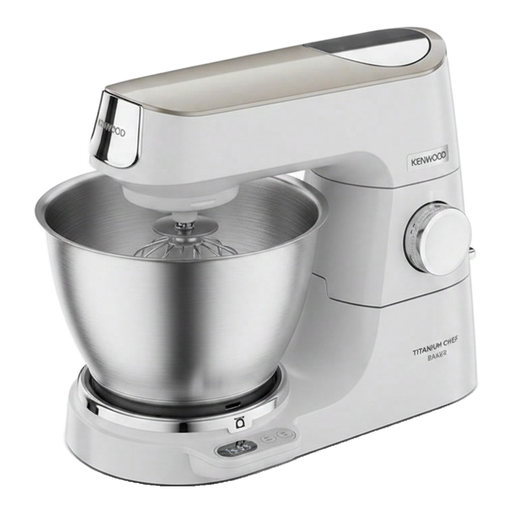
Why it suits this type of buyer: A good choice for home bakers who value convenience and sturdy construction, and regularly make different types of batter and dough.
The listed specifications include a metal housing, a 5-litre stainless steel bowl and variable speed with a pulse setting. The built-in scales let you weigh ingredients directly into the bowl.
1200 W, 5L stainless steel bowl, built-in scales, dough hook, whisk and K-beater.
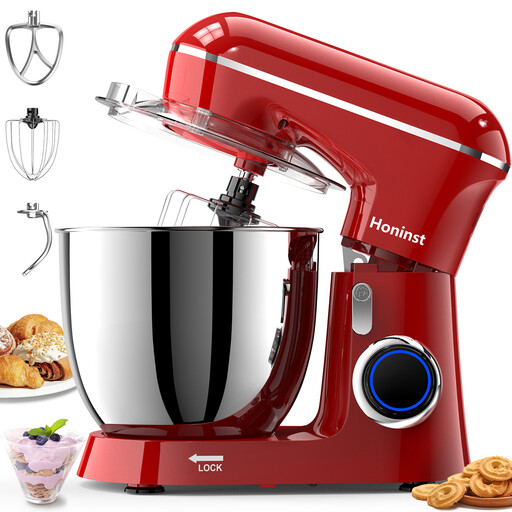
Why it suits this type of buyer: An option for households that make larger quantities of cake, pizza, bread or pastries and want a choice of speeds.
The stated 6.5 QT stainless steel bowl, 10 speeds, tilting head and non-slip feet give you a clearer idea of capacity and stability before you buy. Always follow the manual when kneading heavy dough.
10 speeds, planetary mixing action according to the product description, three accessories and a stated noise level below 60 dB.

Why it suits this type of buyer: Its compact size suits a smaller worktop, while the machine can handle everyday batter, whipped cream and dough quantities up to the stated limit.
The product information clearly states 800 W, 6 speeds, a pulse function, a 4-litre bowl and a maximum dough capacity of 1.4 kg.
Compact housing, stainless steel bowl, splash guard with measuring scoop, plus a whisk, K-beater and dough hook.
We’ve put together a full, up-to-date list of products that meet these strict selection criteria and the applicable European safety regulations.
Always place your stand mixer on a flat, dry surface. When making dough, start at a low speed and add the ingredients gradually. Don’t exceed the maximum quantity stated in the manual, even if the bowl looks large enough.
Also follow these basic rules:
More power doesn’t mean a mixer can run indefinitely. The running time and maximum dough capacity are just as important for reliable everyday use.
Yes, as long as the model has a dough hook and you stay within the stated dough capacity. Use a low to medium speed and check the manual for the maximum running time. A mixer used for bread dough should also stay firmly in place while kneading.
For regular baking, 4 to 5 litres is often practical. Families or anyone making larger quantities may want to look at bowls of 5 to 6.5 litres. Always check the recommended usable capacity, as the bowl’s maximum capacity isn’t the same as the maximum amount of dough you can mix.
Power consumption depends on the rated wattage and how long you use the mixer. A 1200 W mixer won’t automatically use 1.2 kWh for a short mixing session. Check the stated wattage, choose a suitable speed and don’t run the machine for longer than necessary.
