
Vandaag of morgen in huis

Kwaliteit gegarandeerd

Welkomstaanbiedingen ontgrendelen: GRATIS bezorging | Tot 80% korting | Gratis 30 dagen JoyPlus-proefperiode
Download de app
A stand mixer with a bowl can make baking bread, cakes, pizza and pastries easier. But a high wattage rating or a large bowl doesn’t automatically make it the right choice for your kitchen. If you only look at the product title, you could end up with a mixer that’s too small for bread dough, difficult to clean or takes up more space than you need.
Look out for these three common pitfalls:
For batter and whipped cream, an electric mixer with several speed settings is usually sufficient. For bread dough, pizza dough and other heavy mixing, torque, drive system and permitted operating time matter more than wattage alone.
A stand mixer for bread dough should have a sturdy setting and, ideally, a stand mixer with a dough hook. Start mixing dough at a low speed and stick to the maximum quantity stated in the manual. Some models can only run for a few minutes at a time with heavy dough and then need to cool down.
A pulse function is useful for short bursts of powerful mixing, but it doesn’t replace a suitable dough setting. Also look for non-slip feet or suction cups: these help stop the stand mixer moving across your worktop while kneading.
A stainless steel mixing bowl is practical for regular use. Stainless steel doesn’t absorb odours, is relatively easy to clean and works well for both batter and dough. Alongside the bowl capacity, check the recommended capacity. A 6-litre bowl doesn’t mean you can safely process 6 litres of food every time.
For a household that occasionally makes cakes or whipped cream, a bowl of around 4 litres may be enough. Families and home bakers making larger batches could consider a 5-litre or 6-litre stand mixer. Remember to check the space available: a larger bowl often comes with a taller or heavier appliance.
The basic set usually includes a whisk, flat beater and dough hook. The whisk is designed for foods such as whipped cream and egg whites, the flat beater for cake batter and the dough hook for yeast dough. A splash guard helps reduce splashing at higher speeds.
Check which parts are dishwasher-safe and which need to be washed by hand. The motor housing must not be immersed in water. Unplug the appliance before changing accessories or cleaning the bowl.
Also look out for conflicting product information. If the title says 5.5 litres but the technical details state 3.8 litres, use the technical specification when comparing products. If in doubt, check the manual or ask the seller.

Why it suits this profile: This compact stand mixer is designed for everyday baking. It has a 3.8-litre plastic bowl and a basic set of accessories for mixing, whisking and kneading.
The product information states a bowl capacity of 3.8 litres and recommended quantities of up to 1.7 kg of dough and 2.4 kg of batter. This gives you a more realistic idea of what it can handle.
700 watts, 3D planetary mixing action, dough hook, whisk and flat beater. According to the product description, the accessories are dishwasher-safe.
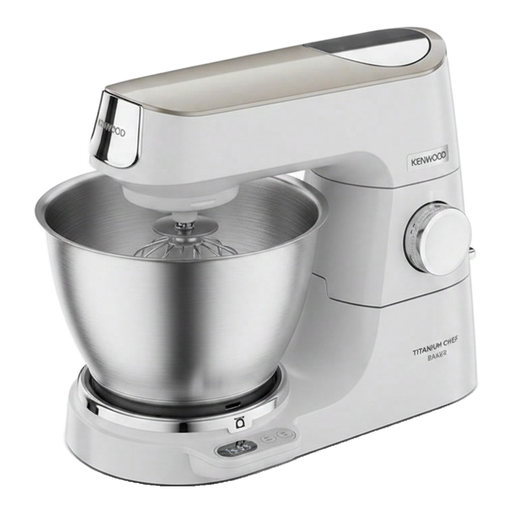
Why it suits this profile: The built-in scales and variable speed are ideal for home bakers who want to weigh ingredients directly into the bowl.
The specifications clearly state that it has a 5-litre stainless steel mixing bowl and a 1,200-watt motor. You don’t have to rely solely on a general marketing claim about capacity.
Built-in scales, pulse function, dough hook, whisk and K-beater. The appliance weighs 12.68 kg and measures 39.5 × 22.5 × 31.5 cm.
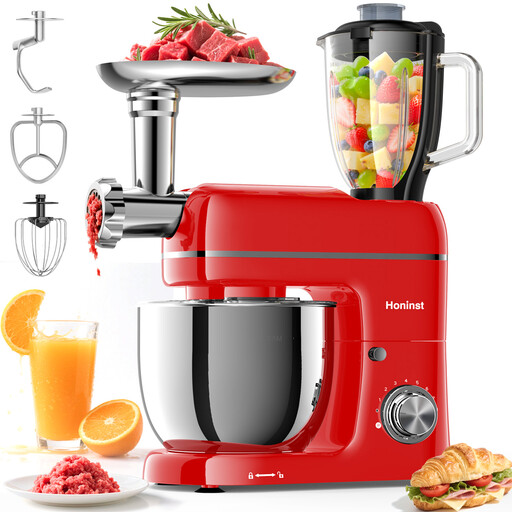
Why it suits this profile: This multifunctional stand mixer combines mixing and kneading with a blender and mincer, making it a good choice for households looking to combine several appliances.
The description lists 8 speeds plus pulse, a tilt-head design and a safety lock. Be sure to check exactly which accessories are included with your version.
According to the product information: up to 1,300 watts, a 6 QT stainless steel bowl and accessories for mixing, kneading, blending and mincing.

Why it suits this profile: According to the product specifications, the XL version has a 7-litre stainless steel bowl and is designed for mixing and kneading larger quantities.
The capacity and dimensions are listed separately. At 40 cm high and 37 cm long, it’s worth checking in advance that the appliance will fit under your kitchen cupboards.
1,200 watts, automatic speed control and integrated scales, according to the product description. Check the manual for the exact dough limits.
We’ve put together a complete, up-to-date list of products that meet these strict selection criteria and the applicable European safety regulations.
Yes, as long as the model has a dough hook and you stay within the stated dough limit. Use a low to medium speed and let the motor cool down when instructed in the manual. A larger bowl doesn’t automatically mean the machine can handle unlimited quantities of heavy dough.
A bowl of around 4 litres can be practical for smaller household portions. A 5-litre stand mixer is often a good fit for families who regularly make cakes, biscuits or bread. If you prepare large quantities, consider a capacity of 6 litres or more. Always compare the recommended capacity for dough and batter, not just the number of litres on the packaging.
Consumption depends on the power, speed and operating time. A 1,200-watt machine doesn’t automatically use 1,200 watts throughout the entire mixing process. Short mixing times and correct use matter more to your energy bill than the maximum wattage alone. Stick to the recommended operating time and avoid running the machine for longer than necessary.
