
Vandaag of morgen in huis

Kwaliteit gegarandeerd

Welkomstaanbiedingen ontgrendelen: GRATIS bezorging | Tot 80% korting | Gratis 30 dagen JoyPlus-proefperiode
Download de app
A stand mixer can knead bread dough, whip cream and mix cake batter without you having to do everything by hand. But not every stand mixer is right for every kitchen. A large mixing bowl takes up space, the motor may struggle with heavy dough, and a long list of accessories doesn’t automatically mean you’ll use them often.
As a Joybuy Product Recommendation Officer, I focus on verifiable specifications and practical use. That way, you can avoid paying extra just for marketing claims.
A high wattage sounds appealing, but it doesn’t tell you everything about how well a mixer performs when kneading. Manufacturers may also quote different power ratings, such as rated power or peak power. So, check the maximum dough capacity, recommended running time and whether the mixer has overheat protection.
For heavy bread dough, a stable drive is more important than a big number on the box. A stand mixer that needs to cool down after a few minutes may not be the best choice for larger baking sessions.
A 5-litre or 6-litre stand mixer doesn’t automatically have room for 5 or 6 litres of ingredients. You usually shouldn’t fill the bowl to the brim. When making dough, the weight of the flour and water matters more than the total volume.
So, check:
A 6-litre bowl is useful for families, but it may be unnecessarily large if you usually prepare small quantities.
A stand mixer with a blender and meat grinder sounds versatile. In practice, these accessories take up extra cupboard space and need cleaning after use. First, decide whether you mainly want to mix, knead and whisk. For many home bakers, a dough hook, whisk and flat beater are the most important attachments.
A stainless steel mixing bowl is sturdy, rust-resistant and generally easy to clean. Also check the handle, how the bowl locks into place and the clearance beneath the mixer head. A tilt-head design makes it easier to fit the bowl and attachments.
For families and regular bakers, models with a capacity of 5 to 6.7 litres are practical. A compact stand mixer with a bowl of around 4 litres takes up less space, but also has a lower maximum dough capacity.
A stand mixer with several speed settings gives you more control. Low speeds are suitable for mixing dry ingredients and getting dough started. Higher settings work better for whipping cream or egg whites. A pulse function can be useful for short bursts of power.
More speed settings aren’t automatically necessary. For everyday use, a clear dial, a gentle start and a good range between low and high speeds are often more important than having the maximum number of settings.
A stand mixer for bread dough should stay firmly on your worktop. Non-slip feet, suction cups or a heavy base can help. Also check the noise level if it’s listed. A figure of, for example, 60 to 75 dB gives you an indication, but the actual experience depends on the speed, surface and type of dough.
Always check the manual for the maximum continuous running time. The included overheat protection safeguards the appliance, but it won’t prevent you from needing to take breaks during heavy-duty mixing.
The following picks are matched to specific uses. The features listed are based on the product information; claims about performance are presented as specifications provided by the brand or retailer.

Why it suits this profile: This model combines a 5-litre stainless steel bowl with a dough hook, whisk and beater. That gives you what you need to get started with bread, pizza, cakes and whipped cream, without buying extra accessories straight away.
The product description lists 10 speeds, a pulse function, non-slip suction feet, and overload and overheat protection. Check the recommended dough quantity in the manual.
5L food-safe stainless steel bowl, 400W copper motor according to the product information, and three essential attachments.

Why it suits this profile: The large bowl and stated power make this a good fit for home bakers who regularly prepare larger quantities of dough or batter and value a metal finish.
The product details list a 7-litre capacity, 1200W, automatic speed control and a built-in scale. The extra features are most useful if you’ll actually use them.
Stainless steel design, 7L bowl and a 2-year manufacturer’s warranty according to the product information provided.
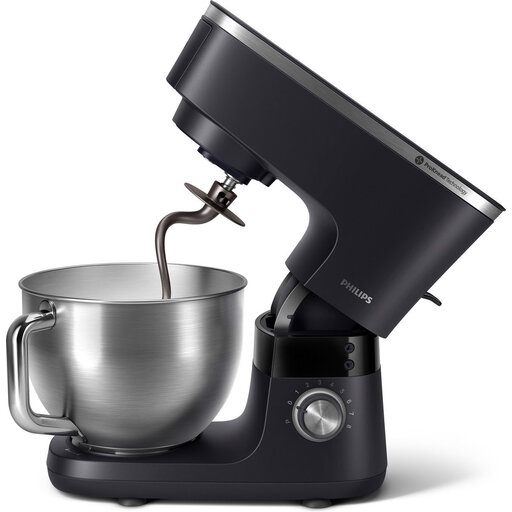
Why it suits this profile: This model is aimed at people who want to blend and grind as well as bake. The listed accessories make it suitable for smoothies, sauces and mincing meat.
The product information lists a timer with automatic shut-off, eight speeds and a 5.5L bowl. Check in advance whether you need the blender and meat grinder for your recipes.
1000W according to the product specifications, 5.5L mixing bowl, 1.5L glass blender and meat grinder listed as accessories.
We’ve put together a complete, up-to-date list of products that meet these strict selection criteria and current European safety regulations.
Yes, a stand mixer with a dough hook can knead bread dough. Be sure to check the maximum dough quantity and recommended running time. Start at a low speed and add the ingredients according to the recipe. Heavy or large batches of dough may need a break to let the motor cool down.
For a small household, around 4 litres is often enough. A 5-litre or 6-litre stand mixer is a better fit for families, pizza nights and larger batches of baking. Don’t just check the bowl capacity; also look at the maximum quantities of flour, batter or dough.
Consumption depends on the power rating and how long you use the mixer for. An electric mixer rated at 1000W running for ten minutes would theoretically use around 0.17 kWh. In practice, the appliance often runs for less time or at a lower power level. So a higher wattage doesn’t automatically mean higher running costs every time you use it.
