
Vandaag of morgen in huis

Kwaliteit gegarandeerd

Welkomstaanbiedingen ontgrendelen: GRATIS bezorging | Tot 80% korting | Gratis 30 dagen JoyPlus-proefperiode
Download de app
A stand mixer can take a lot of the work out of making bread dough, cake batter and whipped cream, as well as preparing larger quantities. However, not every machine is suited to the same tasks. A compact mixer may be perfectly adequate for cake batter, while a stand mixer with a sturdy bowl is better suited to heavy dough. If you mainly chop vegetables or make smoothies, a food processor with extra attachments may be a better choice.
Most disappointing purchases come down to three common misconceptions:
For light mixing, such as pancake batter or whipped cream, a basic food mixer is often enough. For bread dough and larger quantities, motor power, gearing and stability matter more than a single wattage figure.
The product information for the Adler AD4216 lists a power rating of 500 watts and a maximum power of 1000 watts. This difference shows why it’s important to read specifications carefully. The Bosch MUM 54251 is described as having a 900-watt motor, while its technical specifications state 450 watts. Treat figures like these as information for comparing products, not as a guarantee of performance for every recipe.
A stand mixer with a stainless-steel bowl is a good choice if you regularly prepare larger quantities. Stainless steel is sturdy and doesn’t absorb odours in the way some plastics can. Also consider:
A 4-litre bowl, like the one on the Adler AD4216, is practical for families and everyday baking quantities. According to the product description, the Bosch MUM 54251 has a 3.9-litre stainless-steel bowl, with a stated capacity of up to 2.7 kg of kneaded dough and 1.9 kg of yeast dough. Capacity figures like these are more useful than the number of litres alone.
If you’re looking for a stand mixer for kneading and mixing, you’ll generally need at least a dough hook, mixing beater and whisk. For food processor functions, you’ll need extra discs, blades or a blender jug. Check whether the accessories are easy to fit, and how much worktop space the appliance takes up.
A planetary mixing action can help move ingredients around the bowl more evenly. This feature is listed for the Adler AD4216, along with six speeds, a splash guard and a tilting head. These are product features you can check; how well the mixer suits you will depend on the recipe, quantity and how long you use it for.
The selection below matches product details with familiar use cases. This helps you avoid paying for features you’re unlikely to use.
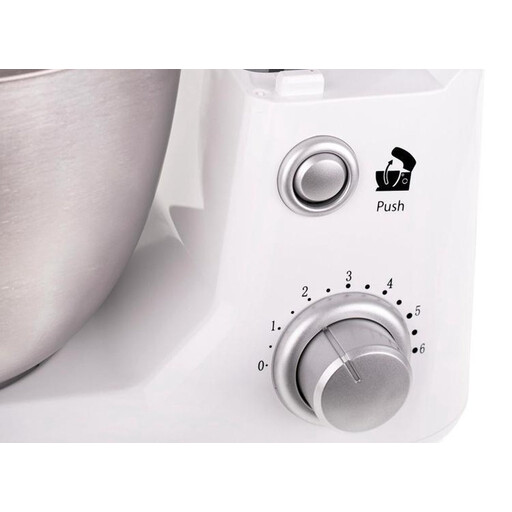
Why it suits this profile: With a 4-litre bowl, six speeds and three basic accessories, it’s well suited to everyday mixing, whisking and kneading, without having to invest in a more extensive system straight away.
The product information specifically lists a stainless-steel bowl, dough hook, whisk, mixing beater and splash guard. So you know exactly what’s included before you buy.
4-litre capacity, planetary mixing action, six speeds and stable suction cups.

Why it suits this profile: This Bosch stand mixer is designed for households that want to do more than mix, with functions for slicing, grating, blending, juicing citrus fruit and grinding.
The included functions are specified: a mincer, blender, citrus juicer, vegetable slicer and accessories for baking.
3.9-litre stainless-steel bowl and several kitchen functions in one appliance.
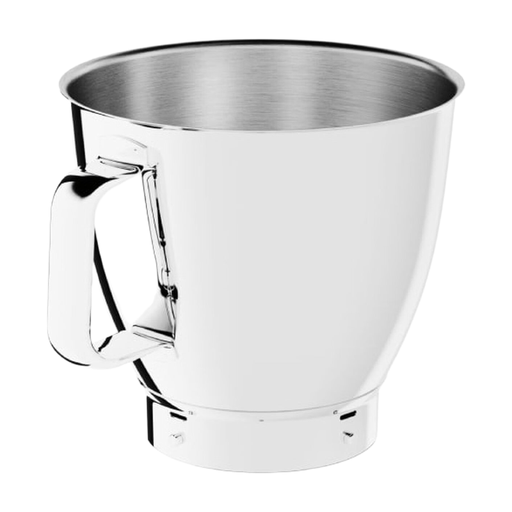
Why it suits this profile: This isn’t a complete stand mixer, but a separate accessory bowl for compatible Kenwood machines. It’s a good option if you already have a compatible system and need extra capacity.
The product page clearly states that this is a mixing bowl and that it must be compatible with a Kenwood stand mixer.
7-litre capacity, stainless-steel construction and, according to the product information, dishwasher-safe.
Check these points before you order:
We’ve put together a full, up-to-date list of products that meet these strict selection criteria and the applicable European safety regulations.
That depends on the model, motor, drive system and maximum dough capacity. Don’t use a stand mixer to prepare more than the quantities specified in the manual. A large bowl alone doesn’t prove that the appliance is suitable for heavy dough or prolonged kneading.
A food mixer or stand mixer is mainly designed for mixing, whisking and kneading. A food processor is more commonly used for chopping, slicing, grating and puréeing. Some models combine both sets of functions, but always check which accessories are actually included.
Energy use depends on the power rating and how long you use the appliance for. A higher stated wattage doesn’t automatically mean it will use more energy for every recipe. Switch the machine off as soon as you’ve finished, and choose an appropriate speed setting. This avoids unnecessary running time and reduces wear on the motor and accessories.
