
Vandaag of morgen in huis

Kwaliteit gegarandeerd

Welkomstaanbiedingen ontgrendelen: GRATIS bezorging | Tot 80% korting | Gratis 30 dagen JoyPlus-proefperiode
Download de app
A stand mixer can knead bread dough, mix cake batter and whip cream while you prepare other ingredients. But a large bowl or high wattage doesn’t guarantee that a machine will suit your kitchen. Home bakers and families often run into the same problems: a mixer that shifts on the worktop, a bowl that’s less practical than expected or attachments that are difficult to clean.
With this buying guide, you can compare a kitchen mixer, stand mixer or food mixer using verifiable specifications. Then you can see which models suit different needs.
A higher wattage may sound appealing, but it doesn’t tell you everything about performance. For example, manufacturers may list peak power and rated power differently. The Monsga SM100 is listed with 1000 W peak power, while its stated rated power is 600 W. So compare the motor type, maximum dough capacity and recommended operating time too.
A 6-litre bowl may look spacious, but you can’t always fill it to the brim. According to the product information, the Monsga has a 6-litre bowl, with a recommended capacity of 5 litres. So when choosing a stand mixer with a bowl, always check the maximum amount of dough or batter it can handle, not just the number of litres.
No stand mixer is completely silent when its motor is running. Check the measured or stated decibel level and the distance at which it was measured. According to its product specifications, the AUCMA 6L is listed at 68–72 dB at one metre. The Monsga is rated at up to 75 dB, while Honinst is listed by the manufacturer at less than 60 dB. These figures aren’t always measured under the same conditions, so they’re best used as a guide.
For a family or regular baking, a 5-litre stand mixer is often enough for cake batter, biscuit dough and medium-sized batches of bread dough. A 6-litre stand mixer gives you more room for larger batches, but takes up more space too.
Look out for:
For a stand mixer for kneading, a steady drive is more important than a high power rating alone. A low speed helps with heavy yeast dough; higher settings are suitable for a mixer with a whisk or beater. A pulse setting can be useful for short bursts of power.
A stand mixer with multiple speed settings gives you more control over your recipes. Six settings are enough for many household tasks, while eight to ten offer more steps in between. Always use the recommended low or medium speed for dough, and don’t exceed the maximum operating time.
The usual basic set includes:
A stand mixer with planetary mixing action moves the attachment around the bowl, helping to reduce the amount of mixture left around the sides. That doesn’t mean you’ll never need to scrape down the bowl. The shape of the bowl, the amount of ingredients and the gap between the attachment and the base all affect the results.

Why it suits this type of user: This 5L stand mixer is designed for everyday home use, including making cakes, biscuits and pizza, as well as medium-sized batches of dough.
The specifications list 10 speeds, a pulse function and a 5-litre bowl. The stated noise level is up to 75 dB, so don’t expect it to run completely silently.
400W copper AC motor according to the product information, three attachments, a splashguard and four non-slip suction feet.
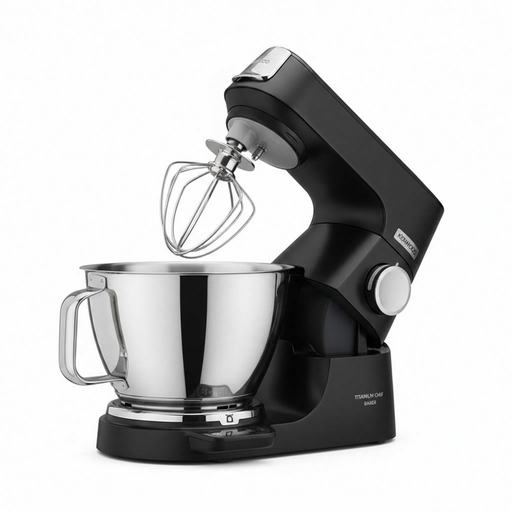
Why it suits this type of user: A handy choice for bakers who want to work precisely and regularly switch between batter, dough and light mixtures.
The stated bowl capacity is 5 litres, and the model has built-in scales. This lets you weigh ingredients directly into the bowl, rather than focusing only on motor power.
1200W according to the product specifications, variable speed with pulse function, built-in scales and an extra bowl according to the product description.
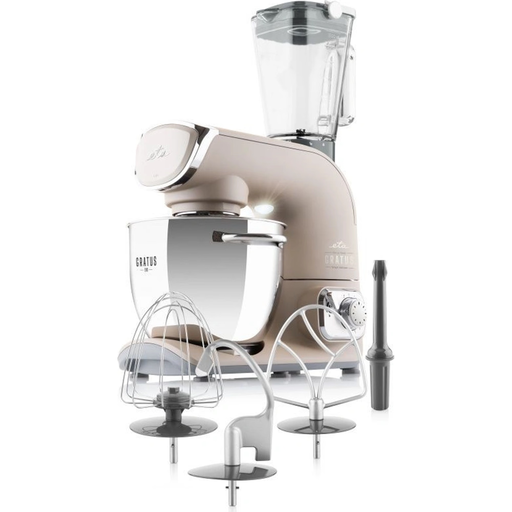
Why it suits this type of user: Designed for users who want more than just mixing and kneading, with extra kitchen functions and a sturdy machine build.
The stated specifications give a maximum dough capacity of 2.5 kg. That’s more specific than a motor claim alone, and helps you plan larger baking sessions.
1500W, planetary mixing action, a 5.5-litre bowl, metal housing and a 1.5-litre glass blender jug according to the product specifications.
We’ve put together a full, up-to-date list of products that meet these strict selection criteria and the current European safety regulations.
A stand mixer will generally last longer if you follow these basic rules:
Also look out for conflicting information in product listings. The title for the Bosch MUMS2AW00 states 1000W and 5.5 litres, while the product specifications list 700W and 3.8 litres. If in doubt, check the manual and the latest specifications page before placing your order.
For many households, yes. The right choice depends on the maximum dough capacity, not just the bowl size. If you often make several loaves at once, consider a 6-litre model or a machine with a clearly stated higher dough capacity.
For basic use, six speeds plus a pulse function are usually practical. Eight or ten settings give you more control as you increase the speed, but don’t automatically make a machine more suitable for heavy dough.
Energy use depends on the power rating and how long you use the mixer. A 1200W motor running for a short time may use less energy than a lower-powered motor that needs to run for much longer. Use the right speed, avoid unnecessarily long mixing cycles and follow the rest periods in the manual.
