
Vandaag of morgen in huis

Kwaliteit gegarandeerd

Welkomstaanbiedingen ontgrendelen: GRATIS bezorging | Tot 80% korting | Gratis 30 dagen JoyPlus-proefperiode
Download de app
A good stand mixer can take a lot of work off your hands, from chopping vegetables to kneading heavy dough. But the market is flooded with models that promise the world. Many appliances are packed with features that are disappointing in practice or have motors that burn out after just a few sessions of kneading bread dough. Before you invest, it's crucial to see through the marketing hype.
We often see consumers fall into the same traps. These are the three most common:
To avoid buyer's remorse, it's better to focus on a few objective specifications that truly matter. These determine whether a stand mixer will become a durable kitchen assistant or a dust collector in the back of the cupboard.
As mentioned, wattage isn't the whole story. A good dough mixer needs a motor that delivers consistent torque, especially at low speeds for kneading dough. Machines with a direct drive system are often better at this; the motor powers the head directly, resulting in less energy loss and more power. A power rating starting from 800W is a good baseline for most home bakers, provided the build quality is solid.
The bowl is your workhorse. Think carefully about what you'll be preparing in it.
The term kitchen machine is used for different appliances. It's crucial to choose the right type for your needs.
Some models, like a Kenwood stand mixer with a built-in scale, combine functions in a smart way that can add real value.
Based on objective specifications, we have selected a number of models that fit different user profiles.
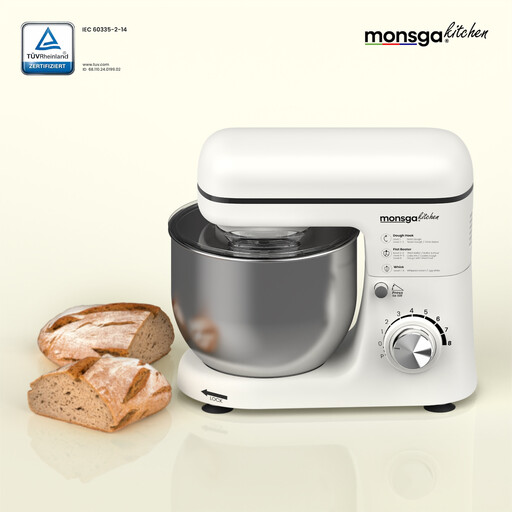
Why This Fits Their Persona: Ideal for those starting out with baking who want a reliable machine without paying a premium. Suitable for cakes, batters, and light to medium-heavy dough.
This model focuses on the core functions of a stand mixer and avoids the "all-in-one" pitfall. The 1000W motor and 5L stainless steel bowl offer solid specifications for the basics, without you paying for unnecessary extras.
The spacious 5.0-litre stainless steel bowl and 8 speed settings offer great flexibility for various recipes. The included dough hook, beater, and whisk are dishwasher-safe.
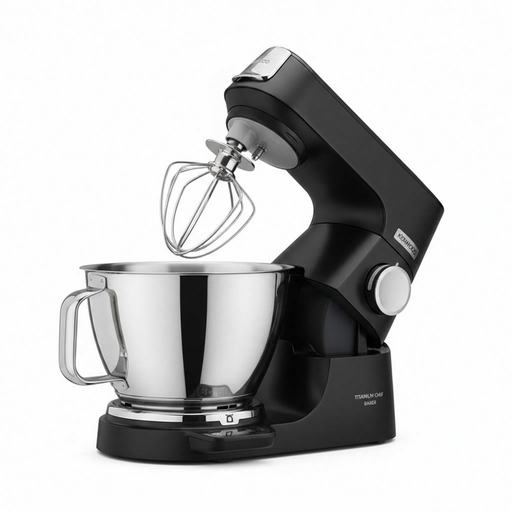
Why This Fits Their Persona: For the passionate baker who seeks precision, durability, and versatility. The built-in scale and powerful motor make this a reliable partner for complex recipes and heavy dough.
This model debunks the wattage myth. The 1200W motor is digitally controlled and intelligently adapts to the task, which is more efficient than pure, uncontrolled power. The expansion options are optional and of high quality.
The built-in scale saves time and reduces washing up. The machine comes with two stainless steel bowls (DuoBowl) and is expandable with over 25 accessories for maximum creativity.

Why This Fits Their Persona: Perfect for those who mainly want to chop, slice, and grate quickly without a large appliance on the countertop. This compact food processor is designed for speed and convenience in daily meal prep.
This appliance doesn't pretend to be a dough mixer. It is a specialised compact food processor that excels at its core tasks. This helps you avoid the disappointment of a 'jack-of-all-trades' that is a master of none.
The unique 360° Express Serve function lets you grate and slice directly into a pan or onto a plate, which saves on washing up. Its compact design is small enough to be stored in a kitchen drawer.
We have compiled a complete, up-to-date list of products that fully meet these strict selection criteria and UK/EU safety regulations.
Don't focus solely on wattage. For most tasks, including kneading bread dough, a machine with a high-quality motor of 800 watts or more is generally sufficient. The efficiency of the drive system is more important than the number itself. A machine with a lower wattage but a direct drive can be more powerful than a model with a higher wattage and a belt drive.
A stand mixer is primarily designed for baking: mixing batter, whipping cream, and kneading dough with attachments like a whisk, dough hook, and flat beater. A food processor is designed for preparatory cutting work: chopping, grating, puréeing, and slicing ingredients with various blades and discs in an enclosed bowl.
No, not every machine is suitable for this. Always check the manufacturer's specifications for the maximum dough capacity. Models with a powerful motor, a metal housing for stability, and an efficient drive system are best suited as dough mixers. A machine that is too light can start to "walk" across the countertop, or its motor can overheat.
