
Vandaag of morgen in huis

Kwaliteit gegarandeerd

Welkomstaanbiedingen ontgrendelen: GRATIS bezorging | Tot 80% korting | Gratis 30 dagen JoyPlus-proefperiode
Download de app
A stand mixer can take a lot of the hard work off your hands: kneading dough, mixing batter, and whisking egg whites or cream. Yet it’s easy to overpay for features you’ll rarely use. A high wattage on the box doesn’t automatically tell you how well a stand mixer copes with heavy dough.
For home bakers, families and keen cooks, three pitfalls matter most:
For light batters and whipped cream, a relatively simple electric mixer is often enough. If you regularly make bread, pizza or brioche, you’ll benefit more from a stable stand mixer with a solid drive and a proper dough hook.
When comparing, look for:
A 400 to 700 watt motor can be suitable for normal household use, depending on the construction and the amount of dough. Models with 1,000 watts or more aren’t automatically better for every recipe. According to the product description, the Philips HR7962/21 has a 1,000 watt motor, while the Bosch MUMS2AW00 lists 700 watts in the technical data. The Bosch product title mentions a different wattage; always check the current product specifications and manual.
A mixer with a stainless-steel bowl is usually practical for everyday use. Stainless steel is sturdy, doesn’t absorb odours and wipes clean easily. Don’t just look at the number of litres, but also the shape of the bowl. A wide bowl can be handy for small quantities, while a deep bowl can do a better job of keeping splashes in check.
As a guide:
Also check whether the bowl has a handle, whether it locks securely, and whether the attachments reach the bottom and sides adequately.
A planetary mixing system moves the attachment around the bowl while it rotates on its own axis. According to product descriptions from Bosch and Honinst, this is designed to mix ingredients more evenly around the bowl. It’s a useful design, but the result also depends on the amount of ingredients, the attachment and the speed chosen.
The basic set usually includes:
A stand mixer with a blender or meat mincer can save space, but check first whether you’ll really use these functions. An integrated food processor or a separate grating and slicing attachment can be handy for vegetables, cheese and sauces. Also check compatibility: accessories from Kenwood won’t simply fit a Bosch or Honinst model.

Why this fits the profile: This compact kitchen mixer has a 3.8 litre bowl and a basic set for whisking, mixing and kneading. Ideal for beginners who mainly make cakes, biscuits and smaller batches of dough.
The stated bowl capacity and maximum quantities for dough and batter make it clearer which portion sizes the model is intended for. The product description also mentions non-slip feet.
3D planetary mixing action, 700 watts according to the technical data, 3.8 litre bowl and dishwasher-safe accessories.
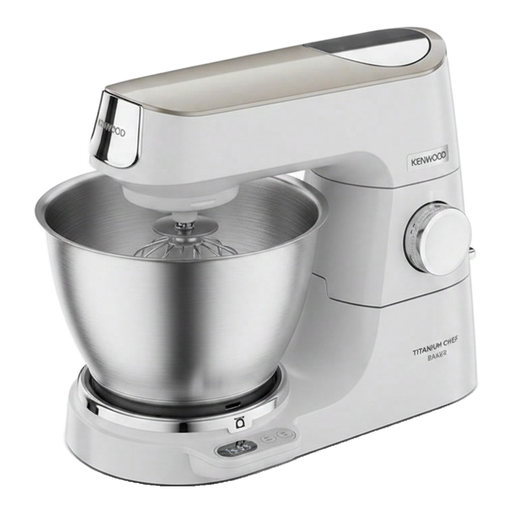
Why this fits the profile: This model is aimed at home bakers who often work on multiple preparations and want to weigh ingredients directly in the bowl.
The built-in scale means you don’t need a separate set of scales for every step. The specifications note a 5 litre stainless-steel bowl and variable speed with pulse.
1200 watts, built-in scales, 5 litre stainless-steel bowl and LightLift head according to the product data.
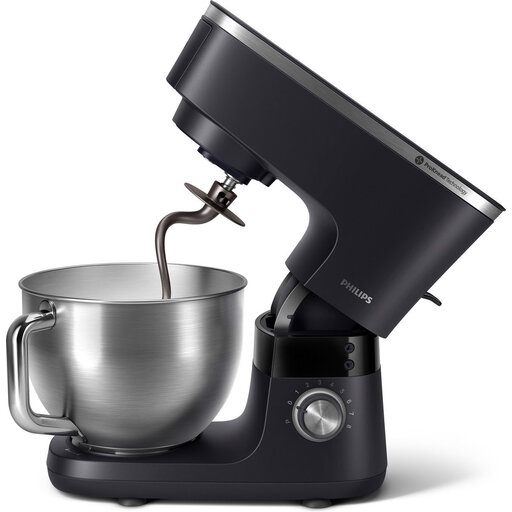
Why this fits the profile: This model is suitable for households that, besides baking, also want to blend and mince without placing multiple separate appliances on the worktop.
The accessories are clearly specified: a 1.5 litre glass blender and a meat mincer. This makes it clearer which extra functions you actually get.
5.5 litre bowl, 1,000 watts, eight speeds, blender, mincer and a timer with automatic switch-off according to the product information.
We’ve compiled a complete, up-to-date list of products that fully meet these strict selection criteria and comply with current European safety regulations.
Always place a stand mixer on a flat, dry and stable surface. Fit the bowl and attachment before plugging it in. Keep hands, clothing and utensils away from moving parts.
Also keep these points in mind:
A quoted noise level of, say, under 60 dB or around 72–75 dB only means something if the measurement method is the same. Treat such figures as an indication, not as a guarantee of a quiet kitchen.
Yes, when the model has a dough hook and the maximum dough capacity matches your recipe. Start with a low speed and work in short sessions if the manual prescribes this. A large bowl doesn’t automatically mean you may knead a large amount of heavy dough.
For a small household, 3 to 4 litres is often enough. Families and regular home bakers usually choose 5 to 6 litres. Always check the recommended working capacity for dough and batter, as this is lower than the bowl’s total capacity.
Power consumption depends on the wattage and how long you run it. A 1,000 watt mixer that runs for ten minutes uses roughly 0.17 kWh in theory. In practice, the motor doesn’t run at maximum power continuously. Shorter preparation time and the right speed therefore also influence the cost.
