
Vandaag of morgen in huis

Kwaliteit gegarandeerd

Welkomstaanbiedingen ontgrendelen: GRATIS bezorging | Tot 80% korting | Gratis 30 dagen JoyPlus-proefperiode
Download de app
A good stand mixer can take the heavy lifting out of kitchen tasks, from kneading bread dough to whipping egg whites. But the search for the right model isn't always straightforward. The market is flooded with promises of power and versatility. Unfortunately, these often lead to a bad purchase: a machine that vibrates on the countertop, a motor that overheats after just a few uses, or a cupboard full of unused accessories.
Before you make a decision, it's helpful to recognise the most common pitfalls.
To avoid buyer's remorse, it's better to focus on a few concrete specifications that truly make a difference to your baking and cooking enjoyment.
Instead of just looking at the wattage, the type of motor is crucial. A machine with a pure copper motor is often more durable and efficient. There are two main types:
A good drive system with metal gears ensures that the motor's power is efficiently transferred to the dough hook or whisk, with less wear and tear.
The stand mixer with bowl is the heart of your appliance. The size determines how much you can prepare at once. For the average home baker who regularly bakes bread or cakes, a 5 to 6-litre bowl is a practical choice. A 6-litre stand mixer offers enough space for a large family loaf or batter for multiple cakes. Stainless steel is the standard for the bowl due to its hygiene, durability, and ease of maintenance.
A good stand mixer or kitchen mixer for baking has three indispensable accessories:
Also, pay attention to ease of use. A tilt-head design makes it easy to swap the bowl and accessories and to add ingredients. Anti-slip feet on the bottom ensure the machine remains stable, even when kneading at high speed.
Based on these functional criteria, we have selected a number of models that suit different user profiles.
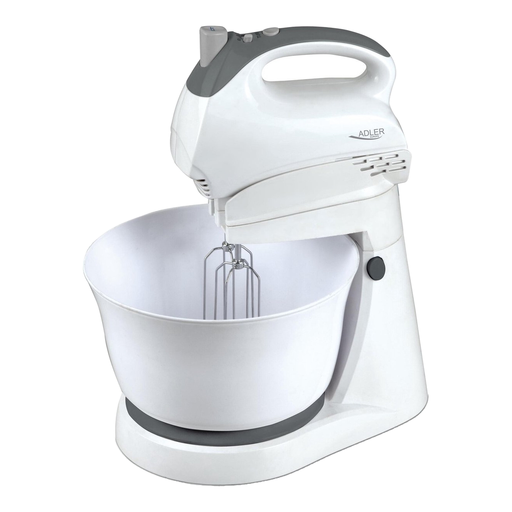
Why This Fits Their Persona: Ideal for those who bake occasionally and want a compact, affordable solution. This mixer handles the mixing for you without the investment and space of a large stand mixer. Perfect for cake batter and lighter doughs.
This model avoids the "all-in-one" disappointment by focusing on the basic functions of mixing and light kneading, without unnecessary extras. The rotating bowl ensures an even result.
Compact and budget-friendly: Takes up little space and is an accessible entry point. Rotating bowl: The 3-litre bowl rotates for a consistent mixing result.
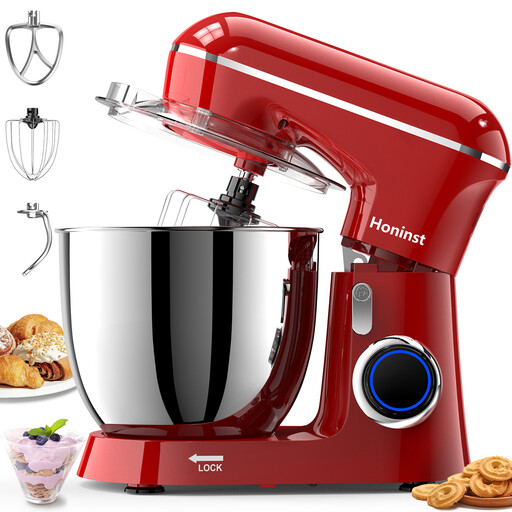
Why This Fits Their Persona: For the hobby chef who bakes regularly and needs a reliable all-rounder. This machine is suitable for both light batters and heavier doughs, and the large bowl is ideal for family-sized portions.
This mixer bypasses the wattage trap. The focus is on the efficient, pure copper motor which, combined with 10 speeds, provides controlled power rather than just a high number on the box.
Large 6.2L stainless steel bowl: Enough capacity for large recipes. Stable and relatively quiet: Anti-slip feet and a design that the manufacturer claims keeps the noise level below 60 dB.

Why This Fits Their Persona: Specifically designed for those who frequently knead large batches of heavy dough. The combination of a large 6L bowl and a powerful DC motor makes this machine a workhorse for the avid bread baker.
This Aucma stand mixer tackles the material miscalculation. Its focus on a 450W pure copper DC motor and a structure with metal gears is geared towards durability and torque, not a high marketing wattage.
Powerful DC motor: Delivers high torque at low speeds, ideal for bread dough. Large 6L bowl: Perfect for preparing large quantities of dough at once.
We have compiled a complete, up-to-date list of products that meet these strict selection criteria and safety standards.
Focus less on wattage and more on the motor type. A machine with a DC (direct current) motor of 400-500 watts can often knead heavy dough more effectively and quietly than a model with a 1200-watt AC (alternating current) motor. The DC motor delivers more consistent power (torque), which is crucial for kneading.
Always check the manufacturer's manual. In general:
The terms are often used interchangeably, but there's a key difference. A stand mixer (or kitchen mixer with a bowl) refers specifically to a mixer on a fixed stand, like the models in this guide. The term food processor is broader and can also include appliances that are more focused on chopping and slicing. In the context of baking, both "stand mixer" and "kitchen mixer" usually refer to the same appliance.
