
Vandaag of morgen in huis

Kwaliteit gegarandeerd

Welkomstaanbiedingen ontgrendelen: GRATIS bezorging | Tot 80% korting | Gratis 30 dagen JoyPlus-proefperiode
Download de app
A great stand mixer can take the heavy lifting out of your kitchen tasks, from kneading bread dough to whipping up light and airy batters. But the market is flooded with models that make big promises. Unfortunately, shiny specifications and marketing claims often lead to a bad purchase: a noisy appliance that dances across the countertop or gives up after kneading just a few batches of heavy dough.
As a Joybuy Product Recommendation Officer, I'm here to help you cut through the noise. Let's avoid the most common pitfalls and focus on what truly matters.
Before you open your wallet, be wary of these common marketing traps:
To avoid a bad purchase, it's better to focus on a few objective specifications. These determine whether a stand mixer can do its job well and for a long time.
The heart of any stand mixer is its motor. Instead of fixating on wattage, pay attention to the following:
dough mixer.The mixer with bowl is your workstation. Its size and material are crucial for ease of use.
A good kitchen machine must remain firmly in place, even when kneading stiff dough.
Based on objective specifications, we have selected a few models that suit different user profiles.

Why it's a match: Ideal for those starting their baking journey who want a reliable appliance without overspending. Suitable for cake batters, whipped cream, and light doughs.
This model focuses on the essentials: a spacious bowl and the three core attachments. It avoids the trap of unnecessary, low-quality accessories.
The 5-litre stainless steel bowl offers ample space for most recipes. The 10 speeds plus a pulse function provide excellent control for an entry-level model.
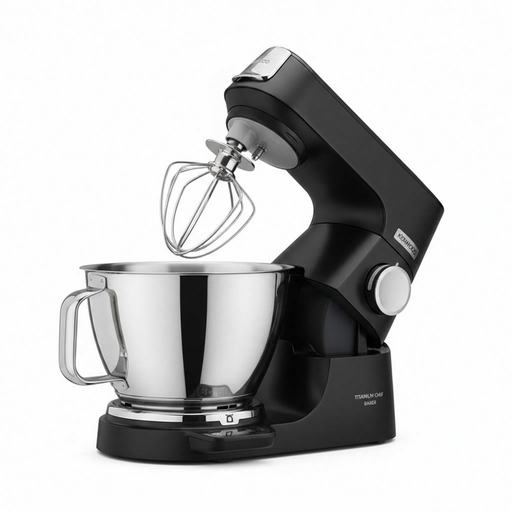
Why it's a match: For the serious baker who is investing in precision, power, and durability. Its solid construction and smart features make complex preparations easier.
This model debunks the wattage myth. Its 1200W motor intelligently adapts its power to the task. The die-cast aluminium housing ensures stability and prevents "walking."
The built-in scale weighs ingredients directly in the bowl, saving time and washing up. The DuoBowl (two nested bowls) is practical for recipes with multiple steps.
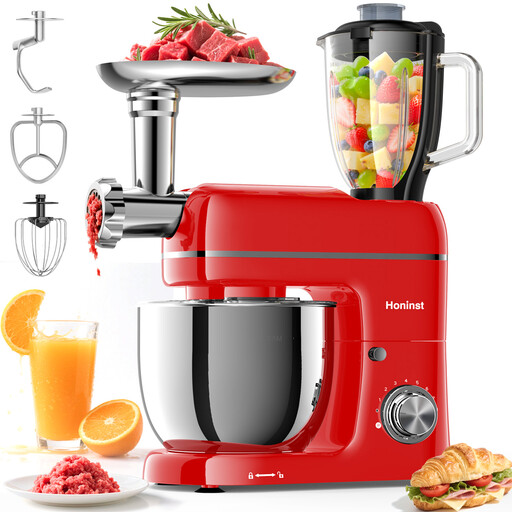
Why it's a match: For those seeking a single powerful appliance that can mix, knead, blend, and grind meat. It saves counter space without compromising on core functions.
Instead of many small, impractical gadgets, this model combines three full-fledged appliances. The powerful motor is designed to handle all of these functions.
A true all-rounder: a `baking mixer` with meat grinder and blender attachments. The large 6.2-litre bowl is suitable for heavy tasks and large quantities.
We've curated a complete, up-to-date list of products that fully meet these strict selection criteria and relevant safety standards.
Don't focus solely on wattage. A machine with 800 to 1200 watts and a high-quality, direct-drive motor is often more powerful and durable than a 1500-watt model with an inefficient drive system. For heavy dough, the combination of power and a solid, stable construction is essential.
A stand mixer is primarily designed for mixing, whipping, and kneading in a large bowl. A food processor specializes in chopping, slicing, grating, and puréeing. Some models, often called kitchen machines, attempt to combine both functions with various attachments.
Always unplug the appliance first. The stainless steel bowl and most stainless steel attachments (whisk, dough hook) can typically go in the dishwasher. Aluminium parts often need to be hand-washed to prevent oxidation. The machine's housing can be wiped down with a damp cloth. Always consult the manufacturer's manual for specific instructions.
