
Baker with a narrow cupboard space
This baker wants to put the mixer away after use, so needs to find room for the body, bowl and attachments. The available headroom while baking matters too.


Choose a stand mixer that will fit in your cupboard with its bowl and attachments, then check which mixing attachment comes with it for your buttercream recipe. Also allow for the space needed to lift the head and consider the quantities you usually make: a compact body does not automatically mean the mixer is suitable for smaller batches.
This baker wants to put the mixer away after use, so needs to find room for the body, bowl and attachments. The available headroom while baking matters too.
This baker is particularly interested in the right mixing attachment and wants to know whether ingredients need scraping down from the bowl during mixing. KitchenAid uses a flat beater in one of its buttercream recipes; Kenwood explains that a standard K-beater does not scrape the sides of the bowl.
This baker sometimes makes a small amount and sometimes enough buttercream for a larger cake. They want to choose a bowl size to suit the recipes they usually make, rather than judging by the mixer’s compact appearance alone.
| What to consider | What should you check? | Who should prioritise this? |
|---|---|---|
| Storage and operating space | Compare the external dimensions with your cupboard space, and measure the clearance needed to lift the head and remove the bowl. | I want to be able to put the mixer away after use and lift the head while baking. Around 40% of consumers prioritise storage and operating space. |
| Buttercream attachment | Check which beater or whisk comes with the exact version you are considering and whether any alternative is compatible. | For buttercream, I want to know which attachment my recipe calls for and whether I’ll need to scrape down the bowl as I go. Around 30% of consumers make buttercream mixing their top priority. |
| Bowl size and batch quantities | Compare the quantities in your usual recipes with the manual, and consider whether you tend to make smaller or larger batches. | I want a bowl that suits the recipes I usually make, even if it takes up more space. Around 20% of consumers choose primarily based on their usual batch size. |
| Cleaning and attachments | Check the cleaning instructions and the included parts before considering an extra beater. | I want to know how much cleaning the attachments need and whether I’ll need anything extra for the way I mix. Around 10% of consumers focus mainly on maintenance and the attachments required. |
A tilt-head mixer needs space for the head to lift during use, and you also need to be able to remove the bowl and beater.
Measure both the cupboard space and the worktop area, allowing for the movement of the head.
Kenwood says that the K-beater on the Go KZM35.000GY does not scrape the sides of the bowl. Ingredients may therefore remain around the edge.
Check the accessory list for the exact version and keep a spatula handy if needed. You may need a separate compatible attachment.
The capacity in litres alone does not tell you how much buttercream you can mix successfully for your recipe.
Compare the quantity you usually make with the manual for the model you are considering.
The Go KZM35.000GY is worth comparing if you’re looking for a low, narrow body and a 4-litre bowl.
The Serie 2 MUMS2EW00 is an option to compare, with a 3.8-litre bowl and an included beater.
KitchenAid describes its mini tilt-head mixer with a 3.3-litre bowl as an option for small kitchens.
These models are options to compare for making buttercream and baking when cupboard space is limited. Check the dimensions, bowl and included attachments of the version you choose.
 No image available
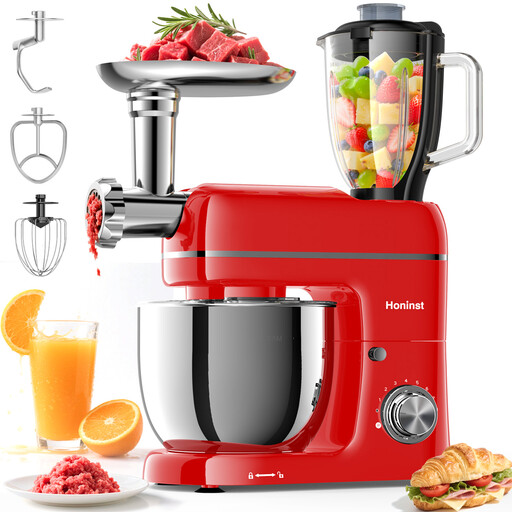
An option to compare if you’re looking for a tilt-head mixer with a 5 L bowl for your baking.
The product name lists 10 speeds and a set comprising a beater, whisk and dough hook. The stated external dimensions are 35.4 × 22.5 × 29.6 cm.
 No image available
An option to compare if you’re looking for a tilt-head mixer with several included attachments.
The product name lists a 6.5 QT bowl and 8 speeds. The product description mentions a flat beater; check which attachments are supplied with the version you choose.
 No image available
An option to compare if you want to take the external dimensions and flat beater into account when choosing.
The product name lists 1000 W Peak Power. The description mentions 8 speeds and a flat beater; the stated appliance dimensions are 33.5 × 18 × 30 cm.
 No image available
An option to compare if you’re looking for the stated external dimensions and a 4-litre bowl.
The product information lists a K-beater, whisk and dough hook. According to Kenwood, the K-beater does not scrape the sides of the bowl, so you may need to scrape it down as you go.
It depends on the recipe. In one of its cookie buttercream recipes, KitchenAid uses a flat beater with softened butter and adds sifted icing sugar gradually. If you have a different model, check which attachment is recommended for the job.
Not necessarily while you’re using it: a tilt-head mixer needs room for the head to lift. Measure both the storage space and the clearance needed to operate the head and remove the bowl.
No. Kenwood says the K-beater should not touch the sides of the bowl, as this could damage the bowl and attachment. Scrape the bowl down with a spatula as needed, and check that any alternative attachment is suitable for your model.
According to the Netherlands’ national government, the retailer must offer a solution if there is a problem with a product; the manufacturer’s warranty is in addition to your statutory rights. When you buy online from a business, you generally have a 14-day cooling-off period, although exceptions may apply.
According to the European Commission, CE marking is only mandatory for products covered by EU rules that require it. The marking is not, by itself, proof that a specific item has been independently approved; check the details of the product in question.