
Bakers who make small batches
If you mainly make buttercream for a few cakes or pastries, you’ll want to know whether the attachment reaches the amount you usually make. Bowl capacity alone won’t tell you that.


Choose a stand mixer based on how much buttercream you usually make and which attachment suits your recipe. For its recipe using softened butter, KitchenAid uses a flat beater; for Italian meringue buttercream, it uses a wire whisk first, followed by a beater. A larger bowl doesn’t, on its own, tell you whether a small batch will mix well, so check the guidance for your recipe and exact model too.
If you mainly make buttercream for a few cakes or pastries, you’ll want to know whether the attachment reaches the amount you usually make. Bowl capacity alone won’t tell you that.
If you make more buttercream in one go for guests or bake larger cakes too, you can compare bowl capacity and the attachments supplied. A stated capacity for dough or cake batter doesn’t automatically tell you how much buttercream the mixer can handle.
If you plan to put your mixer away after baking, it’s worth considering its dimensions and the space available for it on your worktop.
| Buying concern | What to look for | Who is this important for? |
|---|---|---|
| Mixing a small batch | Check which attachment is included and whether the instructions cover small quantities. Also see if you may need to scrape down the bowl during mixing. | If you usually make buttercream for a few cakes or pastries, you’ll want to know whether the attachment reaches the amount in your recipe. Around 40% of consumers say small batches are their main buying concern. |
| Making enough buttercream in one go | Compare the quantity in your own recipe with the guidance for the exact model; don’t use the bowl’s litre capacity alone to estimate how much buttercream it can handle. | If you want to make a larger amount in one go for guests, choosing the right bowl size matters. Around 30% of consumers prioritise making a larger batch. |
| Space and cleaning | Measure the space where you plan to keep the mixer and check separately how to clean the bowl and attachments. | If you need to put the mixer away after use or have limited worktop space, its size and cleaning requirements matter. Around 20% of consumers put space and maintenance first. |
| Making other bakes too | Check which whisk and beater are included, and assess any additional accessories separately. | If you want to make other types of buttercream or bakes as well as regular buttercream, consider which attachments you’ll need. Around 10% of consumers prioritise versatility. |
The stated capacity in litres doesn’t tell you whether an attachment can reach a small batch. Capacity figures for dough or cake batter don’t set limits for buttercream either.
Compare the amount in your recipe with the instructions for the exact model, and check separately how the attachment reaches into the bowl.
Kenwood says that the K-beater doesn’t scrape the sides of the bowl clean, so some mixture may be left behind.
Allow for scraping the bowl down during mixing, and check compatibility before buying a different attachment.
A compatible flexi beater may be an extra accessory; check that it fits your model first.
Additional cover doesn’t replace your rights if a product is faulty. The Government of the Netherlands explains that there is no fixed statutory guarantee period in the Netherlands.
Check exactly what additional cover offers before paying for it.
For the KitchenAid Artisan 5KSM125EER, the manufacturer lists a 4.7-litre bowl, a wire whisk and a beater.
For the MUM58L20, Bosch lists a 3.9-litre bowl and a patisserie set.
For the kMix KMX750ABK, Kenwood lists a 5-litre bowl, a K-beater, balloon whisk and splashguard.
For the 7000 Series HR7962/21, Philips lists a 5.5-litre bowl, a beater, whisk and additional accessories.
These Joybuy products are stand mixers with bowls. Compare the stated bowl capacity and attachments with your recipe, but don’t use them to estimate the smallest amount of buttercream the mixer can handle.
 No image available
Compare the stated bowl capacity with the amount in your own recipe.
Bowl: 5.5 l. 11 speeds.
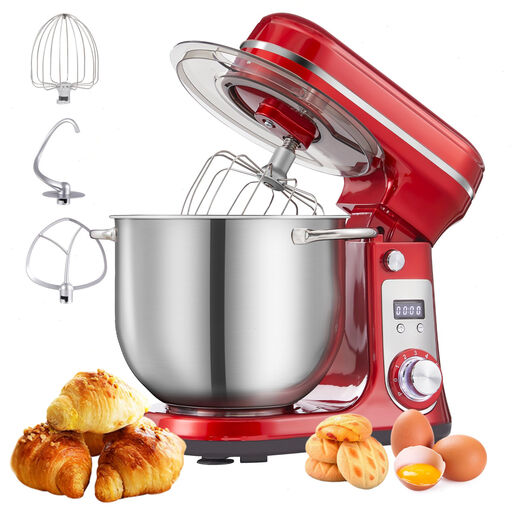 No image available
Compare the stated bowl capacity and speeds with the amount in your recipe.
Bowl: 6 l. 6 speeds and a pulse function.
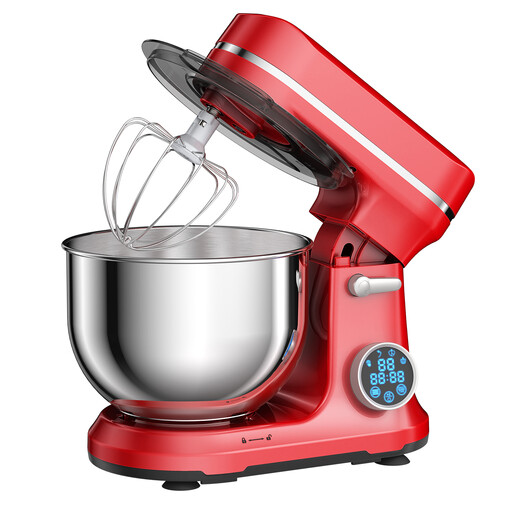 No image available
Consider the bowl size and number of speeds when comparing your recipe and preferred settings.
Bowl: 5 l. 11 adjustable speeds. Planetary mixing action is stated in the product name.
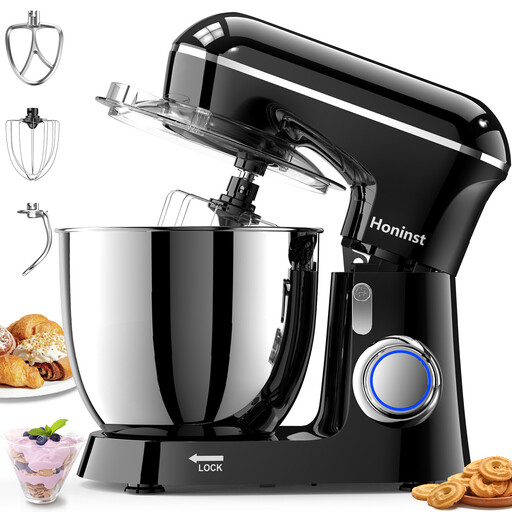 No image available
Compare the listed whisk and beater with the attachments your recipe calls for.
Bowl: 6.5 QT. 10 speeds. Listed attachments: dough hook, whisk and beater.
 No image available
Compare the listed whisk and K-beater with the steps in your recipe. Bear in mind Kenwood’s advice to scrape down the sides of the bowl with a spatula if needed.
Bowl: 6.7 l. Listed attachments: whisk, K-beater and dough hook.
It depends on the recipe. For the buttercream recipe using softened butter that we looked at, KitchenAid uses a flat beater. For its Italian meringue buttercream, the brand uses a wire whisk to make the meringue first, then a flat beater when adding the butter. Don’t automatically use the same speed settings with a different model.
Kenwood says the K-beater shouldn’t touch the sides of the bowl and recommends using a spatula during mixing if any mixture is left behind. If a Kenwood attachment knocks against the bowl, switch off the mixer and unplug it before checking the adjustment according to the instructions.
You’re entitled to a product that works as it should, and you can contact the seller if there’s a fault. According to the Government of the Netherlands, there’s no fixed statutory guarantee period in the Netherlands: what you can reasonably expect depends on the product and the circumstances. An additional manufacturer’s or paid-for guarantee doesn’t replace this right.
For a mixer covered by EU rules that require CE marking, the manufacturer must comply with those rules. CE is the manufacturer’s declaration of conformity, not independent approval. In the Netherlands, parts that come into contact with food must meet the applicable requirements for food-contact materials, as explained by the Netherlands Food and Consumer Product Safety Authority.
The Netherlands Nutrition Centre advises keeping buttercream cakes in the fridge. For a cake that has been cut, it recommends storing it in the fridge for three days; don’t automatically apply this advice to every other recipe or filling.