
Weekend baker making buttercream
You want to mix butter and sugar for a cake and are mainly looking for the right beater, rather than a dough hook.


If you mainly make buttercream, first look for a suitable flat beater or K-beater and a mixer that lets you build up the speed gently; a dough hook is not the accessory that matters most for this job. Choose the bowl and machine size to suit your usual batch and the space in your kitchen, and only opt for extra accessories if you’ll use them for other bakes too. Before buying, check the accessories supplied with the exact model and consult its product documentation.
You want to mix butter and sugar for a cake and are mainly looking for the right beater, rather than a dough hook.
You want a stand mixer that fits on your worktop and can be put away again after baking.
You also use your mixer for batters and other bakes, so you’re comparing the bowl and the accessories supplied with each model.
Choose this if: you have limited worktop or storage space and the size suits your usual recipes. Kenwood lists a 4-litre bowl and a height of 30 cm for the Go KZM35.000GR.
The trade-off: bowl capacity alone doesn’t tell you whether a small batch will mix well.
Choose this if: you regularly make batter as well as buttercream and want to compare the beater, whisk and bowl. Bosch lists these accessories for the MUM58L20; KitchenAid lists a beater for the 5KSM125EER.
The trade-off: check which accessories are actually included with the specific version, using its full model number.
Choose this if: you’ll also use a second bowl and a flexible beater; KitchenAid lists both with the 5KSM175PSEAC.
The trade-off: extra parts need storage space and aren’t necessarily useful for a single weekend cake.
| What to consider | What to check before buying | Who should give this more thought? |
|---|---|---|
| Mixing buttercream | Check whether a flat beater or K-beater is included and whether the speed can be increased gradually. | If I mainly make buttercream, I want to know whether the right beater fits my mixer and whether I can increase the speed gradually. Around 33% of consumers say mixing buttercream is their top priority. |
| Space and batch size | Measure the space available and compare the machine’s dimensions, bowl and access to the mixer head. | In a small kitchen, I want to be able to set up and store the mixer without it taking over my worktop. Around 27% of consumers prioritise space and their usual batch size. |
| Making other bakes too | Compare the beater, whisk, bowl and any extra parts supplied with each model number. | If I also use the mixer for batter or other recipes, I want to choose accessories suited to those jobs. Around 20% of consumers give versatility top priority. |
| Buying and aftercare | Check what’s in the box, who the seller is and the terms of any additional warranty. | For occasional baking, I want to know which parts are included and what extra services offer. Around 20% of consumers put buying and aftercare first. |
The stated capacity in litres describes the bowl, but doesn’t by itself show how well a particular quantity of buttercream will be mixed.
Compare the batch size in your recipe and look for information specific to the model before letting bowl size make the decision for you.
KitchenAid lists a flexible beater with the 5KSM175PSEAC, but not with the 5KSM125EER set described here.
Compare the full model number and check what’s in the box for the version you’re considering.
The Dutch government distinguishes between statutory guarantees and additional services, so an extra warranty is not the same as your statutory rights.
Check what additional terms or services an extra warranty actually provides.
The Go KZM35.000GR is a compact model worth comparing; the kMix KMX750BK is a different range and comes with a K-beater.
The MUM58L20 is a model to compare if you’re also considering other recipes and accessories, as well as mixing.
The Artisan 5KSM125EER and 5KSM175PSEAC are different models, each with its own accessories.
The SMF03DGEU is a model supplied with a flat beater, whisk and dough hook.
The Joybuy products below are stand mixers. For buttercream, focus on whether the model comes with the mixing accessories you need and whether its size suits your batch and kitchen.
 No image available
The title lists a 5.5-litre bowl and 11 speeds; check which beater comes with this model.
The product information also lists 800 W, 220–240 V and a 4.5-inch LED touchscreen.
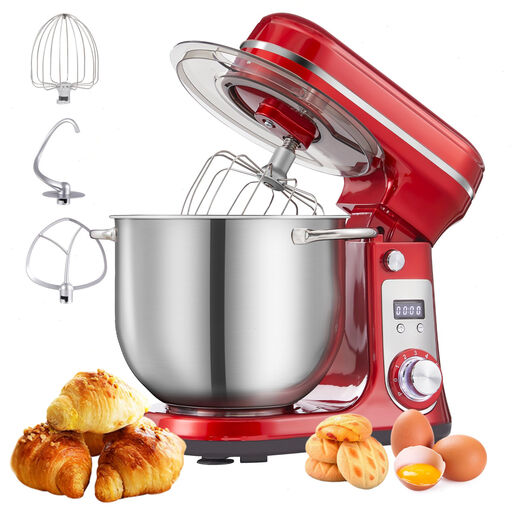 No image available
The title lists a 6-litre bowl; check whether the supplied mixing accessories are suitable for buttercream.
The product name lists 1200 W, an LCD screen, six speeds and a pulse setting.
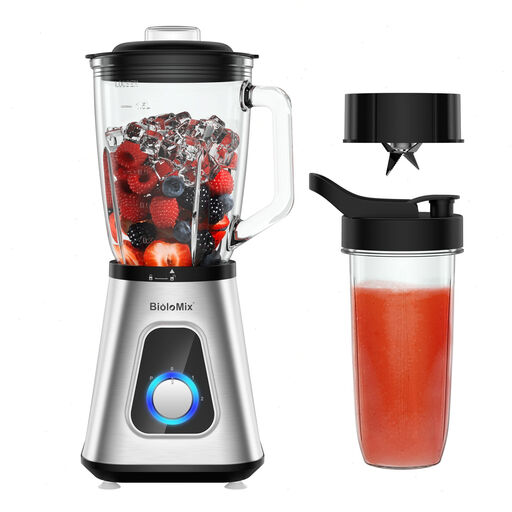 No image available
The title lists a 1.5-litre glass bowl; check which parts are included for mixing buttercream.
The product name lists a 1300 W motor, a 600 ml bottle and removable blades.
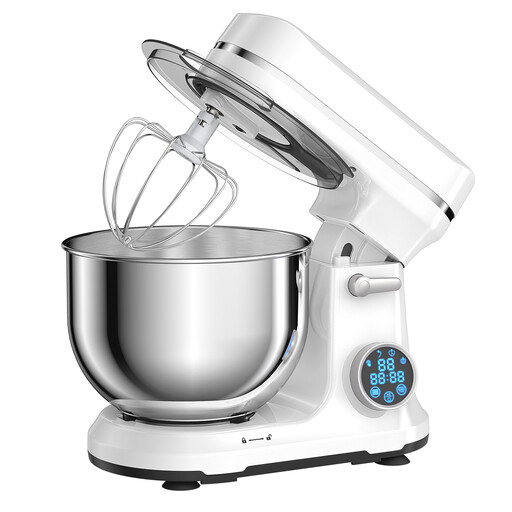 No image available
With a 5-litre bowl, it’s important to check the beater and whether the mixer suits your usual batch size.
The product name lists 11 adjustable speeds, 1200 W, an OLED touchscreen and a planetary mixing system.
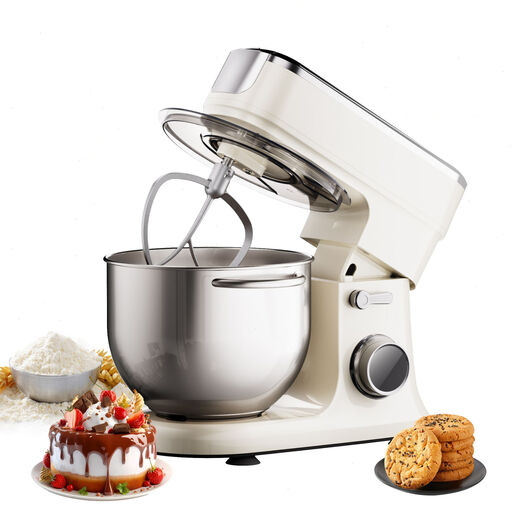 No image available
The product name lists a 7-litre bowl; before choosing it for buttercream, check which mixing accessories come with this model.
The product name also lists a 1200 W motor, an OLED touchscreen and adjustable speeds.
A flat beater is a good place to start: KitchenAid uses one in a recipe with softened butter and sugar added gradually. Check that the beater is included with your exact mixer and follow the instructions for that model.
Switch off the mixer and set the speed to zero before removing the beater. Check the cleaning instructions for the exact accessory; dishwasher suitability can vary between models.
The Netherlands Nutrition Centre advises keeping buttercream cake in the fridge and says that an opened product will keep for three days in the fridge. For a different recipe or a packaged product, follow the relevant storage instructions.
For your statutory guarantee, contact the seller; a manufacturer’s warranty or additional warranty is separate. According to ACM ConsuWijzer, online purchases generally come with a 14-day cooling-off period from delivery, although exceptions may vary depending on the purchase.
Electrical equipment covered by the Low Voltage Directive, including equipment with a rated AC voltage of 50 to 1000 V, must carry CE marking. The manufacturer is responsible for assessing conformity; the marking is not, in itself, an independent product test.