
Buffet baker making large batches
You want to knead plenty of bread dough in each batch, so you compare the stated dough limit with the weight of your own recipe. Ankarsrum, Kenwood and Bosch list capacities for specific models.


Start by calculating the total dough weight and deciding how much dough you want to knead in each batch. Then check the stated limit for the right type of dough and the exact model, rather than relying on bowl capacity alone. A machine with a higher dough limit can handle larger batches, while a smaller model may mean planning more batches; always follow the instructions for your specific model. According to the NVWA, CE marking is compulsory for electrical kitchen appliances in the Netherlands, so check the marking on the product itself.
You want to knead plenty of bread dough in each batch, so you compare the stated dough limit with the weight of your own recipe. Ankarsrum, Kenwood and Bosch list capacities for specific models.
For example, you make a heavier dough and bear in mind that a stated limit or test for light white bread dough may not apply to the same extent. Kenwood and the Consumers’ Association distinguish between light and heavier dough.
You can spread buffet preparation across several batches, weighing up the capacity you need against the space available and the other functions you use.
First, calculate the total dough weight and the amount you’ll make per batch. Then compare the limit for your type of dough, keeping the weight of the flour separate from the total dough weight.
| What to consider | What should you check? | Who should pay particular attention? |
|---|---|---|
| Batch size per kneading cycle | Compare the dough limit in kilograms with the batch size in your recipe for the exact model. | If I want to knead a lot of dough at once for a buffet, I need to know how much my recipe calls for per batch. Around 36% of consumers put batch size at the top of their list when buying. |
| Type of bread dough | Check the manufacturer’s capacity guidance and instructions for your type of dough. | For a firm dough, I need to know whether the stated limit really suits my recipe. Around 29% of consumers prioritise suitability for their type of dough. |
| Planning capacity | Work out how many batches you’ll need and check that you have space for the appliance and its bowls. | If I can spread the preparation over several batches, I want to know how many I’ll need before choosing a machine. Around 21% of consumers put capacity planning first. |
| Other baking tasks | Check which bowls, accessories and functions are included with each version. | If I also use the machine for batters or whisking, I look at the functions it includes in addition to kneading. Around 14% of consumers put versatility at the top of their list when buying. |
Manufacturers may specify separate limits for yeast dough, other types of dough and cake batter. Bowl capacity in litres is not the same as the permitted dough weight in kilograms.
Compare the limit for the exact model and type of dough with your recipe. Don’t use bowl capacity as a substitute for a dough limit.
KitchenAid states a maximum of 1 kg of flour for the 5KSM175PS family, while specifications for other models give limits in kilograms of dough. These units are not directly comparable.
Keep the units separate and use the proportions in your recipe to plan your batch sizes.
The Consumers’ Association describes a test using light white bread dough; heavier wholemeal bread dough was not tested.
For a heavier recipe, check the instructions and capacity limit for the exact model.
The Assistent Original AKM6230 is worth considering if you want to make larger batches of dough at a time.
The Titanium Chef Baker XL KVL85.124SI combines a stated dough limit with two bowls.
The MUM5XW00 is suited to anyone who can make yeast dough in smaller batches and wants built-in scales.
The Artisan 5KSM175PS family is an option for smaller batches and a mix of mixing and whisking tasks.
These Joybuy products are stand mixers whose product information mentions making bread or dough. Compare the details for the exact version with your recipe; bowl capacity alone won’t tell you how much dough you can knead in each batch.
 Image unavailable
The product description lists dense bread dough as a suitable use.
The product name specifies a 5.5-litre bowl, metal construction, a 4.5-inch LED screen and 11 speeds.
 Image unavailable
The product name lists bread-making as a use and mentions a dough hook.
The product name specifies a 6-litre bowl, 6 speeds and a 450 W motor. The product information advises against using the appliance for more than 6 minutes at a time without a break.
 Image unavailable
The product information mentions a dough hook for kneading dough.
The product name specifies the silver version.
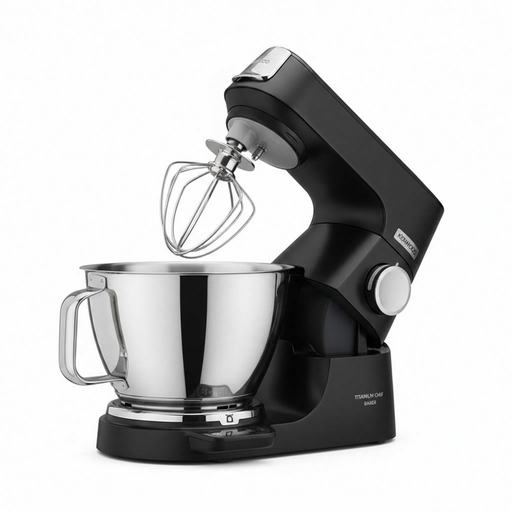 Image unavailable
The product information lists heavier types of dough as a suitable use and mentions built-in scales.
Check the instructions and dough limit for this exact version and your recipe.
 Image unavailable
The product name mentions a dough hook for preparing dough.
The product name specifies a 5-litre bowl, 8 speeds, 1000 W peak power, a whisk and a flat beater.
No. Bowl capacity in litres is not a limit for dough weight in kilograms. Kenwood states that the Titanium Chef Baker XL KVL85.124SI has a 7-litre bowl and a dough capacity of 2.56 kg. Check the limit for the exact model and your type of dough.
No, follow the manual for the exact model. KitchenAid recommends speed 2 for yeast dough with its mixer and provides separate guidance on kneading times. Don’t automatically apply this advice to other brands.
Yes. According to the NVWA, CE marking is compulsory for electrical products, and kitchen appliances are classed as electrical appliances. Check the marking on the product itself; CE marking does not replace the instructions for use.
If you sell at a market or event, the NVWA requires food to be prepared, sold and stored safely and hygienically. According to the NVWA, anyone who prepares and sells food several times a year must have an HACCP food safety plan. If you offer unpackaged food, you must tell consumers which allergens it contains; a private buffet is not automatically the same as a commercial event.