
Baking for a larger group
You want to make your planned batch of dough in as few mixing sessions as possible. So compare your recipe quantity with the dough limit for the exact model.


First, compare the weight of your brioche dough per batch with the dough or yeast dough limit specified for the exact model. Bowl capacity is no substitute for this. A larger machine may suit a generous batch, while a compact mixer could be a better choice if you make the dough in smaller portions. A limit for ordinary yeast dough is not automatically a separately verified brioche limit.
You want to make your planned batch of dough in as few mixing sessions as possible. So compare your recipe quantity with the dough limit for the exact model.
You can divide the recipe into portions and want a mixer that’s practical to set up and store. Kenwood lists the Go KZM35.000GY as 30 cm high.
You also use your mixer for batters, cream or egg whites. KitchenAid lists a dough hook for the Artisan 5KSM125EMH; check which accessories are included with the exact version.
Start with the recipe weight per batch and the corresponding specification for the model. Then consider the kneading instructions, available workspace, and the accessories and aftercare you need.
| What to consider | What to look for when buying | Who is this important for? |
|---|---|---|
| Dough per batch | Weigh your recipe portion and compare it with the stated dough or yeast dough limit; don’t treat bowl capacity, flour weight and cake batter as equivalent. | When I’m baking for a larger coffee morning, I want to know whether my recipe will fit in one batch so I can plan how many mixing sessions I’ll need. Around 36% of consumers mainly want to match the dough portion to the machine. |
| Kneading instructions | Check which dough hook is included, and the speed and timing instructions for the exact model and recipe. | With brioche, I want to be able to follow the instructions for my own mixer, because guidance for a different machine may not apply. Around 29% of consumers put the method first. |
| Workspace and storage | Check the external dimensions, and bear the dough limit in mind if you plan to work in several batches. | If my worktop is small, I can make the dough in batches, but I want to know in advance whether the mixer will fit and how many batches I’ll need. Around 21% of consumers prioritise workspace over making one large batch. |
| Accessories and aftercare | Check which bowl and dough hook are included with the version you’re buying, and look into information on parts, repairs and the warranty. | I want to know which parts are included and where to go for aftercare, so I can consider how useful the mixer will be after purchase. Around 14% of consumers prioritise accessories and aftercare. |
Bosch lists a maximum of 1.9 kg of yeast dough and 2.7 kg of cake batter for the MUM5X720. The cake batter figure is not a brioche limit. For the 5KSM125 family, KitchenAid lists a maximum of 1 kg of flour; this is not the same as the total weight of the finished dough.
Weigh your recipe per batch and only compare specifications that use the same basis.
A smaller usable portion may mean you need to plan for more mixing sessions.
KitchenAid’s published brioche recipe is designed for a 6.9 l mixer. Its method is not automatically suitable for a smaller model.
Check the recipe, portion size and instructions for your exact mixer together.
A 4 l bowl alone doesn’t tell you how much brioche dough a mixer can handle. Kenwood does not list a brioche limit for the Go KZM35.000GY.
Choose a compact mixer if you can plan batches, and check the permitted quantity for your recipe in advance.
Making separate batches may take extra preparation time.
The MUM5X720 is worth comparing if a stated yeast dough limit and weighing ingredients in the bowl are important to you.
The Titanium Chef Patissier XL KWL90.034SI is a larger option; the Go KZM35.000GY is a separate compact choice.
The Artisan 5KSM125EMH could suit you if you want to mix and whisk as well as make dough, and tailor the portion to the specific mixer.
These Joybuy products are stand mixers for dough preparation. Their listed bowl capacities and features are useful for comparison, but don’t automatically tell you how much brioche dough is suitable per batch.
 No image available
An option to compare if you’re looking for a stand mixer for kneading bread dough.
5.5 l bowl; 11 speeds; 4.5-inch LED touchscreen; silver finish.
 No image available
An option to compare if you want to knead dough and use the mixer for other baking tasks too.
5 l bowl; 10 speeds; dough hook, whisk and beater; 400 W motor.
 No image available
An option to compare if you want to knead dough and are also looking for accessories for mixing and whisking.
6 l bowl; 6 speeds; dough hook, whisk and beater; 450 W motor. The product information states a maximum of 6 minutes’ continuous use; let the mixer rest afterwards.
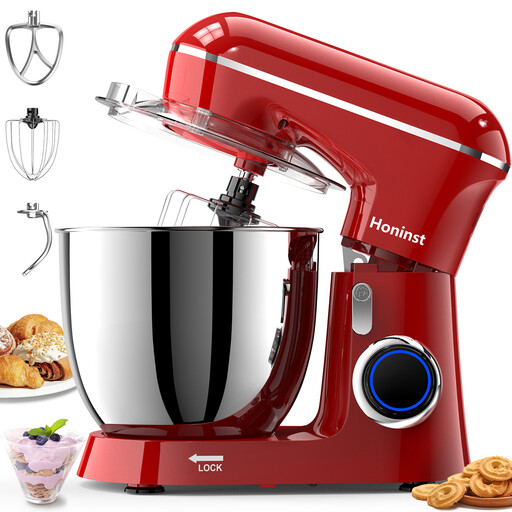 No image available
An option to compare if you want a dough hook and plan to use the mixer for mixing and whisking too.
6.5 QT bowl; 10 speeds; dough hook, whisk and beater. For heavy yeast dough, the product information states a maximum of 10 minutes’ continuous use, followed by at least 15 minutes to cool down.
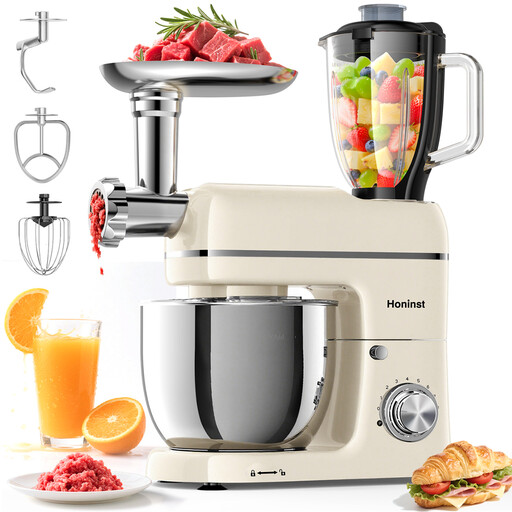 No image available
An option to compare if you want the additional kitchen functions listed as well as dough preparation.
6.5 QT bowl; 8 speeds; dough hook, whisk, beater, meat grinder and juice blender.
No. Compare the recipe weight with the relevant specification for the exact model. For example, Bosch lists 1.9 kg of yeast dough for the MUM5X720, which has a 3.9 l bowl. Keep flour weight, total dough weight and cake batter capacity separate.
Follow the instructions for your exact model and recipe. In its general bread dough FAQ, KitchenAid recommends speed 2, but a brioche recipe for a 6.9 l mixer is not automatically the right method for the 5KSM125.
Check that the bowl and dough hook are included with the version you’ve chosen, and follow the cleaning instructions for those parts. If you sell brioche at a market or event, the NVWA explains the requirements for hygienic preparation and storage.
No. For a qualifying consumer purchase, your statutory guarantee is separate from any manufacturer’s or seller’s warranty. ACM ConsuWijzer explains that the seller is responsible for providing a solution if a product breaks under normal use sooner than you could reasonably expect. Check any additional warranty terms separately.
That depends on the arrangements; a private gathering is not automatically the same as selling at a market or event. For sales at markets and events, the NVWA explains the rules for hygienic preparation and storage. The NVWA also provides information about declaring allergens in unpackaged foods; check which requirements apply to your gathering.