
Brioche baker looking for a good knead
You make a dough rich in butter and eggs, and want a suitable dough hook and control over when the butter is gradually added. KitchenAid Netherlands describes brioche methods that use a dough hook.


Choose a stand mixer with a dough hook, then compare the stated dough capacity of the exact model with the total weight of your recipe. Bowl capacity in litres is not a substitute. Remember to factor in proving and any chilling time, too: KitchenAid Netherlands describes brioche methods with different preparation times, including a recipe that requires at least 8 hours of chilling.
You make a dough rich in butter and eggs, and want a suitable dough hook and control over when the butter is gradually added. KitchenAid Netherlands describes brioche methods that use a dough hook.
You want to scale up the recipe and compare the total dough weight with the limit for the exact mixer model, rather than looking only at bowl capacity. Kenwood, Bosch and Ankarsrum publish dough capacities for specific models.
You need to plan kneading, proving and baking backwards from serving time; some brioche methods also call for overnight chilling. KitchenAid Netherlands describes both a recipe with proving time and one that involves chilling followed by another prove.
Start with the total weight of your recipe and the dough limit for the exact model. Then choose a method and plan the proving time, any chilling and the baking backwards from lunchtime.
| Consideration | What should you check? | Who should pay particular attention? |
|---|---|---|
| Kneading dough rich in butter and eggs | Check that a dough hook is included, along with the permitted speed and the dough capacity of the exact model. | When I make brioche, I want the attachment and kneading instructions to suit my recipe. Around 33% of consumers put kneading at the top of their buying priorities. |
| Enough dough for your lunch group | Calculate the total dough weight after scaling up, then compare it with the limit for the exact model and the relevant type of dough. | For a larger group, I want to know whether the increased quantity can be made in one batch. Around 27% of consumers prioritise the portion size they need. |
| Brioche ready in time for lunch | Choose a recipe and map out the preparation, proving, chilling and baking times. A timer or scales cannot replace proving time. | With a set lunchtime, I want to know in advance when to start and whether chilling is needed. Around 27% of consumers prioritise planning. |
| Space and cleaning | Measure the available space, including room to tilt the mixer head back, and check the cleaning instructions for the attachments. | If my worktop or cupboard space is limited, I want to be able to store and clean the mixer easily after use. Around 13% of consumers prioritise space and tidying away. |
Bowl capacity and maximum dough weight are different measurements. Bosch lists a 3.9 L bowl and a maximum of 1.9 kg of yeast dough for the MUM58L20; this is not the same as a brioche test.
Compare the total weight of your recipe with the dough limit stated by the manufacturer for the exact model.
KitchenAid Netherlands’ brioche methods have different proving and chilling steps. A mixer does the kneading for you, but it does not change those recipe steps.
First settle on a recipe and serving time, then work backwards to decide when to start.
A manufacturer’s guarantee does not automatically replace your statutory rights. The Dutch Government explains that the seller must provide a solution if a product is faulty.
Check what any optional paid-for extended guarantee covers, and contact the seller if your product is faulty.
The Go KZM35.000GY and Chef XL KVL4110S suit different space and portion-size needs.
The MUM5 models are worth considering if you’re looking for a planetary mixer with a stated capacity for yeast dough.
The Artisan 5KSM125EER is a medium-sized mixer with a tilting head and dough hook; KitchenAid also publishes brioche methods.
The Assistent Original 6230 uses a different mixing method, which may be worth considering if you regularly make larger batches.
These Joybuy product picks are stand mixers to consider for preparing brioche. For each exact model, compare the total weight of your recipe with the stated dough capacity; bowl capacity alone won’t tell you how much dough the mixer can handle.
 No image available
A dough hook is useful if you want to knead brioche using a recipe that calls for one.
The product name lists a 5 L bowl, 10 speeds and a dough hook. Bowl capacity is not a limit on dough weight.
 No image available
The dough hook makes this model worth considering if you’re looking for a stand mixer to knead brioche dough.
The product name lists a 6 L bowl and 6 speeds. Product information limits continuous use to a maximum of 6 minutes, so bear this in mind when kneading.
 No image available
Worth including in your comparison if you’re looking for a Kenwood Chef XL for preparing brioche.
For the exact model, check which dough capacity and attachments are suitable for your recipe.
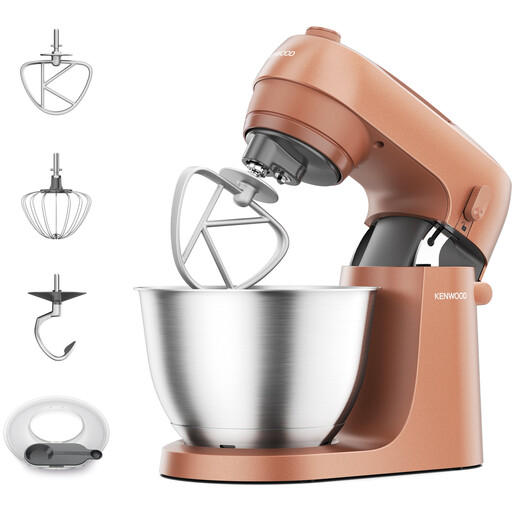 No image available
The compact range may suit you if you’re short on space; check that the exact model can handle the amount of brioche you want to make.
Measure the available space and compare the dough capacity and included attachments with your recipe.
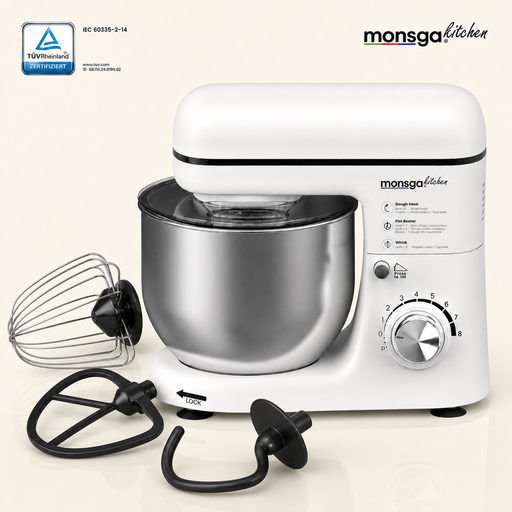 No image available
The listed dough hook makes this model worth considering if you want to knead brioche dough with that attachment.
The product name lists a 5.0 L bowl, a dough hook and 8 speeds. Don’t compare bowl capacity directly with the weight of your recipe’s dough.
It depends on the recipe and when you want to serve it. KitchenAid Netherlands describes, among other methods, one with a 45-minute proving period and another that involves at least 8 hours of chilling, followed by 2–3 hours of proving. Work backwards from lunchtime and add up the steps in your chosen recipe.
Compare the total weight of your recipe with the dough limit stated for the exact mixer model. Bowl capacity in litres is not the same as the permitted dough weight; also check that the stated limit applies to the relevant type of dough.
Follow the instructions for attachments, speed and cleaning. The Netherlands Nutrition Centre advises washing your hands and any kitchen utensils used after contact with raw egg, cooking dishes containing raw egg thoroughly, and keeping preparations made with raw egg in the fridge.
For electrical appliances covered by the relevant EU rules, the Dutch business portal lists product safety requirements, CE marking and an EU declaration of conformity. The Low Voltage Directive applies within the voltage ranges it specifies. Check which requirements apply and review the documentation for the exact model; CE marking is not a performance test.