
Vandaag of morgen in huis

Kwaliteit gegarandeerd

Welkomstaanbiedingen ontgrendelen: GRATIS bezorging | Tot 80% korting | Gratis 30 dagen JoyPlus-proefperiode
Download de app
A stand mixer with a bowl can make kneading, mixing and whisking much easier. However, a high wattage rating doesn’t automatically guarantee good results. A machine may look powerful on paper but prove awkward in practice because the bowl is too small, the feet are unstable or the accessories are difficult to clean.
This buying guide will help you compare a stand mixer, kitchen mixer or dough mixer using verifiable specifications. That way, you can choose an appliance to suit your recipes, kitchen space and how often you’ll use it.
Manufacturers sometimes list the maximum or peak power. This doesn’t always tell you how much power the motor delivers during normal use. For example, the Monsga SM100 is listed as having 1000 watts peak power, while its stated rated power is 600 watts. So don’t compare wattages alone; also check the recommended dough capacity, operating time and overload protection.
A 6-litre bowl may sound appealing, but its usable capacity is often lower. An overfilled bowl can cause splashing, poorly mixed ingredients or extra strain on the motor. Always check the difference between the maximum capacity and the recommended working capacity.
A mixer with a dough hook, whisk and beater is more versatile than a model with just one accessory. Still, check whether the parts are easy to remove and whether they’re dishwasher-safe. Also look at the coatings: a non-stick coating can make sticky dough easier to remove, but always follow the manufacturer’s care instructions.
For a household that regularly makes bread, cakes or pizza, a bowl of around 5 to 6 litres is often practical. A stainless steel bowl, such as one made from 304 stainless steel, is sturdy and suitable for everyday use. Check whether the bowl has a handle and locks securely onto the base.
Look out for:
A baking mixer needs to handle a range of tasks: gently mixing, stirring batter, whisking egg whites and kneading dough. Six to ten speed settings generally give you more control than a machine with just two. A pulse function can be useful for short bursts of extra power.
For heavy bread dough, the motor design, dough hook, stability and recommended operating time are particularly important. When kneading, use a low to medium speed and don’t exceed the maximum dough capacity.
A mixer can move around while kneading bread dough. Non-slip feet or suction cups help keep it in place, but always put the machine on a flat, dry and sturdy work surface.
Treat the stated noise level as a guide. For example, the Monsga SM100 lists a noise level of less than 75 dB, while the Aucma ASM1559 lists 68–72 dB at a distance of one metre. According to the brands’ product information, these figures are based on specified measurement or operating conditions. The noise you experience may vary depending on the recipe, speed and work surface.

Why it suits this profile: A straightforward model for cake batter, biscuits, whipped cream and regular home baking, without a host of extra features.
The product information specifies a 6-litre stainless steel bowl, six speeds plus pulse, and a maximum continuous operating time of six minutes. This gives you a clearer idea of its limits than a wattage claim alone.
450W copper DC motor according to the product description, 6-litre bowl, dough hook, whisk, beater and splash guard.

Why it suits this profile: A good fit for home bakers who mix, whisk and knead several times a week and want a choice of speeds.
The specifications list both 1000W peak power and 600W rated power. They also distinguish between a recommended capacity of 5 litres and a maximum bowl capacity of 6 litres.
8 speeds, stainless steel bowl, dough hook, whisk, beater, splash guard and a tilting motor head.
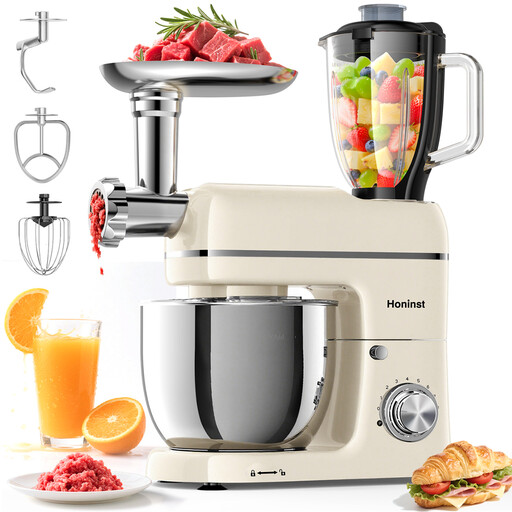
Why it suits this profile: An appealing option for households that want a meat grinder and blender function as well as kneading and mixing.
The manufacturer specifies a safety switch for the tilting head and a maximum capacity of 6 QT. Before buying, check which accessories are actually included in the box.
1300W maximum motor power according to the product description, 6QT stainless steel bowl, eight speeds plus pulse function, and multiple functions.

Why it suits this profile: Designed for households that often make bread dough and would appreciate automatic kneading and resting functions.
The stated maximum dough capacity is 2.5 kg. This makes it clearer what the machine is designed for and helps you avoid relying on the bowl’s total capacity alone.
5-litre family capacity, automatic kneading function, resting programme and touch controls according to the product specifications.
We’ve put together a complete, up-to-date list of products that meet these strict selection criteria and the applicable European safety regulations.
Yes, as long as the machine has a dough hook and you stay within its maximum dough capacity. Use a low to medium speed for heavy dough and let the motor cool down as instructed in the manual. A large bowl doesn’t automatically mean you can knead a large quantity of dough.
For most households, 5 to 6 litres is suitable for cake batter, biscuits, whipped cream and medium quantities of bread dough. Pay particular attention to the recommended working capacity. This may be lower than the maximum capacity shown on the product page.
Energy use depends on the motor’s actual power and how long you use it for. A machine that runs for a short time may use less energy, despite its higher stated power, than a less powerful model that needs to run for longer. So compare the rated power and recommended operating time with how often you bake.
